10-Page PDF with Bookmarked TOC
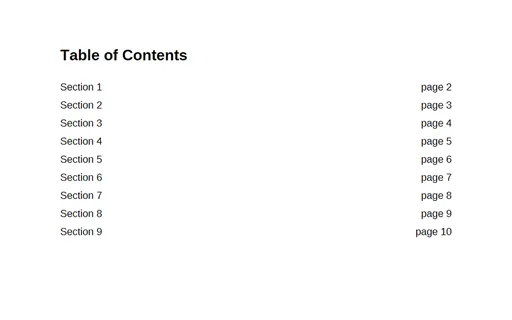
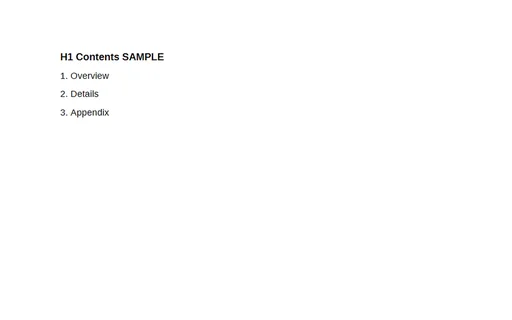
A ten-page PDF with a table of contents and a full bookmark outline (10 entries) — for testing PDF navigation, outline parsing, and page extraction.
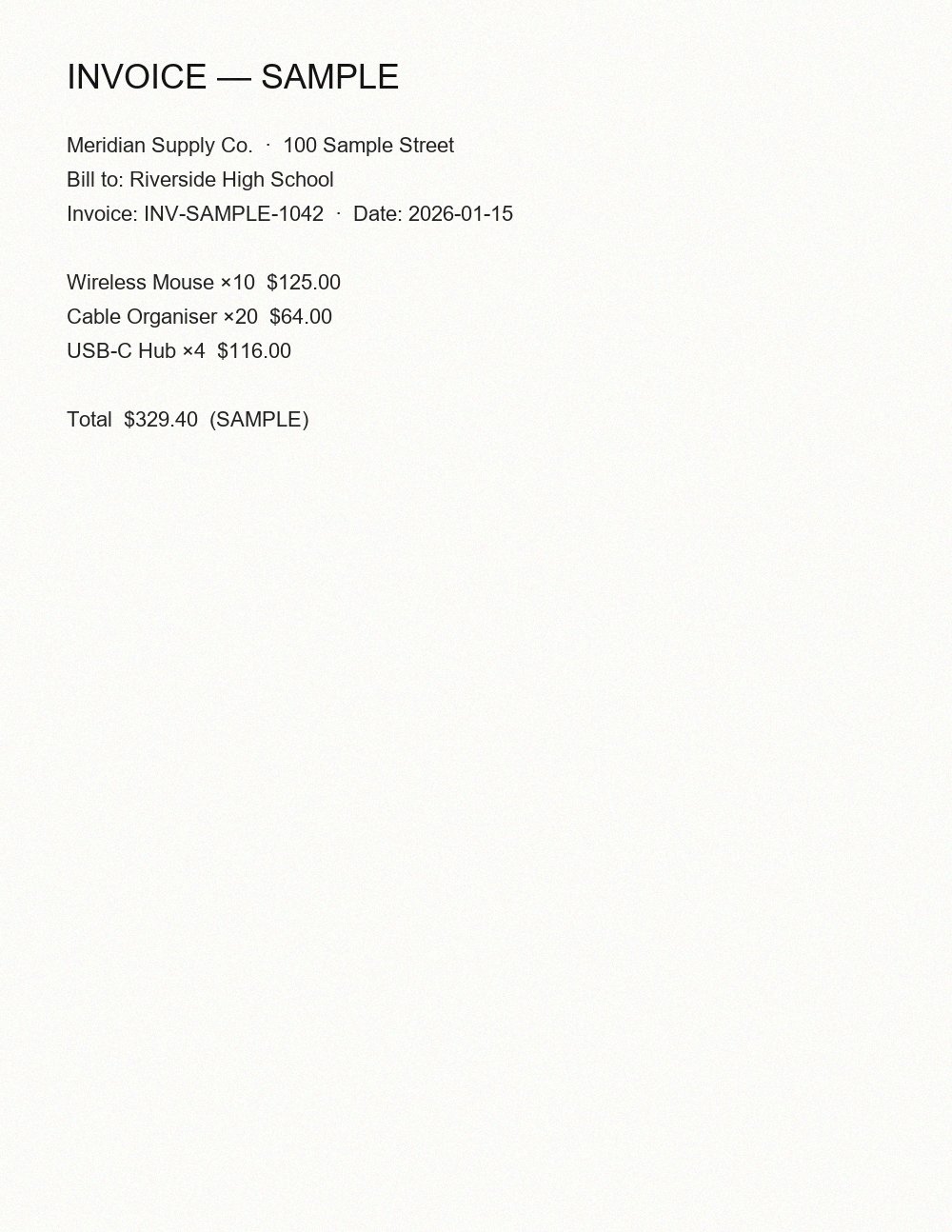
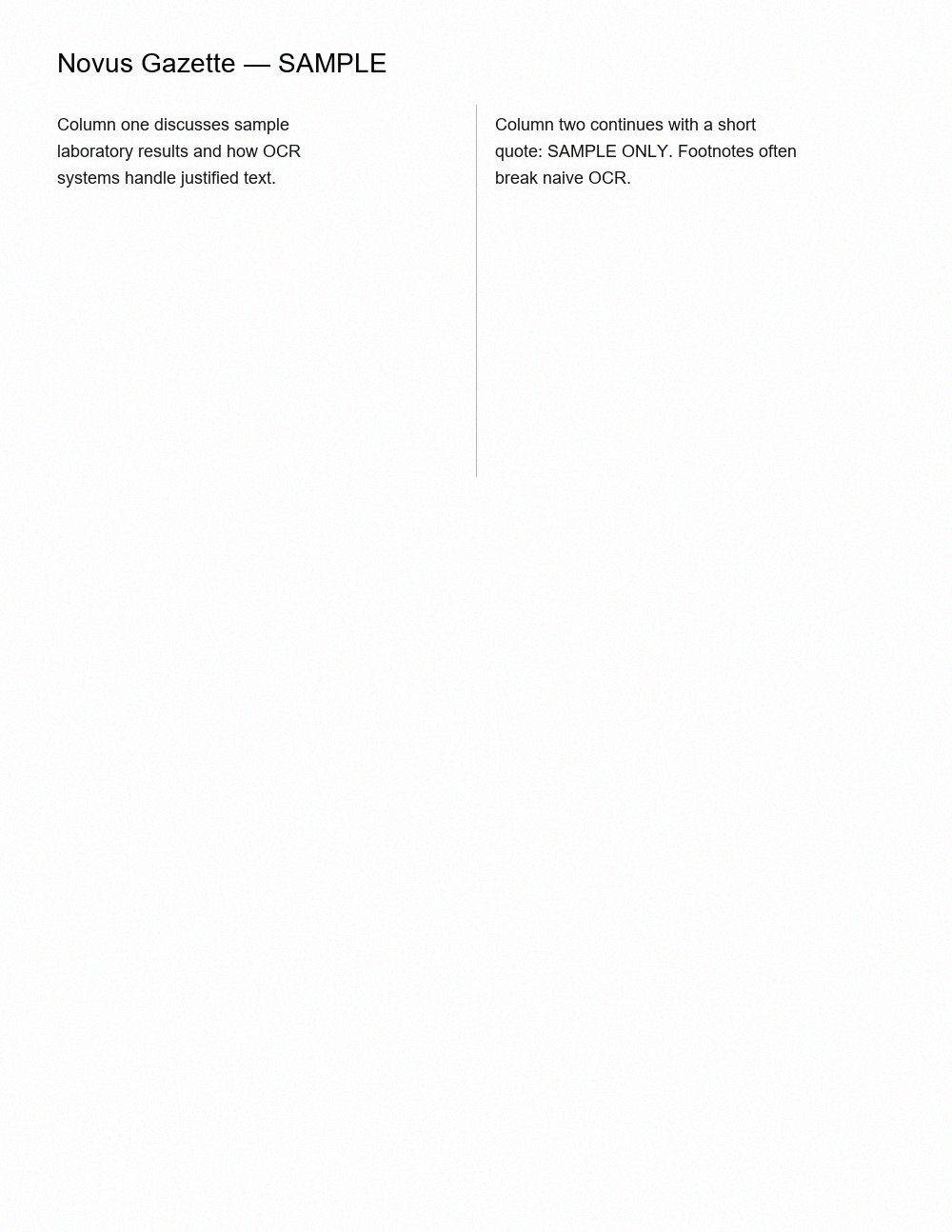
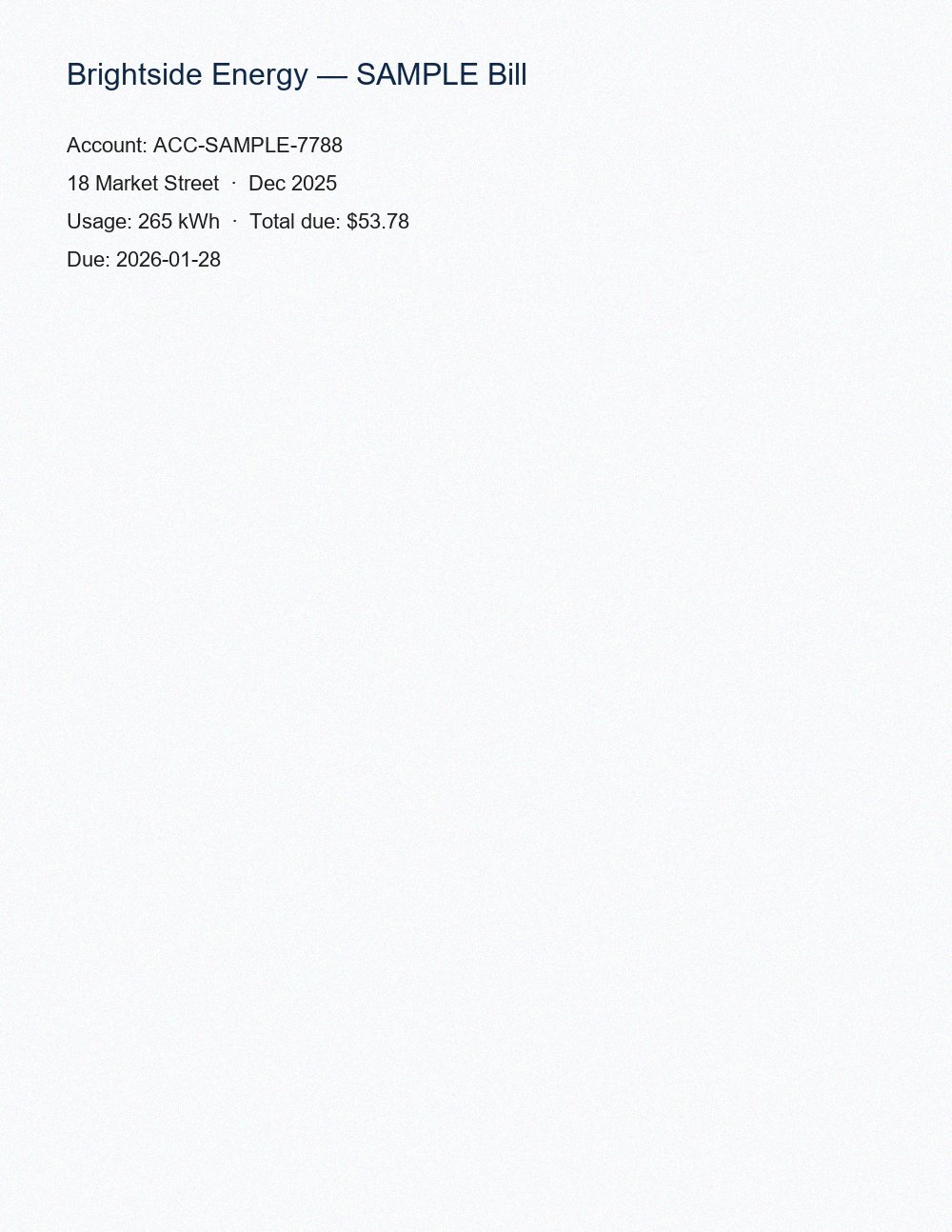
The documents category is built for parsers, editors, and OCR. The PDF set includes a simple one-pager, a document with a bookmarked table of contents, an AcroForm with named fields listed in its spec, an image-only 'scanned' twin of the simple document paired for OCR testing, tables and landscape layouts, a text-light long document, and a deliberately truncated PDF for error handling. Word and Excel files come formatted and plain, with documented styles and formulas, and there's a set built for the features parsers and converters actually miss: a workbook with embedded bar and line charts, one with merged cells, conditional formatting, data validation and frozen panes, a Word document with real tracked changes, another with anchored reviewer comments, a slide deck with speaker notes, and a café receipt as a searchable-versus-scanned OCR pair. Text files ship in UTF-8, UTF-8 with BOM, and UTF-16 with documented encodings and line endings. Every file lists its internal structure, so you're testing against a known specification rather than a mystery document.
A ten-page PDF with a table of contents and a full bookmark outline (10 entries) — for testing PDF navigation, outline parsing, and page extraction.
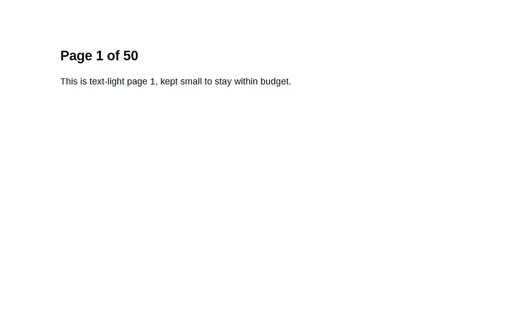
A 50-page, text-light PDF — for testing page-count handling, pagination, and large-document navigation without a large file.
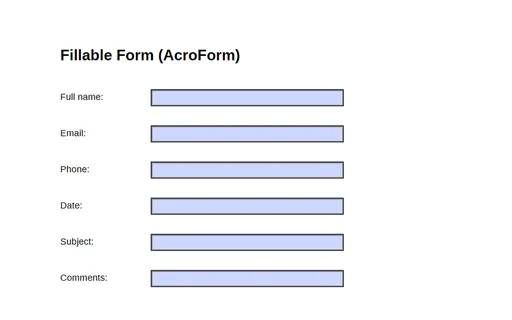
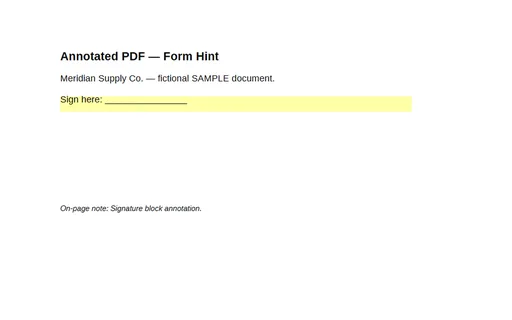
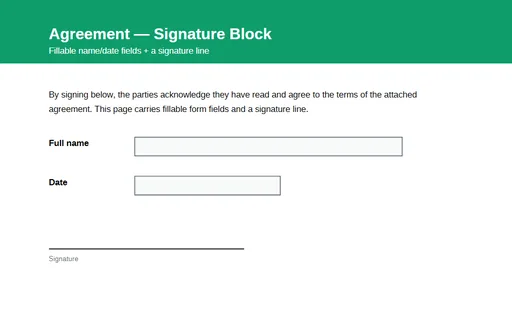
A one-page PDF with a six-field AcroForm (full_name, email, phone, date, subject, comments) — a fixture for testing form fillers, parsers, and field extraction.
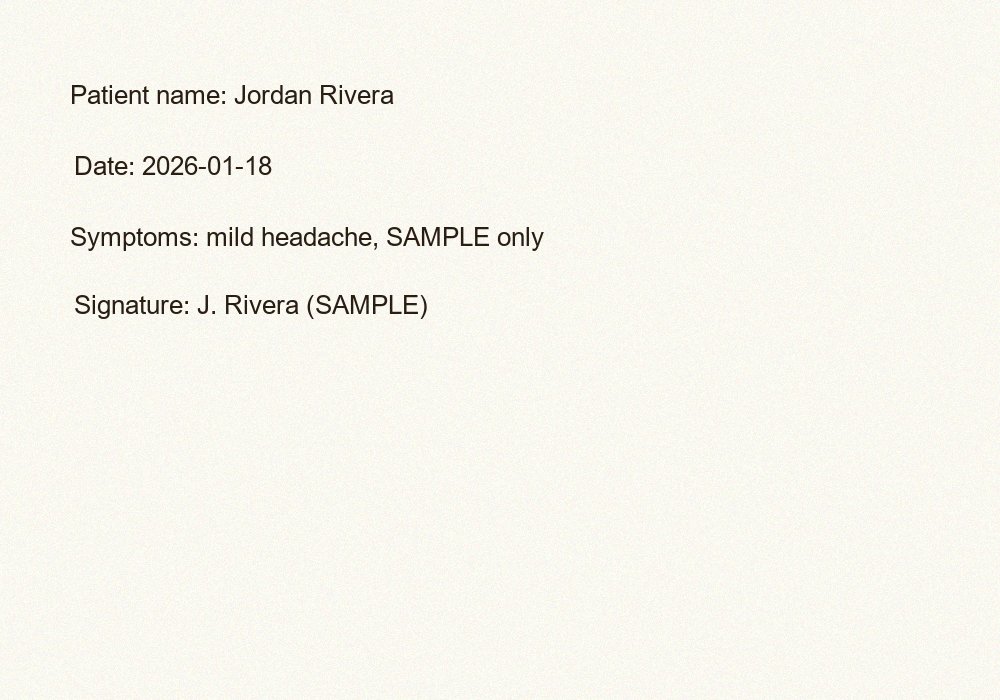
An image-only PDF containing a rasterised 'scan' of the simple document, with no text layer. Paired with the text version so you can score OCR output against a known ground truth.
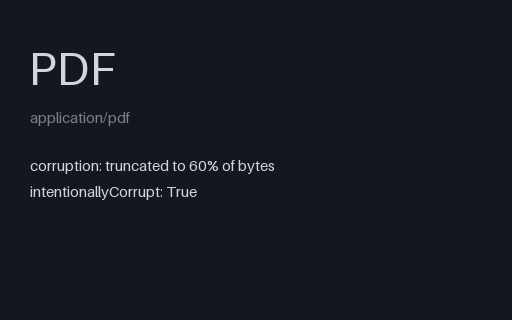
An intentionally corrupt PDF, truncated to 60% of its bytes, for testing how a PDF parser handles a damaged file. Not a valid document by design.
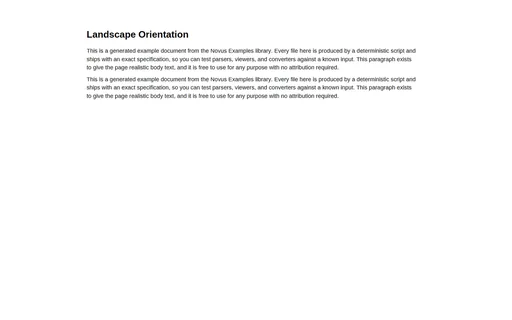
A landscape-orientation PDF — for testing whether your viewer or converter respects non-portrait page geometry.
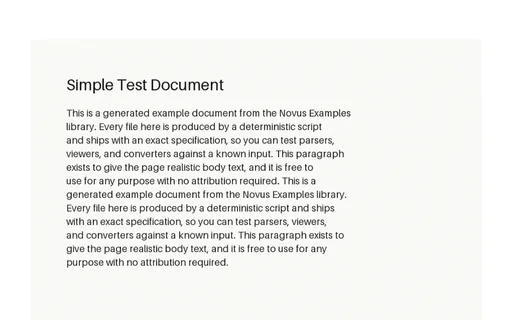
A single-page PDF with a title and body text — the simplest valid document for testing PDF viewers, parsers, and text extraction. Paired with an image-only scanned twin for OCR testing.
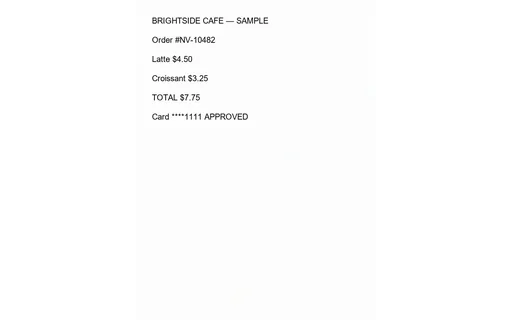
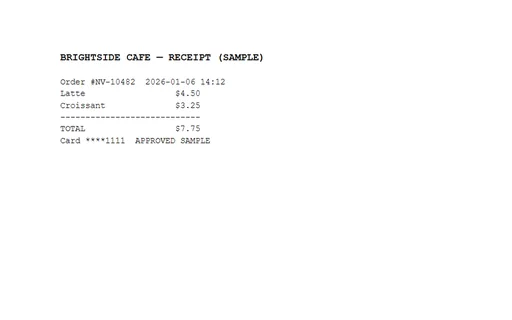
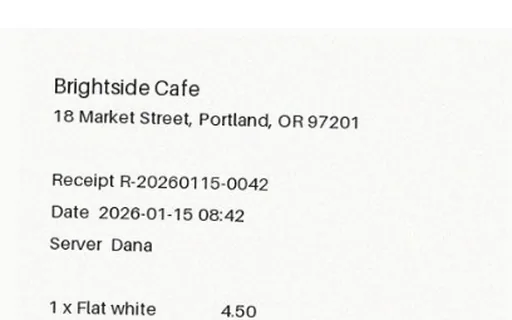
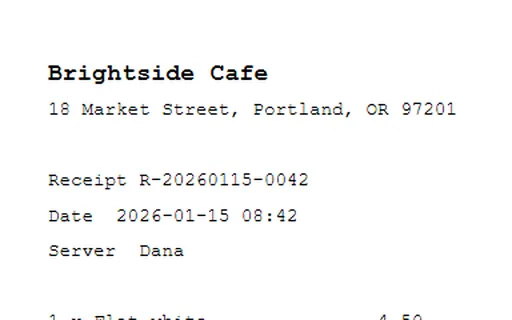
The same café receipt as an image-only 'scan' — no text layer, with a slight rotation and grain so it reads like a photographed receipt. Paired with the searchable version as OCR ground truth.
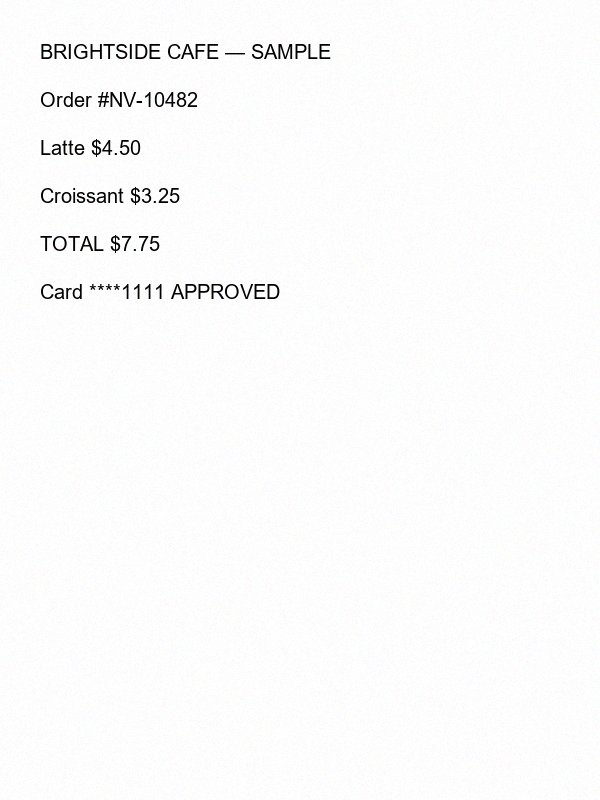
A realistic café receipt as a searchable PDF with a real text layer — the OCR ground truth paired with an image-only scanned twin, so you can score OCR output against known text.
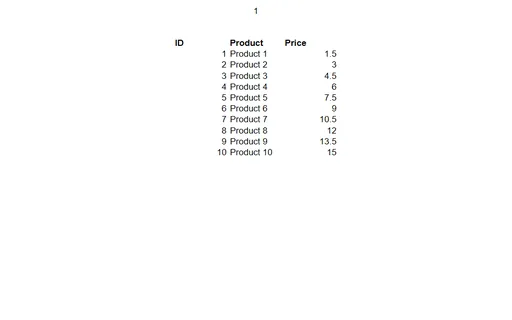
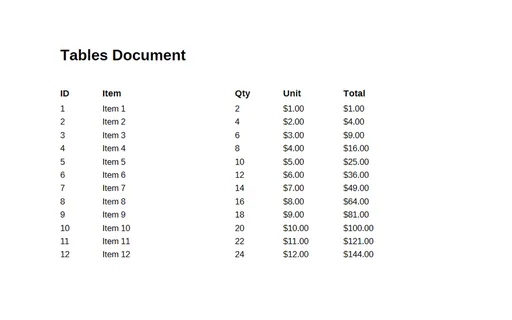
A PDF containing a 12-row, 5-column table — for testing table extraction and layout parsing.
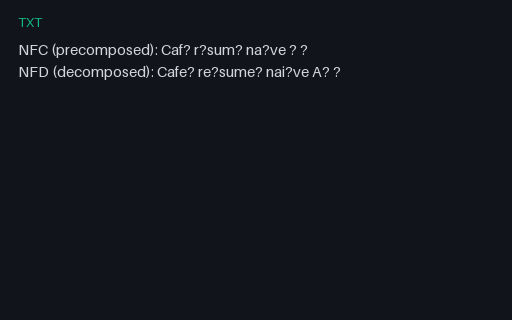
A UTF-8 file with the same words in both NFC (precomposed) and NFD (decomposed combining marks) normalisation forms — for testing normalisation-aware comparison, search, and dedup.
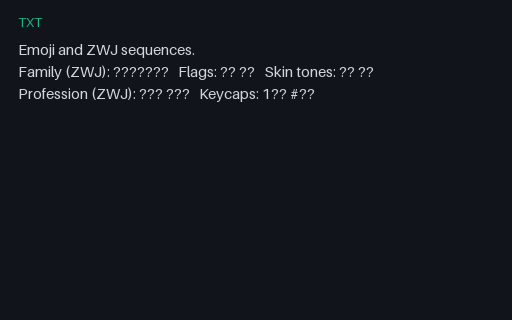
A UTF-8 file of emoji including zero-width-joiner sequences, regional-indicator flag pairs, and skin-tone modifiers — multi-code-point grapheme clusters for testing grapheme segmentation and display-width calculation.
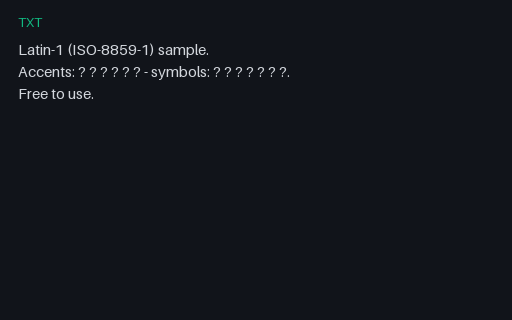
A single-byte Latin-1 (ISO-8859-1) text file using high-range accented characters — for testing legacy 8-bit charset detection and transcoding to UTF-8.
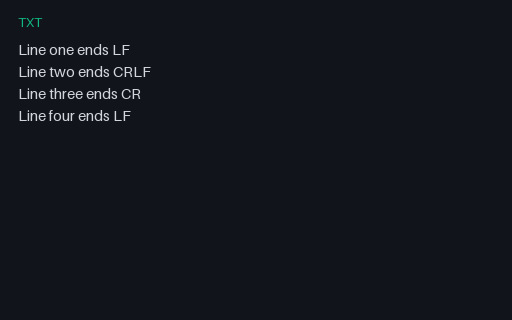
A UTF-8 text file that deliberately mixes LF, CRLF, and lone-CR line endings within one file — for testing newline normalisation and line-counting logic.
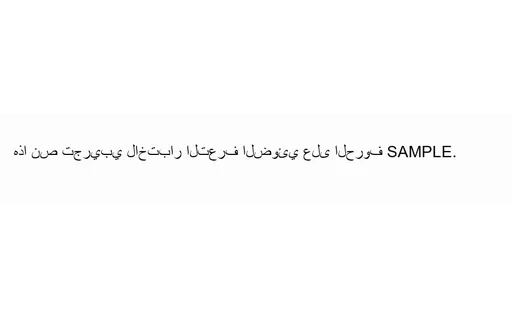
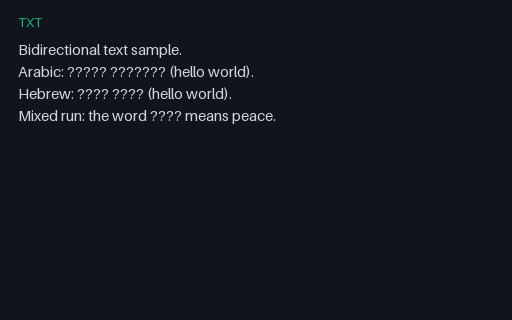
A UTF-8 file mixing left-to-right and right-to-left scripts (Arabic and Hebrew alongside English) — for testing bidirectional text handling, reordering, and rendering.
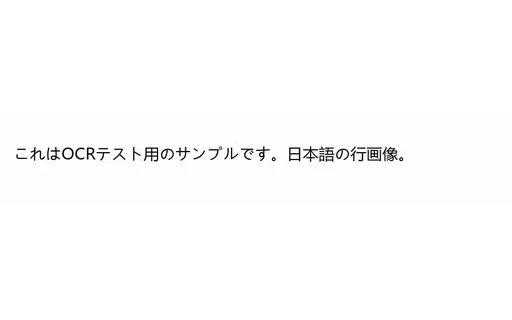
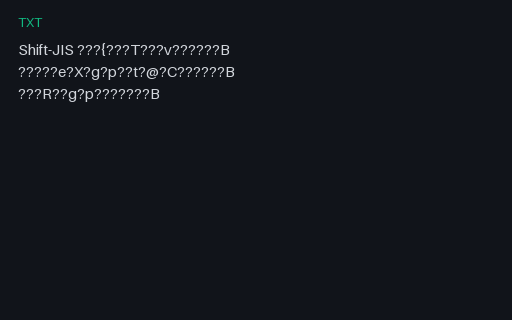
A Shift-JIS encoded Japanese text file — a multi-byte East-Asian encoding, for testing CJK charset detection and Shift-JIS→UTF-8 conversion.
A UTF-16 big-endian text file with a BOM (FE FF) and CRLF line endings — for testing wide-character decoding and byte-order detection.
A UTF-16 little-endian text file with a BOM (FF FE) and CRLF line endings — for testing wide-character decoding and encoding detection.
A UTF-32 little-endian text file with a BOM (FF FE 00 00) — four bytes per code point, for testing full-width Unicode decoders and byte-order handling.
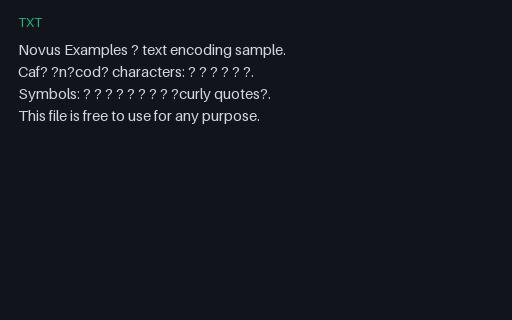
A UTF-8 text file with Unix (LF) line endings and no byte-order mark, containing accented and symbol characters — for testing charset detection.
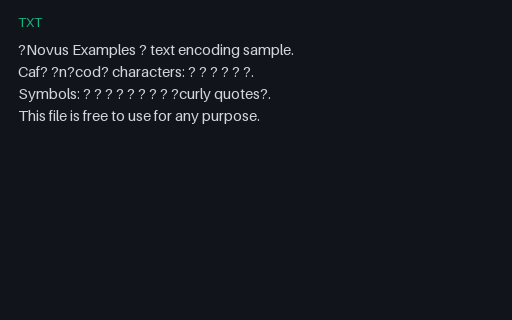
A UTF-8 text file that starts with a byte-order mark (EF BB BF) and uses Windows (CRLF) line endings — for testing BOM handling and line-ending detection.
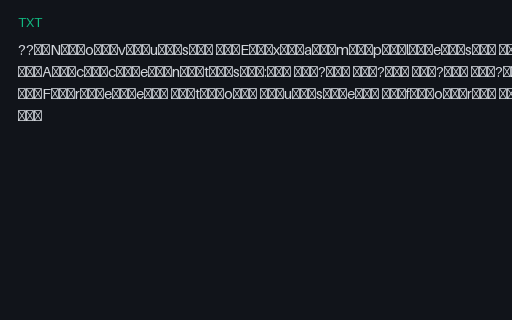
A UTF-8 file consisting of a single very long line (~18,000 characters with no interior newline) — for testing editors, buffers, and line-oriented parsers against long-line handling.
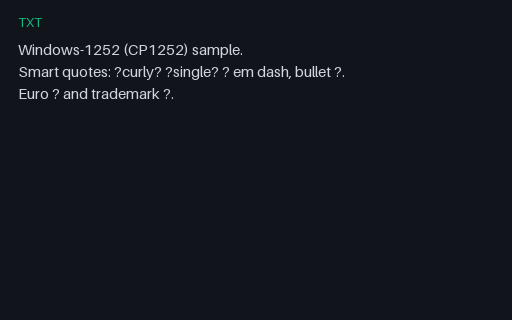
A Windows-1252 text file using the 0x80–0x9F range (smart quotes, em dash, euro, bullet) that naive Latin-1 decoders get wrong — for testing codepage detection and transcoding.
The formatted Word document saved as legacy binary .doc (Word 97-2003, OLE compound file) via LibreOffice. For testing legacy-Office parsers and DOC→DOCX conversion.
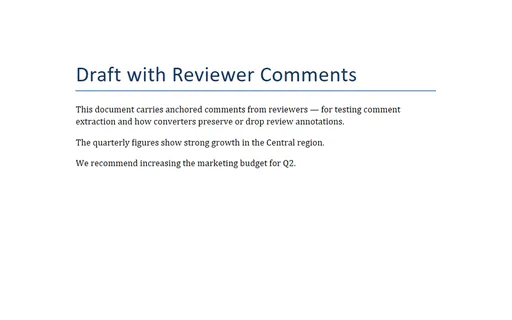
A Word document with two anchored reviewer comments — for testing comment extraction and whether converters preserve or drop review annotations.
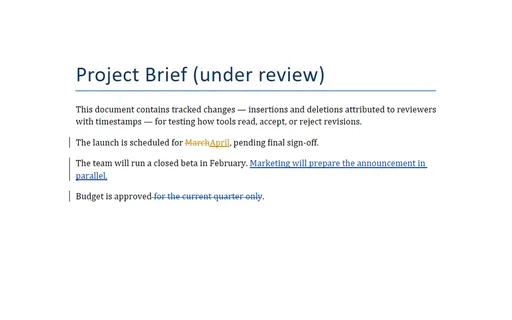
A Word document with real tracked changes — insertions and deletions attributed to two reviewers with timestamps — for testing how tools read, accept, reject, or preserve revisions.
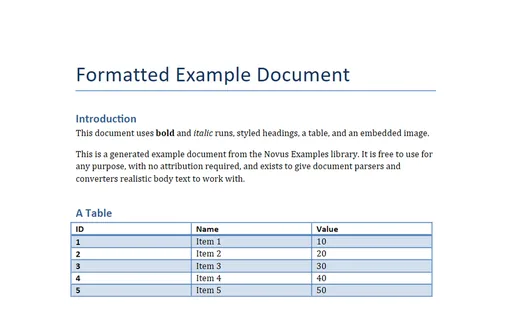
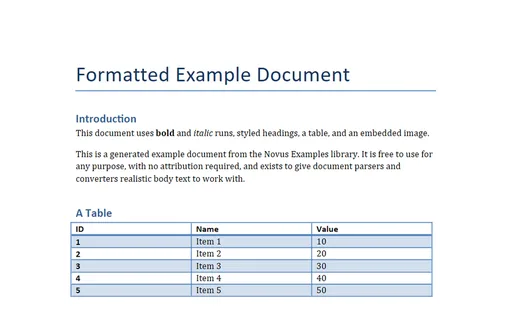
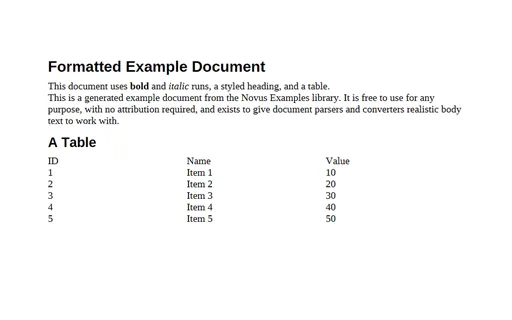
A Word document with styled headings, bold/italic runs, a table, and an embedded image — for testing DOCX parsers and converters against a rich document.
An OpenDocument Text file carrying the same content as the formatted DOCX — styled heading, bold/italic runs, and a table. The open twin in a DOCX↔ODT conversion set.
A minimal Word document of plain paragraphs with no styling — the simplest valid DOCX for baseline parser testing.
A two-sheet workbook where a Summary sheet references a Data sheet with SUM and arithmetic formulas — for testing spreadsheet parsers, formula evaluation, and converters.
An OpenDocument Spreadsheet with the same tabular data as the plain XLSX and legacy XLS — a member of an XLSX↔ODS↔XLS conversion set for spreadsheet importers.
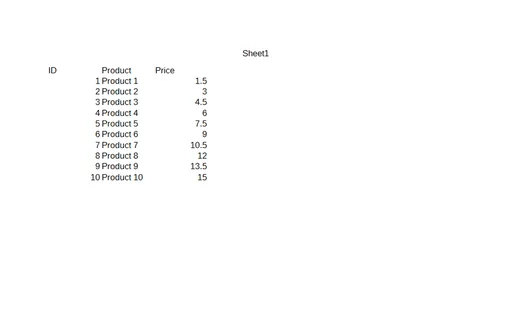
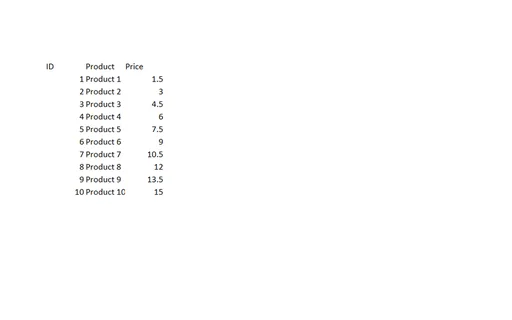
A single-sheet workbook of plain tabular values with no formulas — a baseline fixture for spreadsheet importers.
A legacy Excel 97–2003 (.xls / BIFF8) workbook holding the same tabular data as the plain XLSX and ODS — for testing legacy-format readers and XLS↔XLSX conversion.
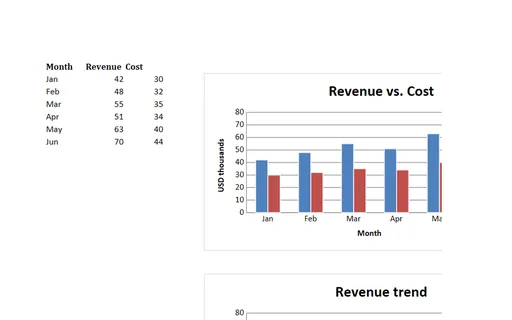
A workbook with a data table plus a native bar chart and a line chart bound to the cells — for testing whether spreadsheet parsers and XLSX-to-PDF converters preserve and render embedded charts.
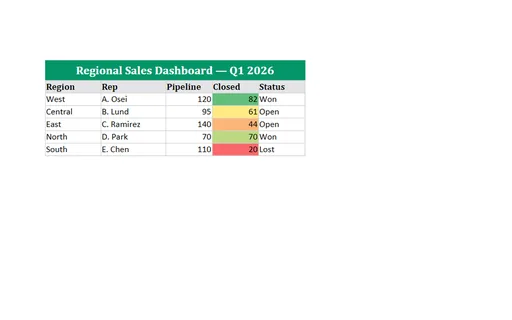
A dashboard sheet exercising the features importers miss: a merged title cell, a three-colour conditional-formatting scale, a data-validation dropdown, cell borders, and frozen panes.
A three-slide OpenDocument Presentation with titles and body text — for testing ODP readers and slide converters. Original content, free to use.
A pitch-deck slide set saved as legacy binary .ppt (PowerPoint 97-2003, OLE compound file) via LibreOffice. For testing legacy-Office parsers and PPT→PPTX conversion.
A four-slide presentation where every slide carries speaker notes in the notes pane — for testing notes extraction and whether converters preserve the notes alongside the slides.
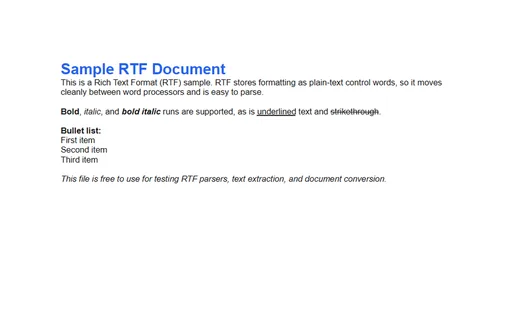
A Rich Text Format document exercising bold, italic, underline, colour, headings, and a bullet list — all as plain control words. For testing RTF parsers, text extraction, and RTF→DOCX/PDF conversion.
The simplest possible RTF: one monospace font and a couple of paragraphs, no styling. A minimal baseline for RTF parsers and conversion tools.
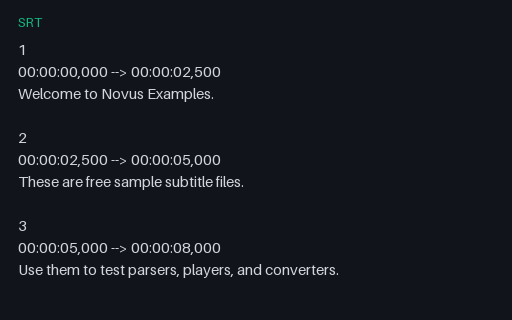
A SubRip (SRT) subtitle track with three timed cues — the most common subtitle format. Paired with the WebVTT twin for testing subtitle parsers and SRT↔VTT conversion.
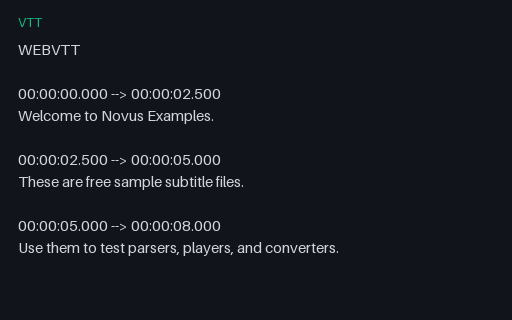
A WebVTT subtitle track with three timed cues — the HTML5 <track> subtitle format. Paired with the SRT twin for testing subtitle parsers and VTT↔SRT conversion.
We use Google Analytics. It sets no analytics cookies until you allow the Analytics category below. See our cookie policy.