Simple 1-Page PDF
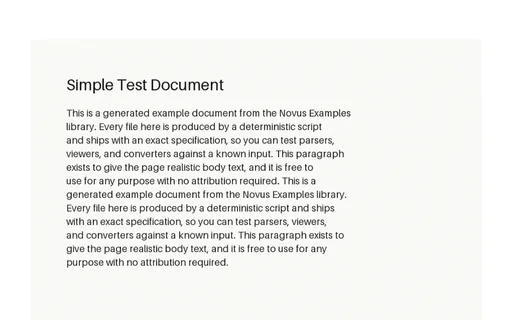
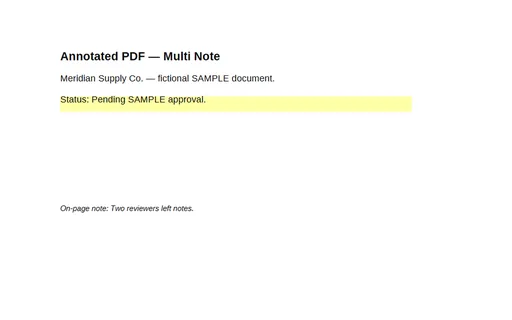
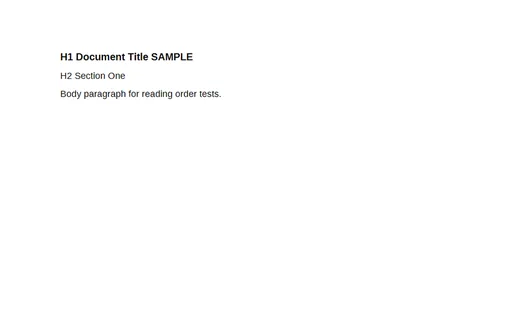
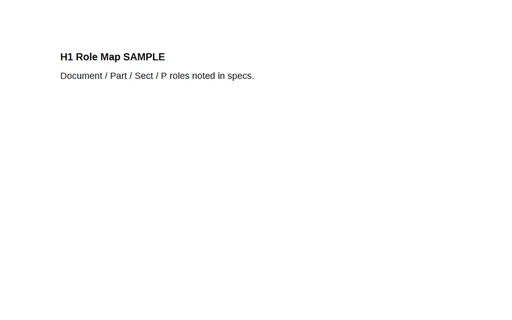
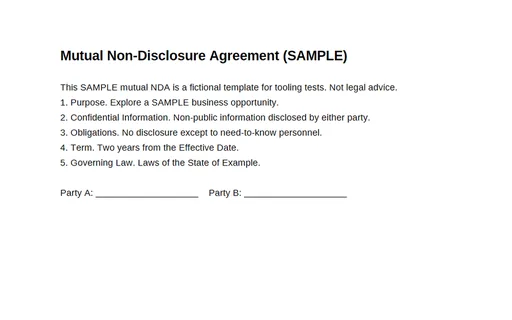
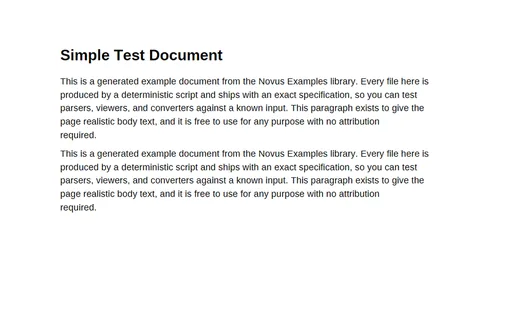
A single-page PDF with a title and body text — the simplest valid document for testing PDF viewers, parsers, and text extraction. Paired with an image-only scanned twin for OCR testing.
Form PDFs, bookmarked documents, scanned pairs, and deliberately corrupt files for exercising PDF editors, parsers, and fillers.
A single-page PDF with a title and body text — the simplest valid document for testing PDF viewers, parsers, and text extraction. Paired with an image-only scanned twin for OCR testing.
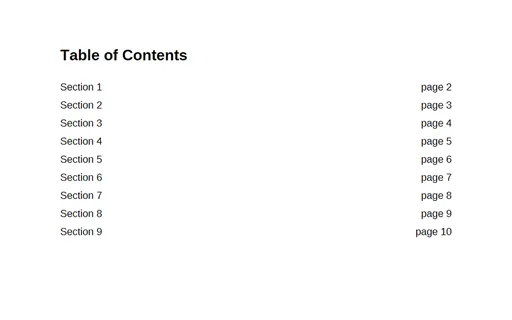
A ten-page PDF with a table of contents and a full bookmark outline (10 entries) — for testing PDF navigation, outline parsing, and page extraction.
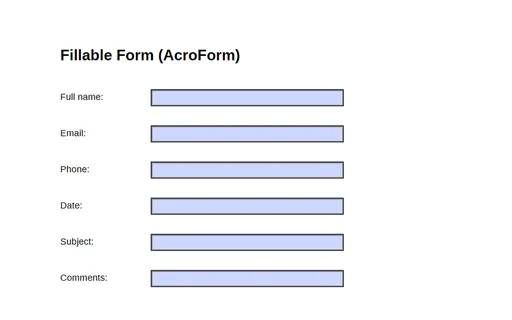
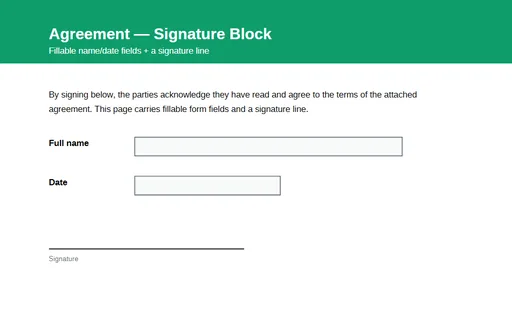
A one-page PDF with a six-field AcroForm (full_name, email, phone, date, subject, comments) — a fixture for testing form fillers, parsers, and field extraction.
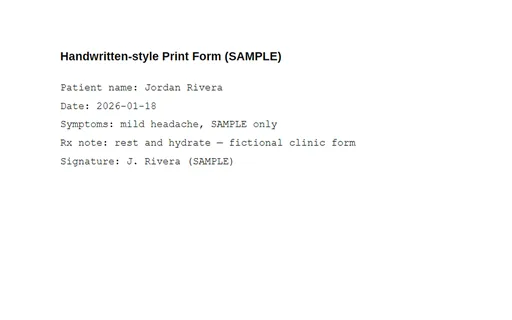
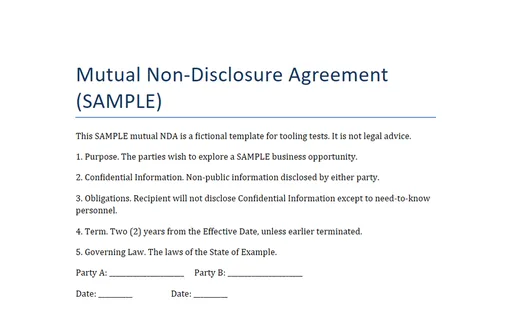
An image-only PDF containing a rasterised 'scan' of the simple document, with no text layer. Paired with the text version so you can score OCR output against a known ground truth.
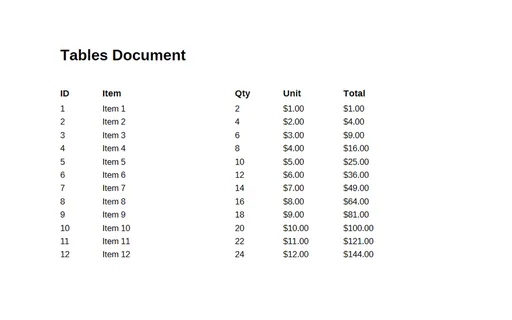
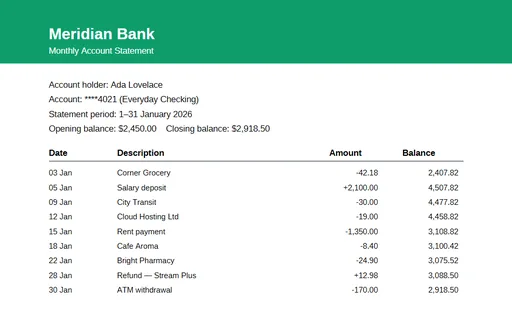
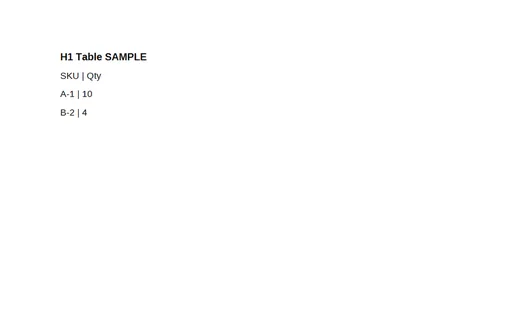
A PDF containing a 12-row, 5-column table — for testing table extraction and layout parsing.
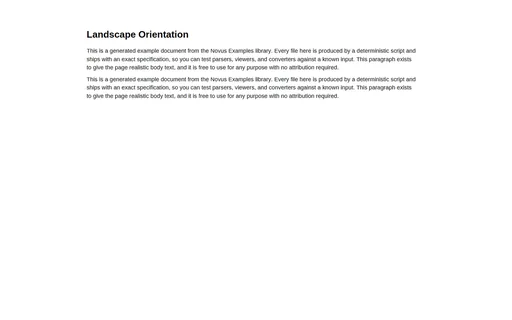
A landscape-orientation PDF — for testing whether your viewer or converter respects non-portrait page geometry.
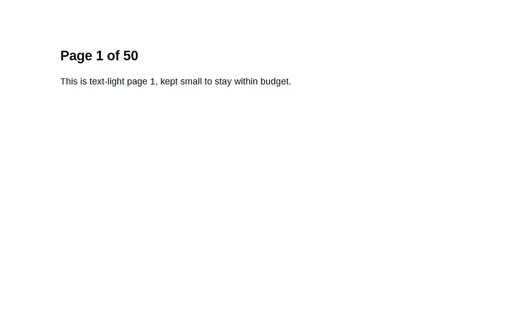
A 50-page, text-light PDF — for testing page-count handling, pagination, and large-document navigation without a large file.
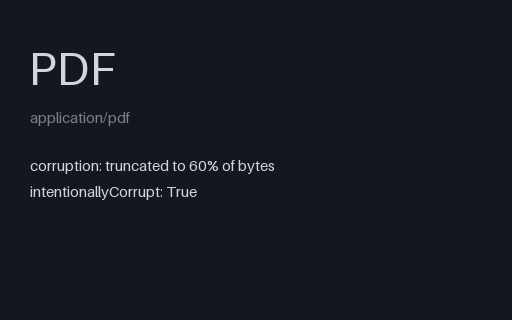
An intentionally corrupt PDF, truncated to 60% of its bytes, for testing how a PDF parser handles a damaged file. Not a valid document by design.
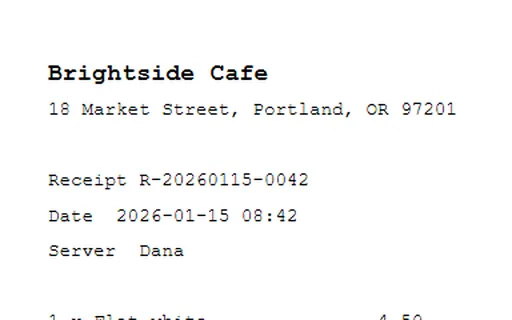
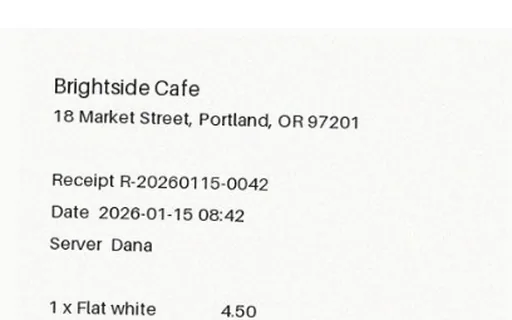
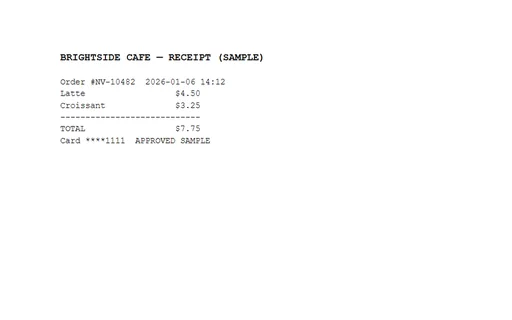
A realistic café receipt as a searchable PDF with a real text layer — the OCR ground truth paired with an image-only scanned twin, so you can score OCR output against known text.
The same café receipt as an image-only 'scan' — no text layer, with a slight rotation and grain so it reads like a photographed receipt. Paired with the searchable version as OCR ground truth.
We use Google Analytics. It sets no analytics cookies until you allow the Analytics category below. See our cookie policy.