Intentionally Corrupt — Truncated JPEG
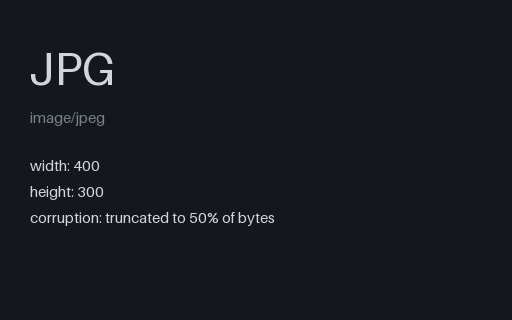
An intentionally corrupt JPEG, truncated to half its bytes, for testing how a decoder handles incomplete image data. This is not a valid image by design.
Deliberately corrupt and invalid files, clearly labelled, for testing how your tool fails.
An intentionally corrupt JPEG, truncated to half its bytes, for testing how a decoder handles incomplete image data. This is not a valid image by design.
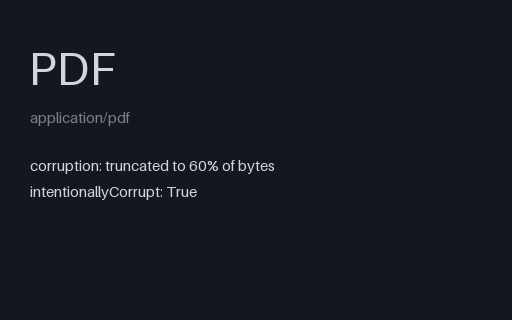
An intentionally corrupt PDF, truncated to 60% of its bytes, for testing how a PDF parser handles a damaged file. Not a valid document by design.
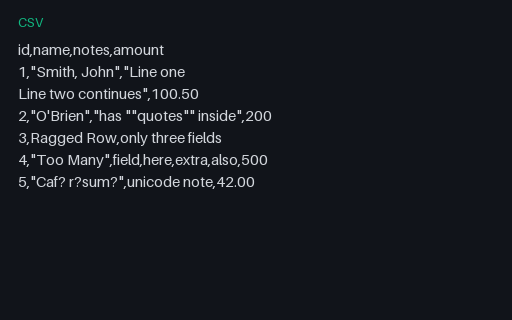
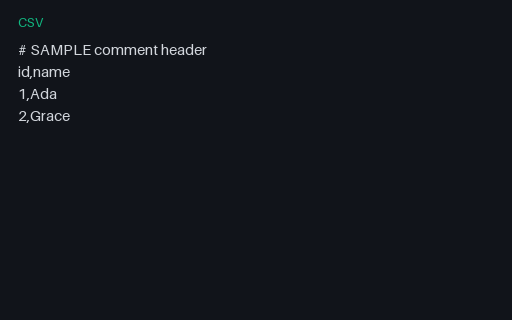
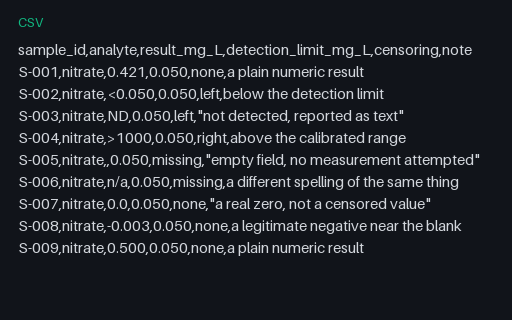
A deliberately messy CSV: a quoted field with a comma, a quoted field with an embedded newline, escaped double-quotes, and ragged rows with too few and too many fields — the cases that break naïve parsers.
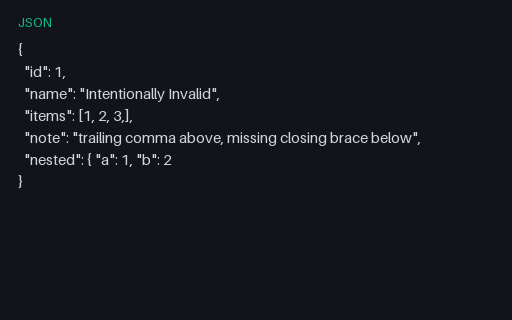
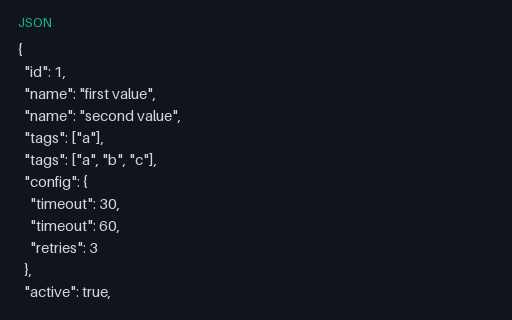
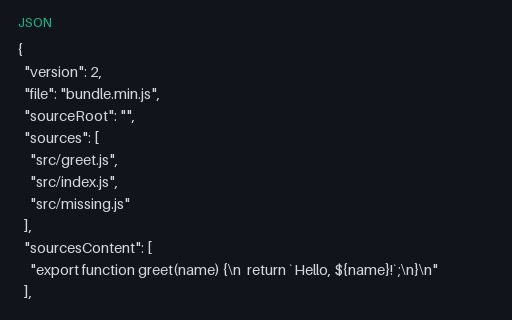
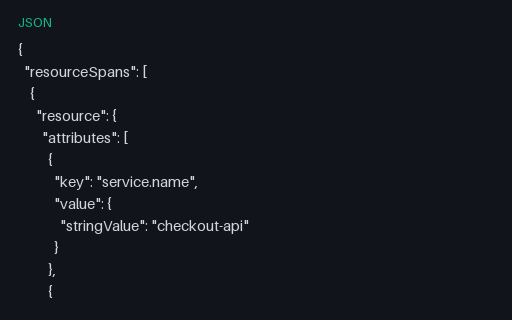
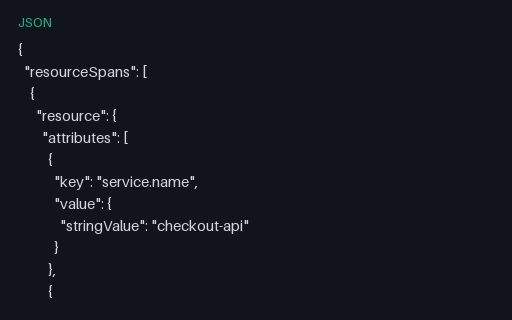
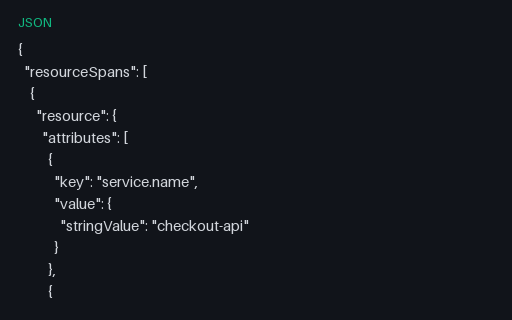
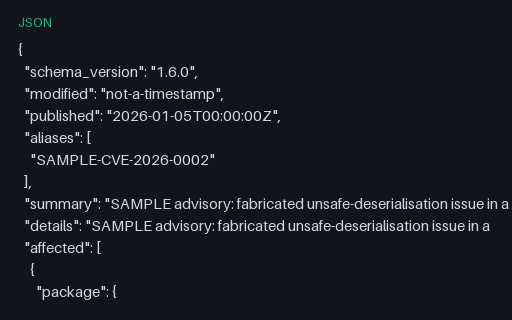
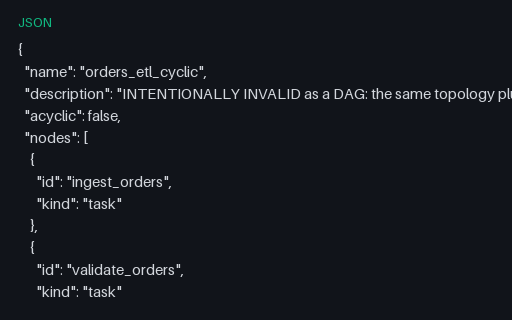
An intentionally invalid JSON file with a trailing comma and a missing closing brace — for testing parser error handling and messages. Not valid JSON by design.

A product object that deliberately violates the product JSON Schema in five ways (out-of-range id, empty name, non-positive price, wrong boolean type, an extra property) — the negative case for testing validator error reporting.
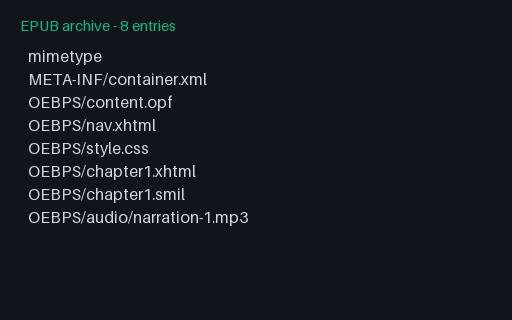
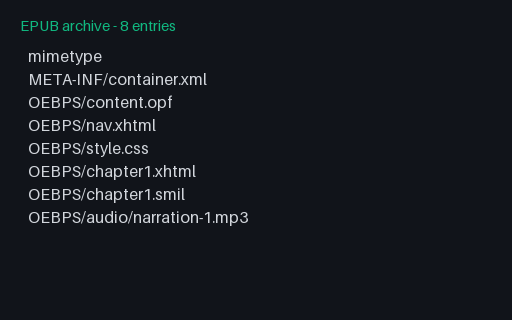
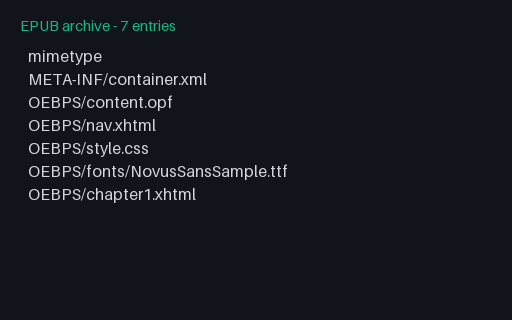
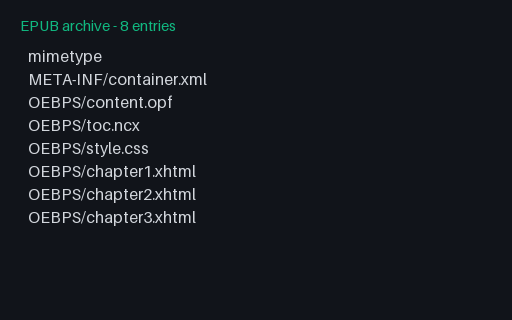
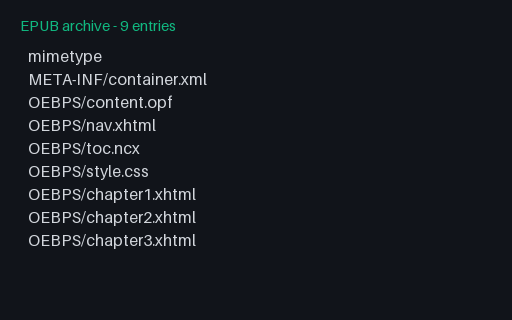
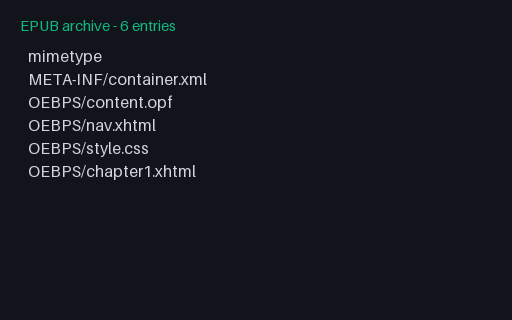
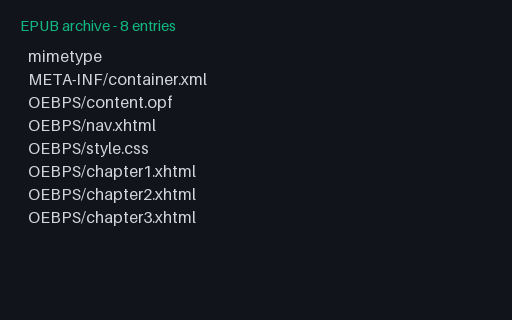
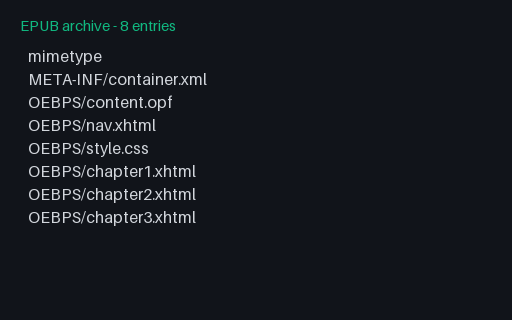
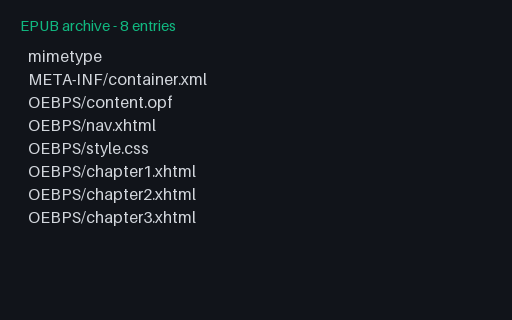
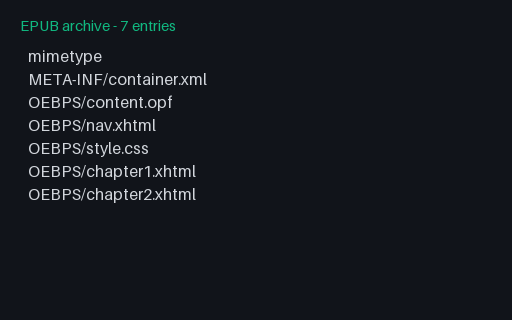
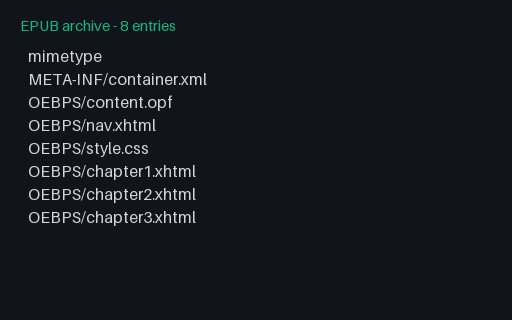
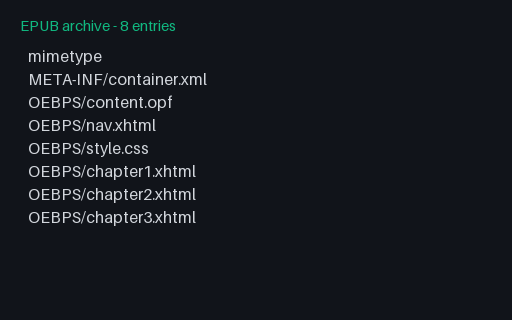
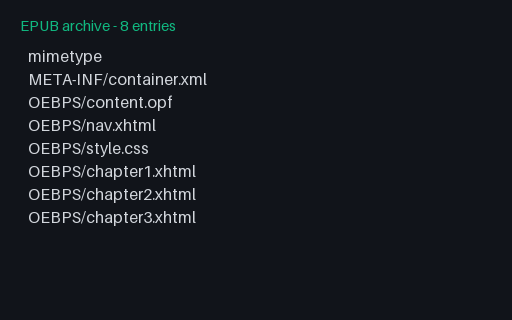
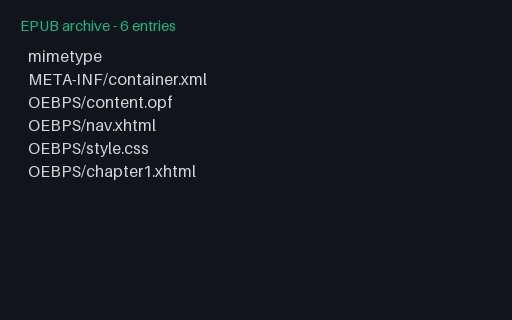
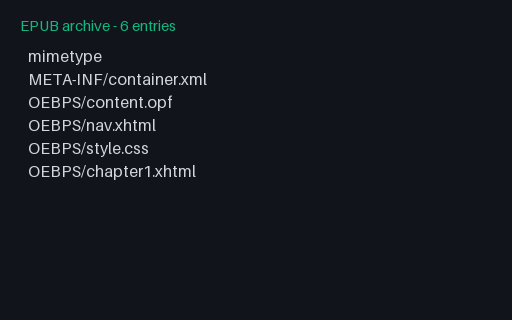
An intentionally invalid EPUB: identical to the valid twin except its OCF mimetype entry is compressed and mislabelled as application/zip — a real EPUB spec violation. For testing how readers and validators handle a malformed container. Clearly labelled; harmless content.
We use Google Analytics. It sets no analytics cookies until you allow the Analytics category below. See our cookie policy.