

png
28.7 KB
Colourization Input: Mug Sepia (512px)
Sepia input for colourizing the mug scene. Pair with the colour ground truth in this group.
- File
- PNG · Colourize Set · 512 × 512 px
- Use case
- ColourizationImage pipeline QA· Conversion set
Find files, editable templates and browser test targets by what you need to make or test. Explore complete business kits for connected records, templates and expected results.
Page 33 of 221; 24 results per page.
Sepia input for colourizing the mug scene. Pair with the colour ground truth in this group.

Greyscale input for colourizing the plant scene. Pair with the colour ground truth in this group.

Sepia input for colourizing the plant scene. Pair with the colour ground truth in this group.
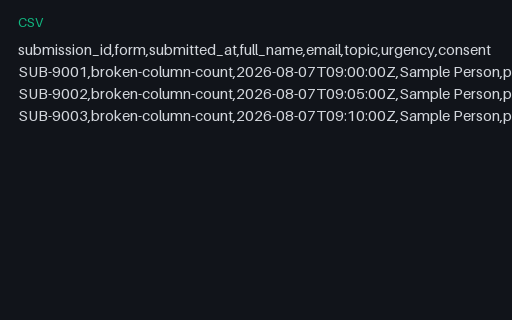
Intentionally corrupt. A submissions export whose header declares eight columns while its three data rows carry six, ten and eight, so a reader has to choose between padding, truncating and refusing.

JSON description of nullable columns in the null-heavy columnar fixtures.
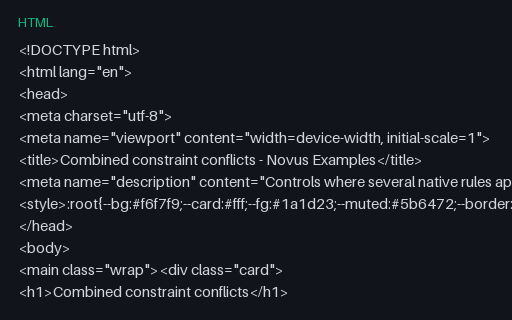
Controls stacking required, pattern, length and range rules at the same time, including two deliberately awkward cases - a pattern narrower than its length bound, and a step that cannot reach the maximum - for testing which constraint a validator reports first.
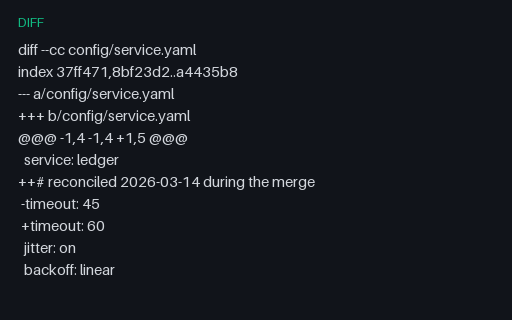
What `git show` prints for a merge commit: a `diff --cc` header, an index line naming three blobs, `@@@` hunk markers, and two prefix columns instead of one. The `++` line is the giveaway a reviewer is looking for: content that appears in the merge result but in neither parent.
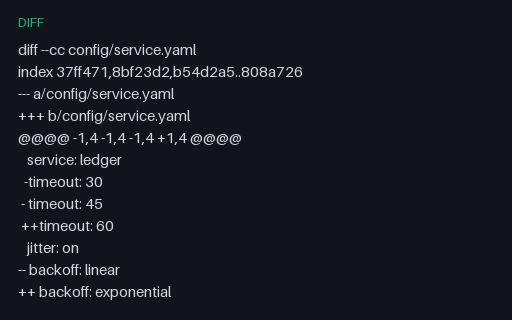
An octopus merge, so the hunk marker grows to `@@@@` and every line carries three prefix columns. Any parser that hard-codes `@@@` or assumes two columns reads the third column as the first character of the line's content.
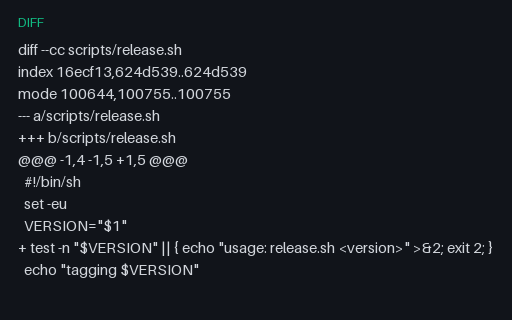
When the file mode differs between the parents and the merge result, a combined diff adds a `mode a,b..result` line below the index line: a comma-separated shape that appears nowhere else in git's output. Parsers written for the single-parent `old mode`/`new mode` pair do not recognise it.
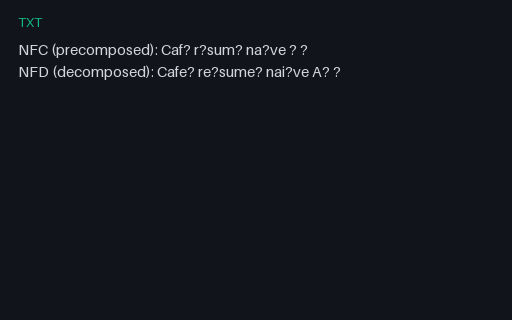
A UTF-8 file with the same words in both NFC (precomposed) and NFD (decomposed combining marks) normalisation forms, for testing normalisation-aware comparison, search, and dedup.
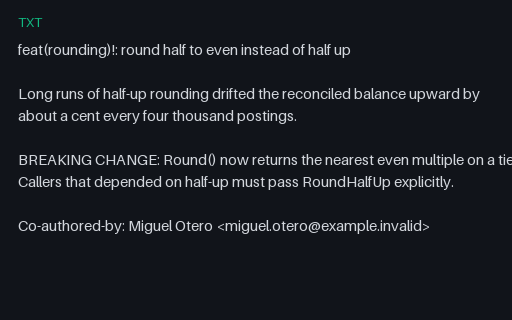
A breaking change announced twice, which the specification allows: a `!` after the scope and a `BREAKING CHANGE:` footer whose value continues onto a second line. Generators that stop a footer at the first newline lose half the sentence, and version bumpers that only look for one of the two markers under-bump the release.
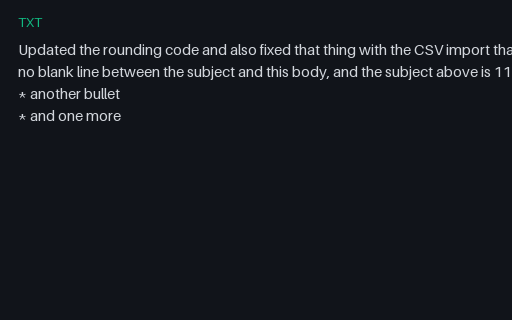
An intentionally invalid commit message that breaks four commitlint rules at once: no conventional type, a 116-character header, no blank line separating subject from body, and a body that starts mid-sentence. Every rule should fire independently, which is what makes this useful for checking that a linter reports all violations rather than stopping at the first.
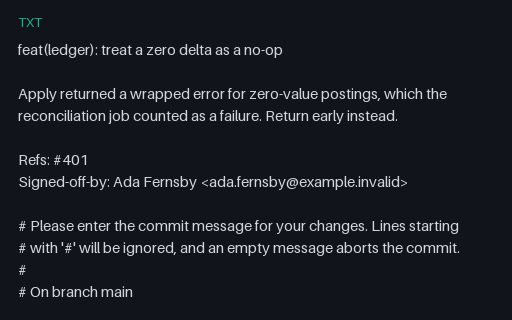
A commit message file exactly as `git commit` hands it to a commit-msg hook: a conventional subject, a wrapped body, two trailers, and git's own comment block that the hook must ignore. The subject is 43 characters, comfortably inside commitlint's default 72-character header limit.

A company letterhead with the name and address in a page header that repeats on every page and the website in the footer. Drop in your letter and the branding stays consistent.
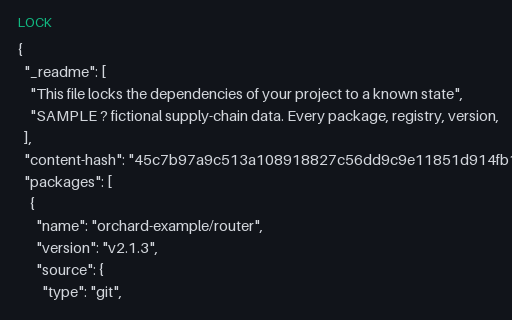
A PHP composer.lock in JSON, pinning each fictional package by both a git reference and a dist zip shasum, with a content-hash binding it to composer.json. Every package, version, hash and licence is fictional: the tree describes nothing real.
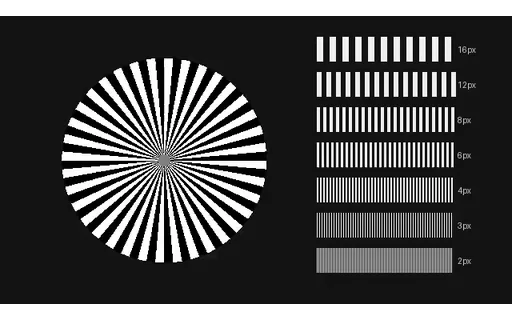
The detail-chart plate at CRF 28: mild artefacts. Encoded from the original frames rather than transcoded from the reference, so it carries exactly one generation of loss and the comparison is clean. On this plate the fine wedges collapse first, showing exactly which spatial frequencies the quantiser discarded.
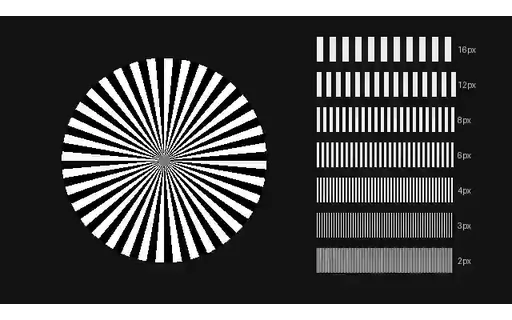
The detail-chart plate at CRF 36: clearly visible artefacts. Encoded from the original frames rather than transcoded from the reference, so it carries exactly one generation of loss and the comparison is clean. On this plate the fine wedges collapse first, showing exactly which spatial frequencies the quantiser discarded.
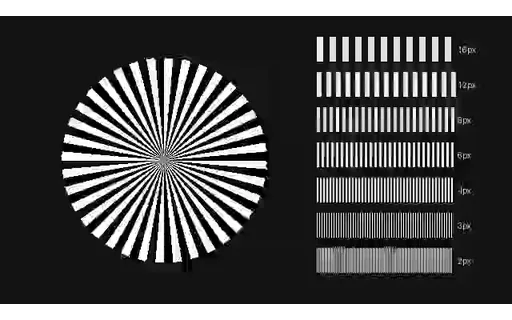
The detail-chart plate at CRF 44: severe artefacts. Encoded from the original frames rather than transcoded from the reference, so it carries exactly one generation of loss and the comparison is clean. On this plate the fine wedges collapse first, showing exactly which spatial frequencies the quantiser discarded.
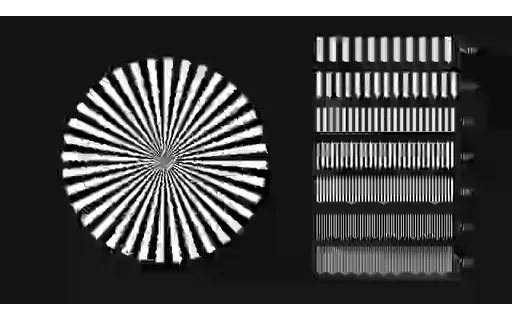
The detail-chart plate at CRF 51 (extreme), the codec's limit artefacts. Encoded from the original frames rather than transcoded from the reference, so it carries exactly one generation of loss and the comparison is clean. On this plate the fine wedges collapse first, showing exactly which spatial frequencies the quantiser discarded.

The gradient-sky plate at CRF 28: mild artefacts. Encoded from the original frames rather than transcoded from the reference, so it carries exactly one generation of loss and the comparison is clean. On this plate the damage shows as banding across the smooth gradient, which is the artefact viewers notice first and metrics score most poorly.

The gradient-sky plate at CRF 36: clearly visible artefacts. Encoded from the original frames rather than transcoded from the reference, so it carries exactly one generation of loss and the comparison is clean. On this plate the damage shows as banding across the smooth gradient, which is the artefact viewers notice first and metrics score most poorly.
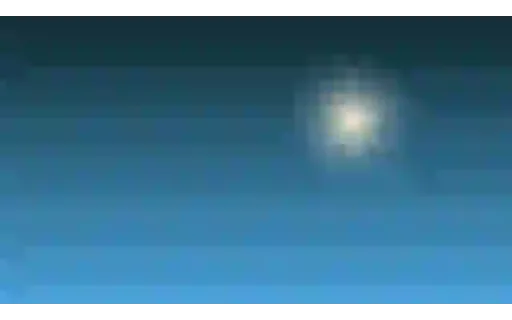
The gradient-sky plate at CRF 44: severe artefacts. Encoded from the original frames rather than transcoded from the reference, so it carries exactly one generation of loss and the comparison is clean. On this plate the damage shows as banding across the smooth gradient, which is the artefact viewers notice first and metrics score most poorly.
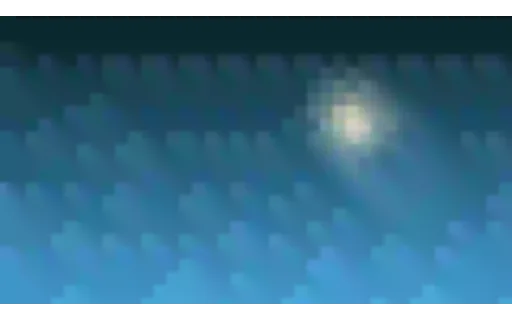
The gradient-sky plate at CRF 51 (extreme), the codec's limit artefacts. Encoded from the original frames rather than transcoded from the reference, so it carries exactly one generation of loss and the comparison is clean. On this plate the damage shows as banding across the smooth gradient, which is the artefact viewers notice first and metrics score most poorly.
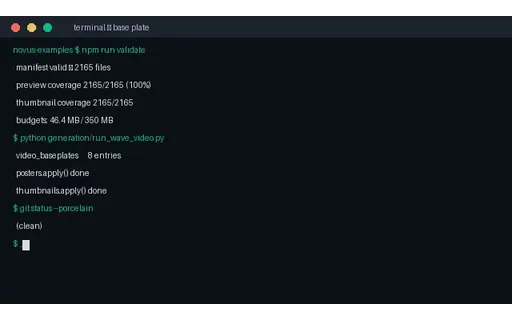
The text-motion plate at CRF 28: mild artefacts. Encoded from the original frames rather than transcoded from the reference, so it carries exactly one generation of loss and the comparison is clean. On this plate the damage shows as ringing around glyph edges, where legibility gives a pass/fail signal that needs no metric.
We use Google Analytics and show ads via Adsterra. Non-essential cookies and ad scripts run only after you allow the matching categories. See our cookie policy.