
kt
92 BKotlin Data Class
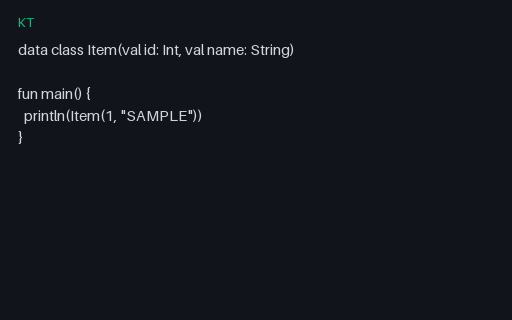
Kotlin data class SAMPLE for Kotlin language-server tests.
- File
- KT · Kotlin
- Use case
- Syntax highlightingCode parsing+1
Find files, editable templates and browser test targets by what you need to make or test. Explore complete business kits for connected records, templates and expected results.
Page 116 of 221; 24 results per page.
Kotlin data class SAMPLE for Kotlin language-server tests.
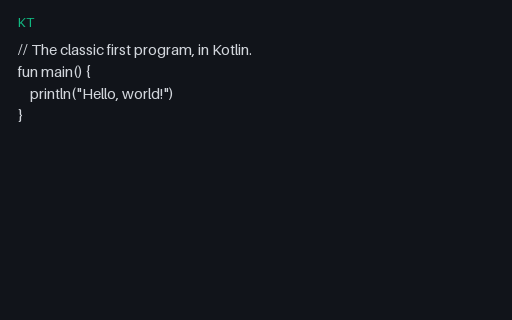
The classic hello-world in Kotlin (a top-level main function) for testing highlighters, the Kotlin compiler, and parsers.
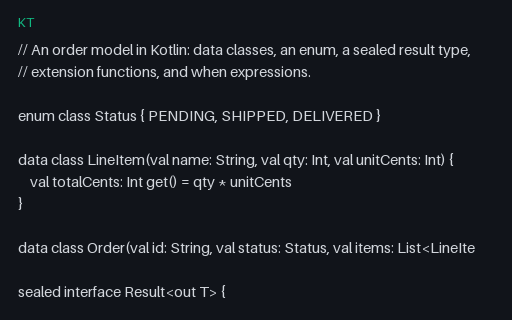
A realistic Kotlin snippet with data classes, an enum, a sealed result interface, extension functions, and when expressions, for testing highlighters, the Kotlin compiler, ktlint, and parsers.
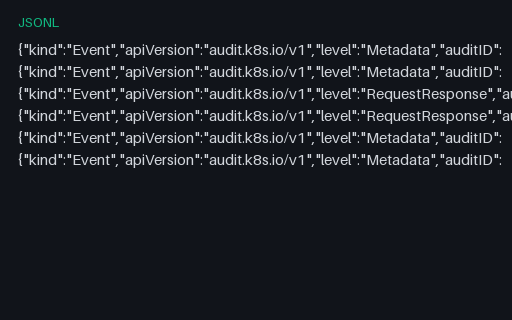
Six Kubernetes audit events at two audit levels, including one 403 whose authorization annotations record the forbid decision and its reason. The shape a cluster-audit alert or compliance report reads, with every user and service account invented.
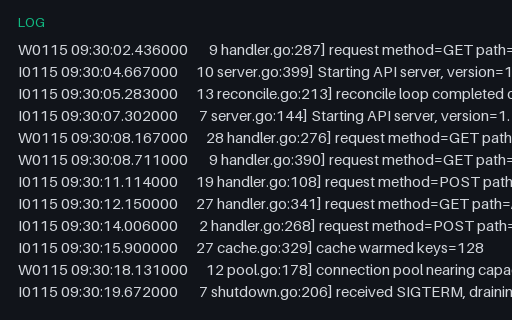
A Kubernetes-component log in the klog/glog format: a severity letter, timestamp, thread id, and source location prefix followed by the message. A fixture for testing klog parsers and severity extraction.
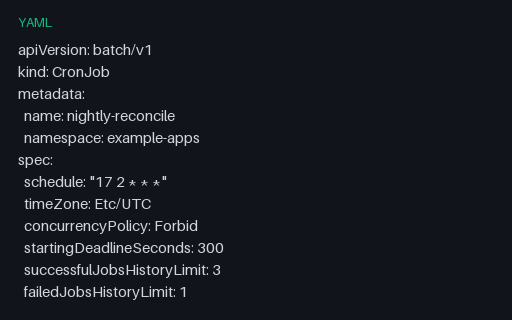
A CronJob with an explicit timeZone, Forbid concurrency, a starting deadline, and history limits on both success and failure. For testing cron parsing and the scheduling fields policy engines most often check.
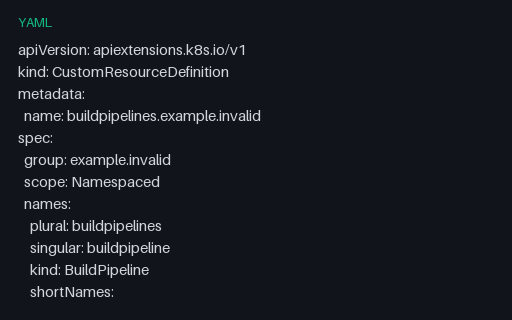
A CustomResourceDefinition carrying a deep structural OpenAPI v3 schema with a regex pattern, an enum, a default, and array minItems. Useful both as a CRD fixture and as a nested JSON-Schema-in-YAML validation target.
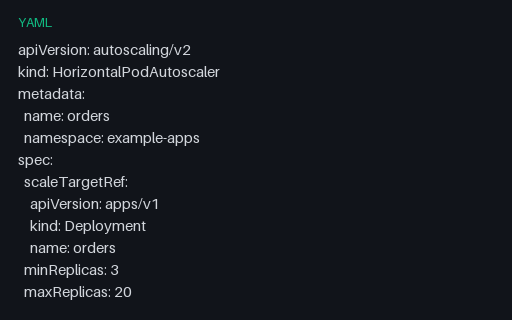
An autoscaling/v2 HPA with both a Resource and a Pods metric, plus scaleUp and scaleDown behaviour policies. The v2 metric shape differs sharply from v1 and v2beta, which is what makes it a useful conversion fixture.
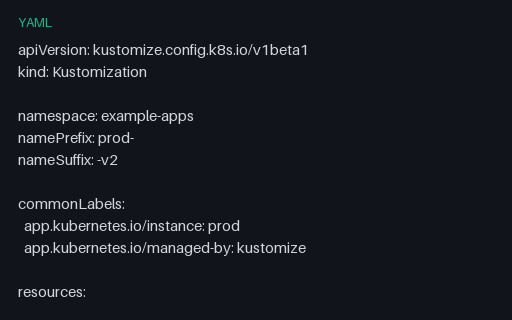
A Kustomize overlay with a name prefix and suffix, common labels, an image tag override, a configMapGenerator merge, and a JSON-6902 patch embedded as a block scalar: YAML inside YAML, which naive rewriters mangle.
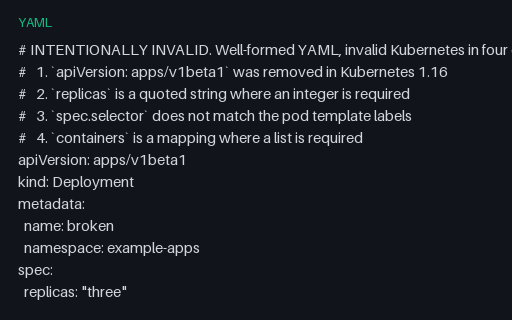
An intentionally invalid Kubernetes manifest: a removed apiVersion, a quoted string where replicas needs an integer, a selector that does not match the pod template, and containers as a mapping instead of a list. Four documented faults for a validator to report.
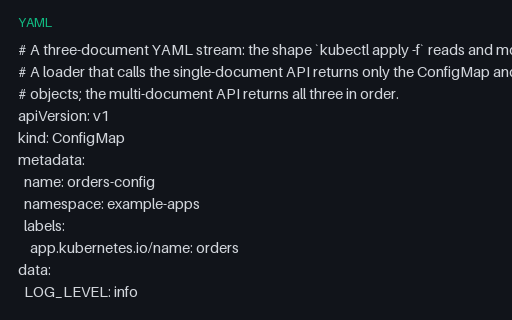
Three Kubernetes objects in one YAML stream, the shape kubectl apply consumes. A loader that calls the single-document API returns only the first object and silently drops the other two, which is exactly the failure this fixture is for.
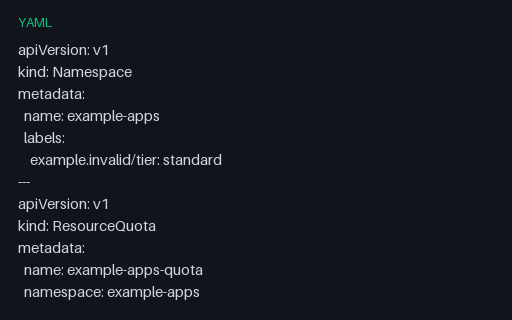
A three-document governance bundle. Its real edge case is quantity handling: values like "8", 16Gi and 250m are Kubernetes quantity strings, and a parser that coerces the quoted ones to numbers or normalises the suffixed ones changes their meaning.
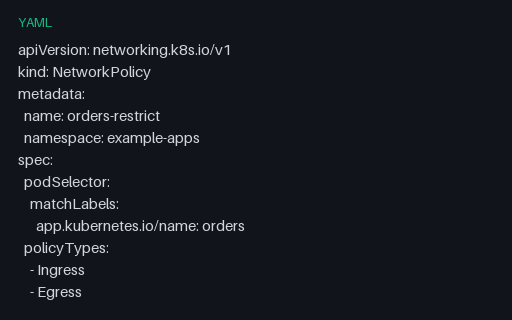
A NetworkPolicy with both policy types: an ingress rule combining namespace and pod selectors, and two egress rules, one of which uses an ipBlock with an except range. For testing policy engines that reason about allowed traffic.
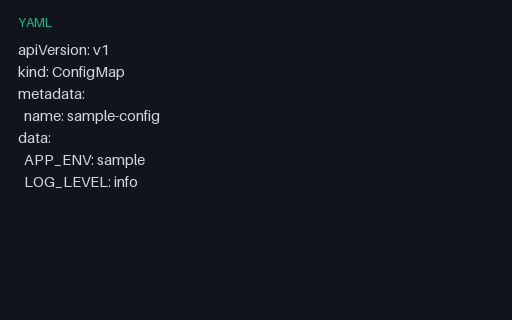
SAMPLE Kubernetes configmap manifest: fictional names, no real cluster secrets.
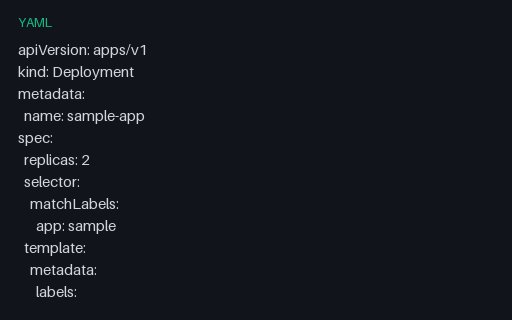
SAMPLE Kubernetes deployment manifest: fictional names, no real cluster secrets.
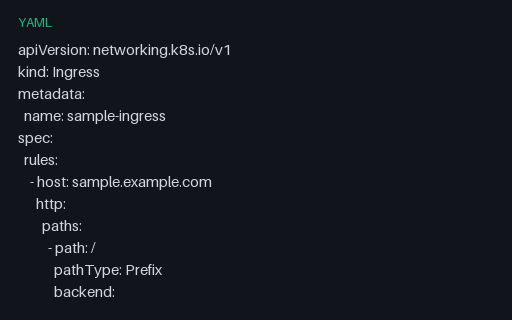
SAMPLE Kubernetes ingress manifest: fictional names, no real cluster secrets.
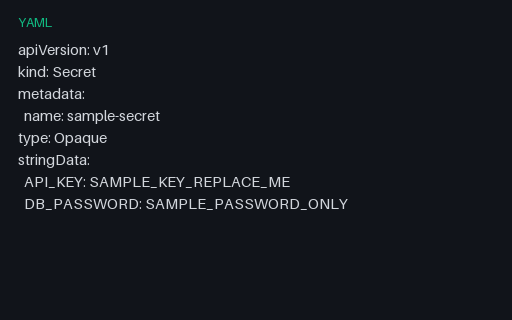
SAMPLE Kubernetes secret manifest: fictional names, no real cluster secrets.
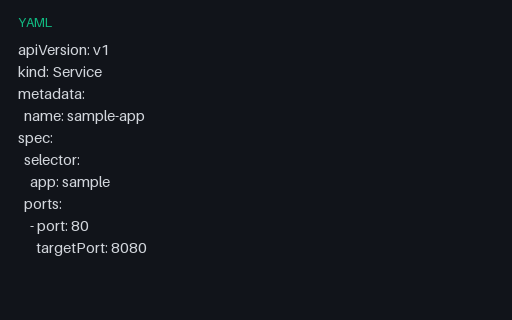
SAMPLE Kubernetes service manifest: fictional names, no real cluster secrets.
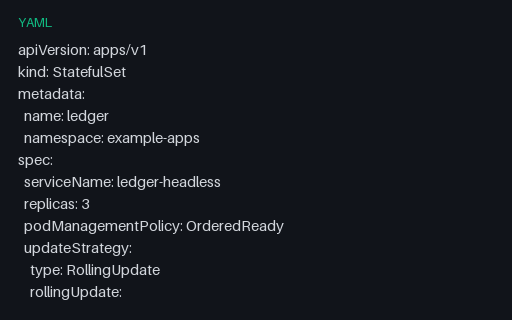
A StatefulSet with volumeClaimTemplates, an ordered pod-management policy, a partitioned rolling update, and a non-root pod security context. For testing manifest linters and admission policies that reason about storage and identity.
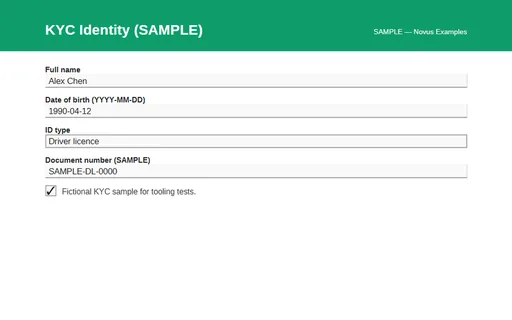
Fillable fictional KYC identity PDF for testing identity-form fields and consent checkboxes.
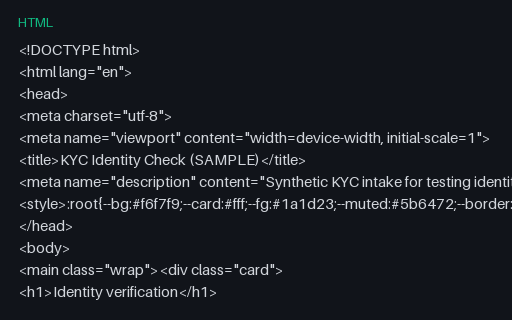
Know-your-customer style identity form with DOB, document type, and file upload: fictional SAMPLE IDs only.
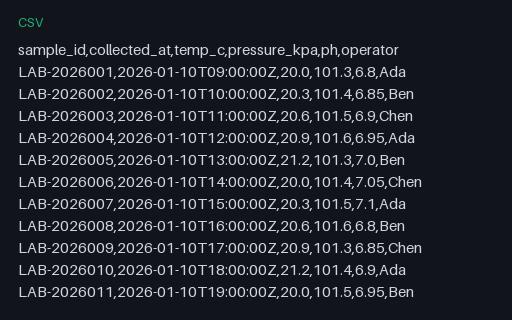
Synthetic lab readings (temperature, pressure, pH) with ISO timestamps for scientific ETL tests. CSV twin.
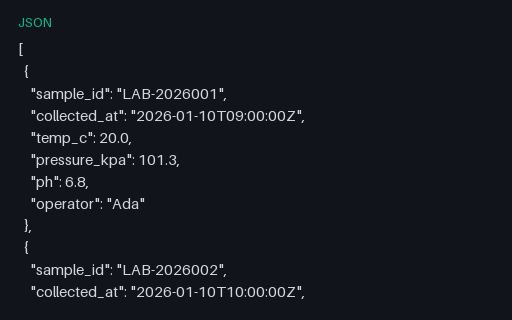
Synthetic lab readings (temperature, pressure, pH) with ISO timestamps for scientific ETL tests. JSON twin.
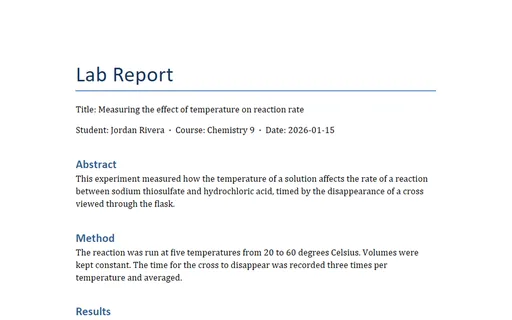
A science lab report following the standard abstract–method–results–discussion–conclusion structure, with a results table and realistic data: a template for students and educators.
We use Google Analytics and show ads via Adsterra. Non-essential cookies and ad scripts run only after you allow the matching categories. See our cookie policy.