Skip to content
Novus Examples

Explore the test library

Search files, editable visual templates, and live browser targets from one registry-backed directory. Filtered query views stay crawlable for links but are deliberately noindex; the stable taxonomy pages below remain the canonical search surfaces.

402 results

Page 6 of 17; 24 results per page.

Show the canonical directory
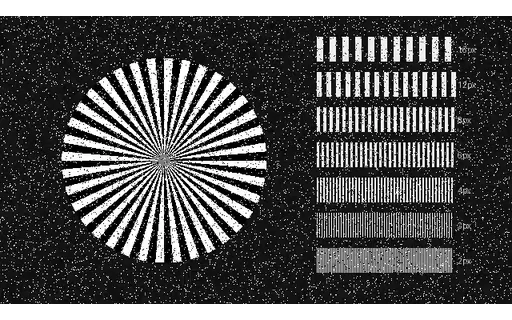
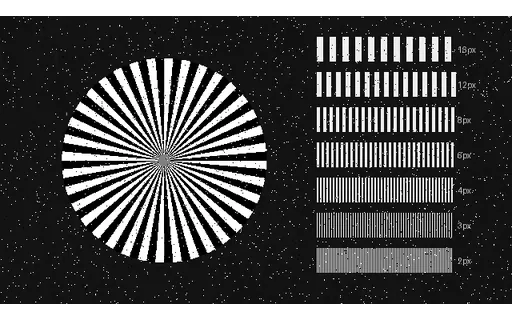
Preview of Denoise Input — detail-chart, Salt and pepper 2%
mp4
447.6 KB
Actual file preview for Denoise Input — detail-chart, Salt and pepper 2%

Denoise Input — detail-chart, Salt and pepper 2%

Salt and pepper 2% applied to the detail-chart base plate with seed 9068. Two per cent of pixels forced to pure black or white — impulse noise from sensor faults and transmission errors. Defeats Gaussian-assuming filters, which smear each spike instead of rejecting it. Paired with the clean ground truth in this group, so denoiser output can be scored numerically. Encoded at CRF 19, where the light noise could otherwise be confused with compression artefacts.

File
MP4 · Denoise · 640x360
Use case
Video denoiseVideo QA· Conversion set
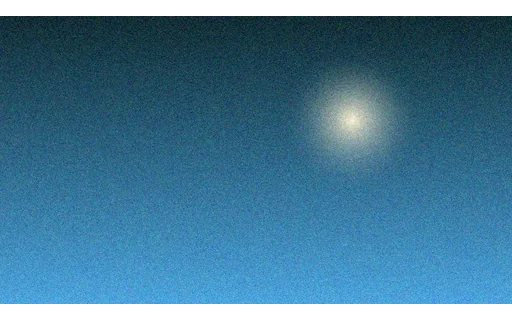
Preview of Denoise Input — detail-chart, Salt and pepper 8%
mp4
1 MB
Actual file preview for Denoise Input — detail-chart, Salt and pepper 8%

Denoise Input — detail-chart, Salt and pepper 8%

Salt and pepper 8% applied to the detail-chart base plate with seed 9085. Dense impulse noise. A median filter handles this trivially and a Gaussian one cannot, so it separates the two families of denoiser immediately. Paired with the clean ground truth in this group, so denoiser output can be scored numerically. Encoded at CRF 24 rather than 19: random noise is incompressible, and at this amplitude the codec's own artefacts sit far below the noise floor, so a coarser quantiser saves several megabytes without affecting any measurement.

File
MP4 · Denoise · 640x360
Use case
Video denoiseVideo QA· Conversion set
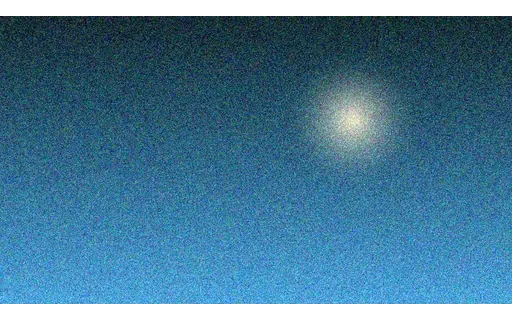
Preview of Denoise Input — gradient-sky, Gaussian σ=15
mp4
1.6 MB
Actual file preview for Denoise Input — gradient-sky, Gaussian σ=15

Denoise Input — gradient-sky, Gaussian σ=15

Gaussian σ=15 applied to the gradient-sky base plate with seed 9017. Moderate Gaussian noise, roughly a mid-ISO handheld shot. The level most denoise benchmarks use. Paired with the clean ground truth in this group, so denoiser output can be scored numerically. Encoded at CRF 19, where the light noise could otherwise be confused with compression artefacts.

File
MP4 · Denoise · 640x360
Use case
Video denoiseVideo QA· Conversion set
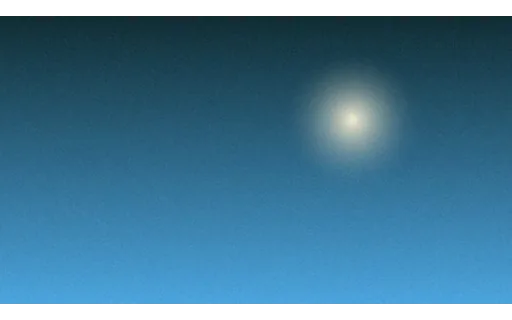
Preview of Denoise Input — gradient-sky, Gaussian σ=30
mp4
1.4 MB
Actual file preview for Denoise Input — gradient-sky, Gaussian σ=30

Denoise Input — gradient-sky, Gaussian σ=30

Gaussian σ=30 applied to the gradient-sky base plate with seed 9034. Heavy Gaussian noise where fine detail and noise overlap in amplitude, so recovery requires temporal information rather than spatial smoothing alone. Paired with the clean ground truth in this group, so denoiser output can be scored numerically. Encoded at CRF 24 rather than 19: random noise is incompressible, and at this amplitude the codec's own artefacts sit far below the noise floor, so a coarser quantiser saves several megabytes without affecting any measurement.

File
MP4 · Denoise · 640x360
Use case
Video denoiseVideo QA· Conversion set
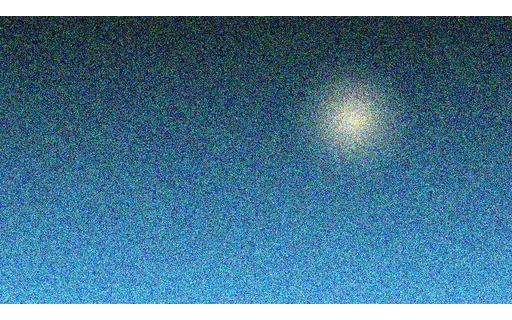
Preview of Denoise Input — gradient-sky, Gaussian σ=5
mp4
549.5 KB
Actual file preview for Denoise Input — gradient-sky, Gaussian σ=5

Denoise Input — gradient-sky, Gaussian σ=5

Gaussian σ=5 applied to the gradient-sky base plate with seed 9000. Light sensor noise — the level a modern camera produces at base ISO. Subtle enough that an over-aggressive denoiser does more damage than the noise did. Paired with the clean ground truth in this group, so denoiser output can be scored numerically. Encoded at CRF 19, where the light noise could otherwise be confused with compression artefacts.

File
MP4 · Denoise · 640x360
Use case
Video denoiseVideo QA· Conversion set
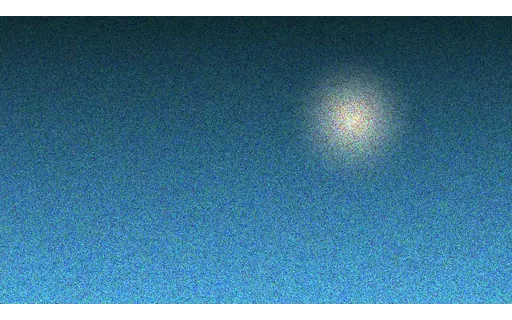
Preview of Denoise Input — gradient-sky, Gaussian σ=50
mp4
2 MB
Actual file preview for Denoise Input — gradient-sky, Gaussian σ=50

Denoise Input — gradient-sky, Gaussian σ=50

Gaussian σ=50 applied to the gradient-sky base plate with seed 9051. Severe noise approaching the signal level. Included as the failure case — most denoisers hallucinate structure here, which is exactly what the paired reference exposes. Paired with the clean ground truth in this group, so denoiser output can be scored numerically. Encoded at CRF 24 rather than 19: random noise is incompressible, and at this amplitude the codec's own artefacts sit far below the noise floor, so a coarser quantiser saves several megabytes without affecting any measurement.

File
MP4 · Denoise · 640x360
Use case
Video denoiseVideo QA· Conversion set
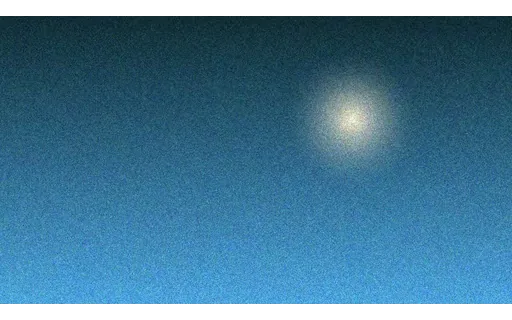
Preview of Denoise Input — gradient-sky, Multiplicative speckle
mp4
1.1 MB
Actual file preview for Denoise Input — gradient-sky, Multiplicative speckle

Denoise Input — gradient-sky, Multiplicative speckle

Multiplicative speckle applied to the gradient-sky base plate with seed 9102. Multiplicative rather than additive noise, so its amplitude scales with local brightness — the pattern seen in ultrasound and radar. Additive-noise models systematically under-correct highlights. Paired with the clean ground truth in this group, so denoiser output can be scored numerically. Encoded at CRF 24 rather than 19: random noise is incompressible, and at this amplitude the codec's own artefacts sit far below the noise floor, so a coarser quantiser saves several megabytes without affecting any measurement.

File
MP4 · Denoise · 640x360
Use case
Video denoiseVideo QA· Conversion set

Preview of Denoise Input — gradient-sky, Poisson shot noise
mp4
754.1 KB
Actual file preview for Denoise Input — gradient-sky, Poisson shot noise

Denoise Input — gradient-sky, Poisson shot noise

Poisson shot noise applied to the gradient-sky base plate with seed 9119. Photon shot noise, signal-dependent and the physically correct model for low-light capture. Dark regions are proportionally far noisier than bright ones. Paired with the clean ground truth in this group, so denoiser output can be scored numerically. Encoded at CRF 24 rather than 19: random noise is incompressible, and at this amplitude the codec's own artefacts sit far below the noise floor, so a coarser quantiser saves several megabytes without affecting any measurement.

File
MP4 · Denoise · 640x360
Use case
Video denoiseVideo QA· Conversion set
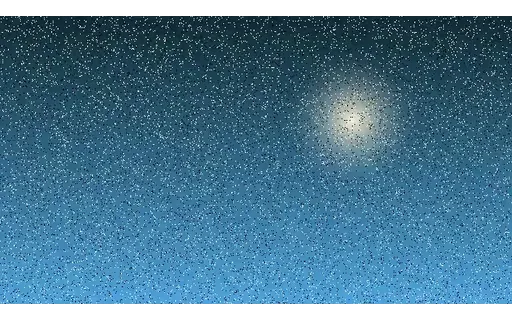
Preview of Denoise Input — gradient-sky, Salt and pepper 2%
mp4
651.2 KB
Actual file preview for Denoise Input — gradient-sky, Salt and pepper 2%

Denoise Input — gradient-sky, Salt and pepper 2%

Salt and pepper 2% applied to the gradient-sky base plate with seed 9068. Two per cent of pixels forced to pure black or white — impulse noise from sensor faults and transmission errors. Defeats Gaussian-assuming filters, which smear each spike instead of rejecting it. Paired with the clean ground truth in this group, so denoiser output can be scored numerically. Encoded at CRF 19, where the light noise could otherwise be confused with compression artefacts.

File
MP4 · Denoise · 640x360
Use case
Video denoiseVideo QA· Conversion set
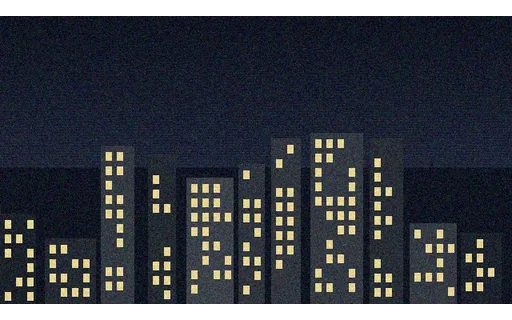
Preview of Denoise Input — gradient-sky, Salt and pepper 8%
mp4
1.2 MB
Actual file preview for Denoise Input — gradient-sky, Salt and pepper 8%

Denoise Input — gradient-sky, Salt and pepper 8%

Salt and pepper 8% applied to the gradient-sky base plate with seed 9085. Dense impulse noise. A median filter handles this trivially and a Gaussian one cannot, so it separates the two families of denoiser immediately. Paired with the clean ground truth in this group, so denoiser output can be scored numerically. Encoded at CRF 24 rather than 19: random noise is incompressible, and at this amplitude the codec's own artefacts sit far below the noise floor, so a coarser quantiser saves several megabytes without affecting any measurement.

File
MP4 · Denoise · 640x360
Use case
Video denoiseVideo QA· Conversion set
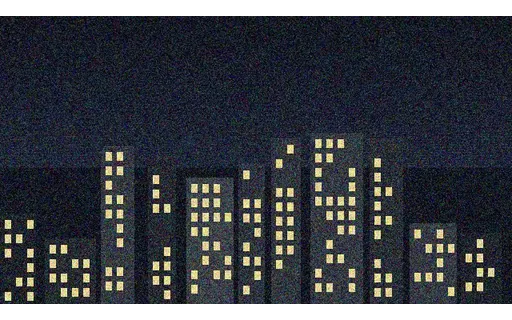
Preview of Denoise Input — pan-city, Gaussian σ=15
mp4
1.4 MB
Actual file preview for Denoise Input — pan-city, Gaussian σ=15

Denoise Input — pan-city, Gaussian σ=15

Gaussian σ=15 applied to the pan-city base plate with seed 9017. Moderate Gaussian noise, roughly a mid-ISO handheld shot. The level most denoise benchmarks use. Paired with the clean ground truth in this group, so denoiser output can be scored numerically. Encoded at CRF 19, where the light noise could otherwise be confused with compression artefacts.

File
MP4 · Denoise · 640x360
Use case
Video denoiseVideo QA· Conversion set
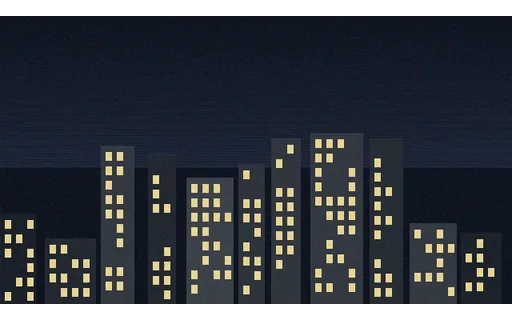
Preview of Denoise Input — pan-city, Gaussian σ=30
mp4
1.1 MB
Actual file preview for Denoise Input — pan-city, Gaussian σ=30

Denoise Input — pan-city, Gaussian σ=30

Gaussian σ=30 applied to the pan-city base plate with seed 9034. Heavy Gaussian noise where fine detail and noise overlap in amplitude, so recovery requires temporal information rather than spatial smoothing alone. Paired with the clean ground truth in this group, so denoiser output can be scored numerically. Encoded at CRF 24 rather than 19: random noise is incompressible, and at this amplitude the codec's own artefacts sit far below the noise floor, so a coarser quantiser saves several megabytes without affecting any measurement.

File
MP4 · Denoise · 640x360
Use case
Video denoiseVideo QA· Conversion set
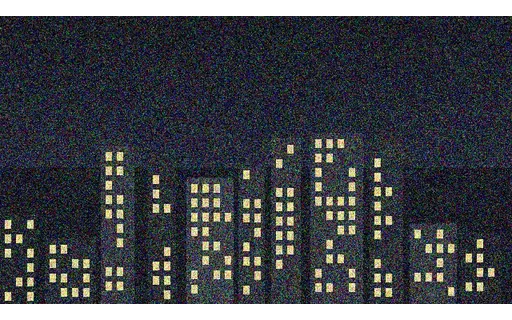
Preview of Denoise Input — pan-city, Gaussian σ=5
mp4
255.9 KB
Actual file preview for Denoise Input — pan-city, Gaussian σ=5

Denoise Input — pan-city, Gaussian σ=5

Gaussian σ=5 applied to the pan-city base plate with seed 9000. Light sensor noise — the level a modern camera produces at base ISO. Subtle enough that an over-aggressive denoiser does more damage than the noise did. Paired with the clean ground truth in this group, so denoiser output can be scored numerically. Encoded at CRF 19, where the light noise could otherwise be confused with compression artefacts.

File
MP4 · Denoise · 640x360
Use case
Video denoiseVideo QA· Conversion set
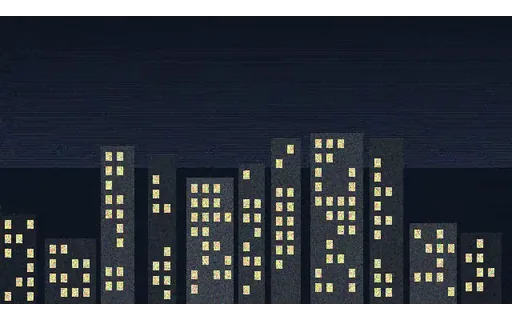
Preview of Denoise Input — pan-city, Gaussian σ=50
mp4
1.7 MB
Actual file preview for Denoise Input — pan-city, Gaussian σ=50

Denoise Input — pan-city, Gaussian σ=50

Gaussian σ=50 applied to the pan-city base plate with seed 9051. Severe noise approaching the signal level. Included as the failure case — most denoisers hallucinate structure here, which is exactly what the paired reference exposes. Paired with the clean ground truth in this group, so denoiser output can be scored numerically. Encoded at CRF 24 rather than 19: random noise is incompressible, and at this amplitude the codec's own artefacts sit far below the noise floor, so a coarser quantiser saves several megabytes without affecting any measurement.

File
MP4 · Denoise · 640x360
Use case
Video denoiseVideo QA· Conversion set
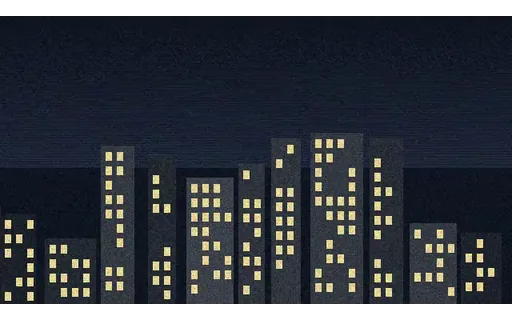
Preview of Denoise Input — pan-city, Multiplicative speckle
mp4
240.9 KB
Actual file preview for Denoise Input — pan-city, Multiplicative speckle

Denoise Input — pan-city, Multiplicative speckle

Multiplicative speckle applied to the pan-city base plate with seed 9102. Multiplicative rather than additive noise, so its amplitude scales with local brightness — the pattern seen in ultrasound and radar. Additive-noise models systematically under-correct highlights. Paired with the clean ground truth in this group, so denoiser output can be scored numerically. Encoded at CRF 24 rather than 19: random noise is incompressible, and at this amplitude the codec's own artefacts sit far below the noise floor, so a coarser quantiser saves several megabytes without affecting any measurement.

File
MP4 · Denoise · 640x360
Use case
Video denoiseVideo QA· Conversion set
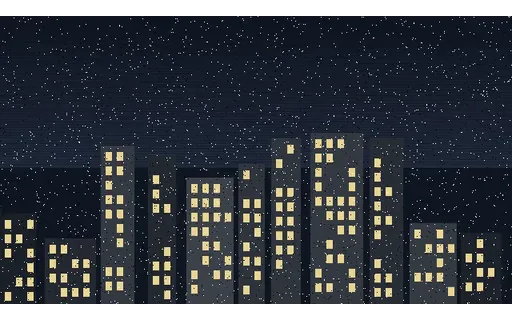
Preview of Denoise Input — pan-city, Poisson shot noise
mp4
199.8 KB
Actual file preview for Denoise Input — pan-city, Poisson shot noise

Denoise Input — pan-city, Poisson shot noise

Poisson shot noise applied to the pan-city base plate with seed 9119. Photon shot noise, signal-dependent and the physically correct model for low-light capture. Dark regions are proportionally far noisier than bright ones. Paired with the clean ground truth in this group, so denoiser output can be scored numerically. Encoded at CRF 24 rather than 19: random noise is incompressible, and at this amplitude the codec's own artefacts sit far below the noise floor, so a coarser quantiser saves several megabytes without affecting any measurement.

File
MP4 · Denoise · 640x360
Use case
Video denoiseVideo QA· Conversion set
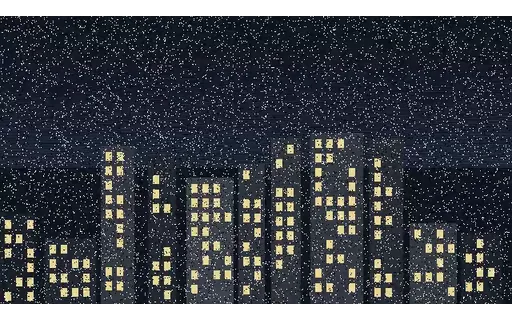
Preview of Denoise Input — pan-city, Salt and pepper 2%
mp4
531.1 KB
Actual file preview for Denoise Input — pan-city, Salt and pepper 2%

Denoise Input — pan-city, Salt and pepper 2%

Salt and pepper 2% applied to the pan-city base plate with seed 9068. Two per cent of pixels forced to pure black or white — impulse noise from sensor faults and transmission errors. Defeats Gaussian-assuming filters, which smear each spike instead of rejecting it. Paired with the clean ground truth in this group, so denoiser output can be scored numerically. Encoded at CRF 19, where the light noise could otherwise be confused with compression artefacts.

File
MP4 · Denoise · 640x360
Use case
Video denoiseVideo QA· Conversion set

Preview of Denoise Input — pan-city, Salt and pepper 8%
mp4
1 MB
Actual file preview for Denoise Input — pan-city, Salt and pepper 8%

Denoise Input — pan-city, Salt and pepper 8%

Salt and pepper 8% applied to the pan-city base plate with seed 9085. Dense impulse noise. A median filter handles this trivially and a Gaussian one cannot, so it separates the two families of denoiser immediately. Paired with the clean ground truth in this group, so denoiser output can be scored numerically. Encoded at CRF 24 rather than 19: random noise is incompressible, and at this amplitude the codec's own artefacts sit far below the noise floor, so a coarser quantiser saves several megabytes without affecting any measurement.

File
MP4 · Denoise · 640x360
Use case
Video denoiseVideo QA· Conversion set
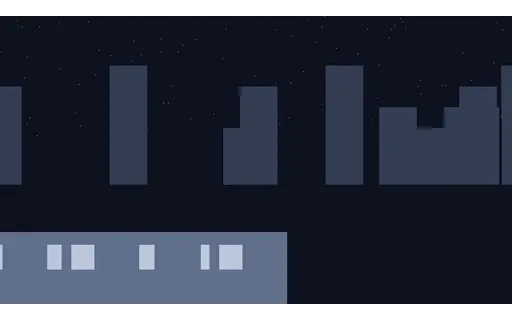
Preview of Depth Ground Truth — Layer Depth Map
mp4
10.3 KB
Actual file preview for Depth Ground Truth — Layer Depth Map

Depth Ground Truth — Layer Depth Map

The depth map for the parallax plate, encoded brighter-is-nearer across three layers. These values are not an estimate — they are derived from the layer velocities the generator used, so the depth ordering is exact by construction. Relative depth is what matters here: the layers move at 0.6, 2.4 and 6.0 pixels per frame, a 1 : 4 : 10 ratio.

File
MP4 · Depth · 640x360
Use case
Depth from videoVideo QA· Conversion set
Preview of Depth Input — Three-Layer Parallax Scene
mp4
17.8 KB
Actual file preview for Depth Input — Three-Layer Parallax Scene

Depth Input — Three-Layer Parallax Scene

Three planes translating at 0.6, 2.4 and 6.0 pixels per frame — a 1 : 4 : 10 velocity ratio that defines their relative depth by motion alone. There are no pictorial depth cues to fall back on: no perspective convergence, no shading, no familiar object sizes. A monocular depth model that has learned pictorial cues rather than motion parallax will do poorly here, which is precisely what makes the fixture informative.

File
MP4 · Depth · 640x360
Use case
Depth from videoFrame interpolation+1· Conversion set
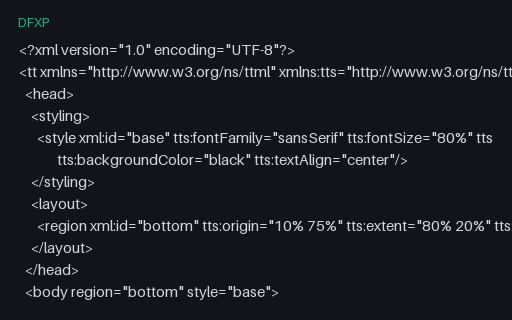
Preview of DFXP — TTML Under Its Other Extension
dfxp
1 KB
Actual file preview for DFXP — TTML Under Its Other Extension

DFXP — TTML Under Its Other Extension

Timed text as DFXP — byte-for-byte a TTML document, just under the extension Netflix, Adobe and older captioning tool-chains still use. Same tt root, same head/body/div/p structure, same styling and region attributes. It exists to check that a caption parser dispatches on document content rather than on the file extension: a parser that accepts .ttml but rejects an identical .dfxp is exactly the bug this catches.

File
DFXP · Captions Formats · 5 cues
Use case
Subtitle parsingConversion testing+1· Conversion set
Preview of Embedded Metadata — Cover Art (MP4)
mp4
35.2 KB
Actual file preview for Embedded Metadata — Cover Art (MP4)

Embedded Metadata — Cover Art (MP4)

Cover art embedded in an MP4 as a still JPEG carrying the `attached_pic` disposition. Note what that means structurally: the artwork is a *second video stream*, not a metadata field. That is the trap. A pipeline that maps 'the video stream' with `-map 0:v` picks up both and produces a file with a stray one-frame track; one that counts video streams to decide whether a file is a video reports two. Both are common, and neither shows up until a file with artwork arrives.

File
MP4 · Metadata · 8s
Use case
Media metadataVideo QA+1· Conversion set
Preview of Embedded Metadata — File Attachment (MKV)
mkv
25.9 KB
Actual file preview for Embedded Metadata — File Attachment (MKV)

Embedded Metadata — File Attachment (MKV)

A Matroska attachment: a whole file carried inside the container alongside the media, with its own filename and MIME type. In the wild this is how fonts travel with styled ASS subtitles, so that a rendering machine lacking the typeface still gets the right result. Extract it with `ffmpeg -dump_attachment:t:0 out.txt -i …`. Unlike the MP4 cover art in this group, an attachment is not a media stream — it demuxes as `codec_type=attachment` and has no frames, which is why remuxing to any container without an attachment concept discards it silently. The filename here is deliberately not `cover.jpg`. Matroska's cover-art convention is simply an attachment named `cover.*`, and FFmpeg and most players special-case that name and promote it to an `attached_pic` video stream. So the same bytes attached under two different filenames produce two different stream lists — a genuinely surprising result if you are counting streams to decide what a file contains.

File
MKV · Metadata · 8s
Use case
Media metadataVideo QA+1· Conversion set
Preview of Embedded Metadata — Fixed Creation Time (MP4)
mp4
26.9 KB
Actual file preview for Embedded Metadata — Fixed Creation Time (MP4)

Embedded Metadata — Fixed Creation Time (MP4)

A file with a known, fixed creation time — the field media libraries sort by, importers use to build folders, and forensic tools read first. Fixed rather than generated at build time, so re-running the generator produces byte-identical output and the published value never goes stale. Two behaviours worth testing against it. MP4 stores the `mvhd` timestamp in seconds since 1904 with no timezone, so anything that displays a local time is applying an assumption; and the stripped file in this group has no creation time at all, which is what a privacy-scrubbed file should look like.

File
MP4 · Metadata · 8s
Use case
Media metadataVideo QA+1· Conversion set