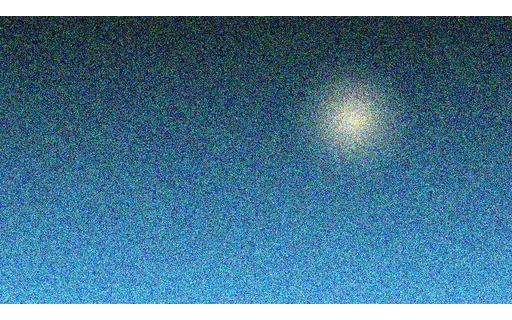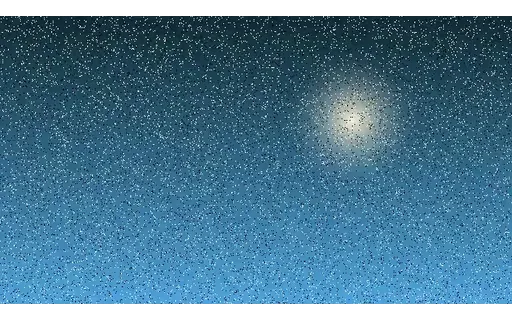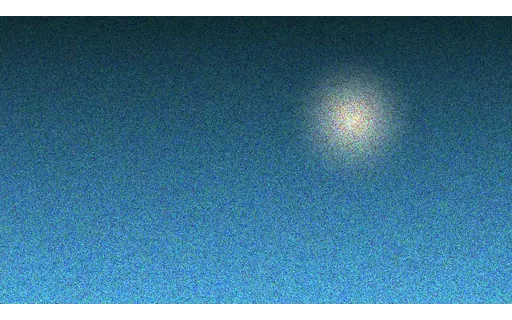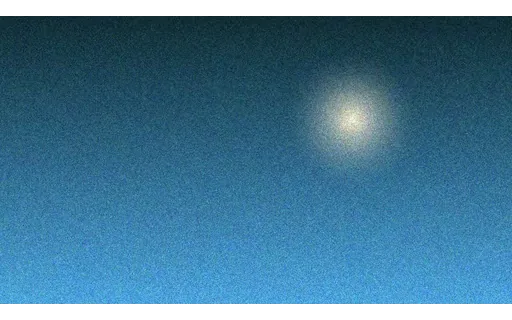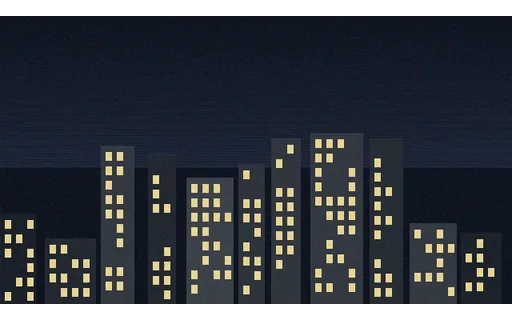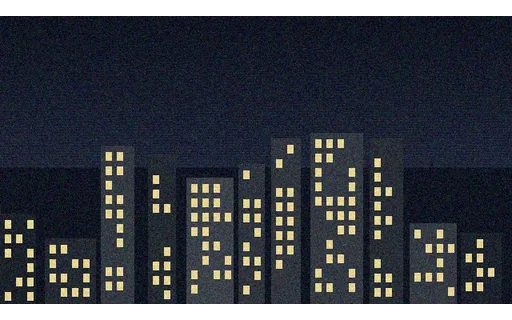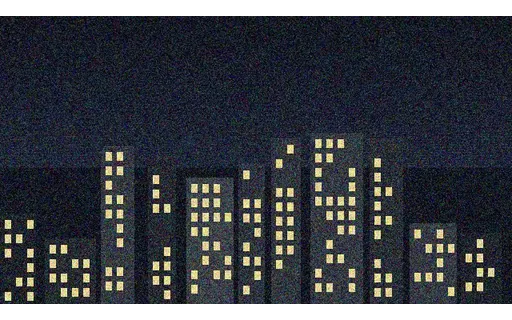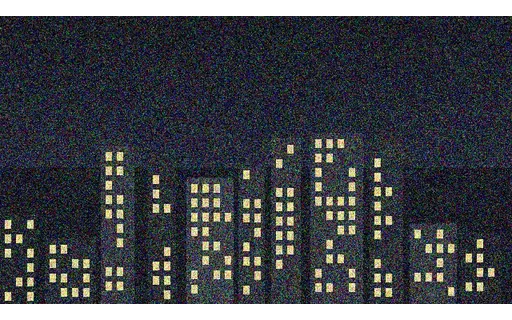
Clips degraded with documented noise type, sigma, and seed, each shipped beside the exact high-quality source it came from — so a denoiser's output can be scored, not eyeballed.
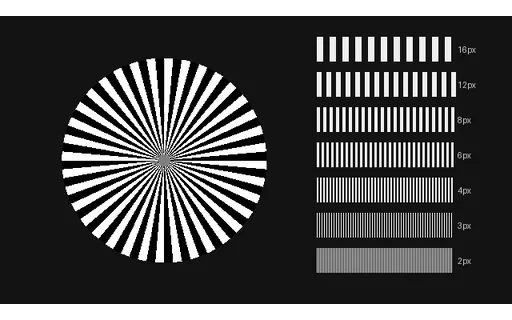
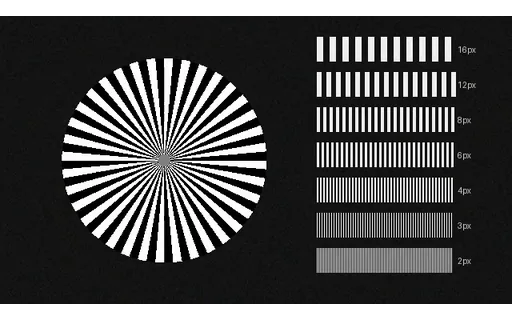
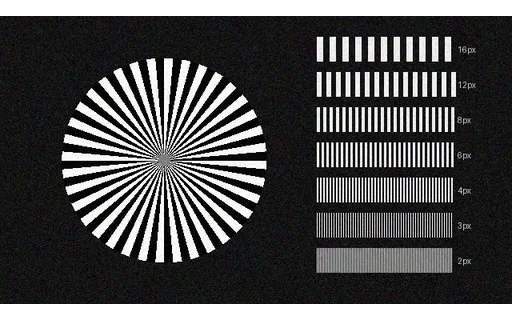
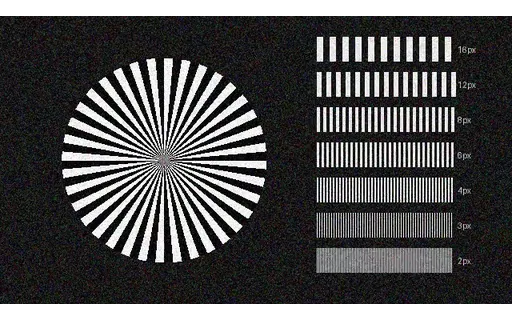
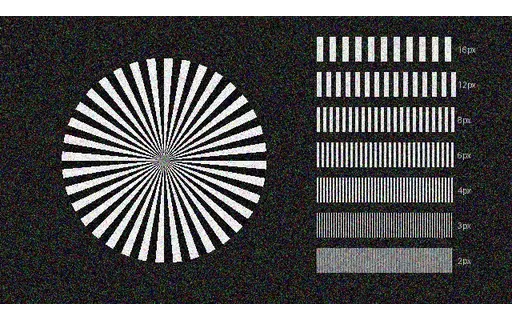
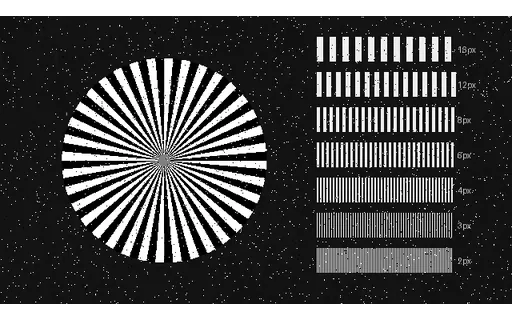
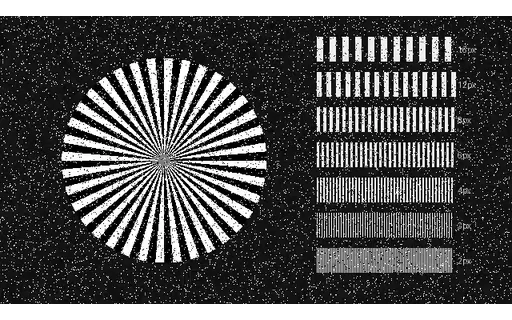
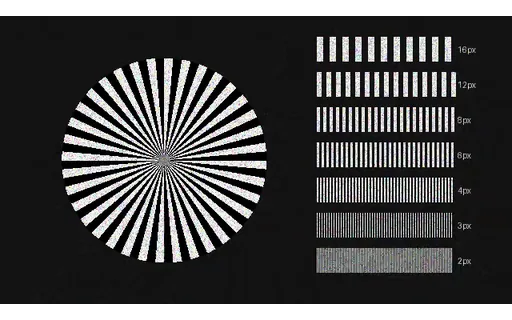
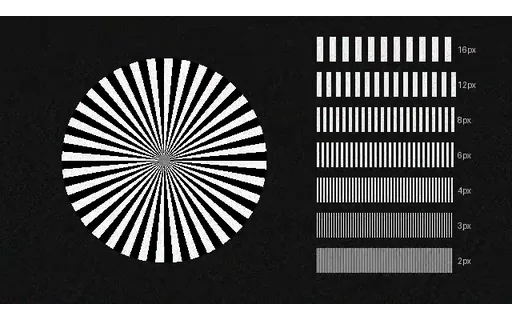
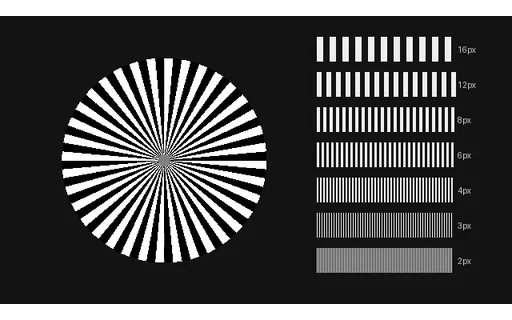
A 36-spoke Siemens star under a slow zoom, plus bar-pair wedges from 16 pixels down to 2. Detail runs right down to the Nyquist limit, which is exactly where super-resolution and denoise either recover structure or invent it. One of eight shared base plates: every AI-video suite in this library degrades one of these rather than inventing its own footage, so results across suites are comparable. Encoded at CRF 14 — well above the house CRF 30 — because a reference compressed as hard as the material under test puts the measurement floor above the effect being measured.
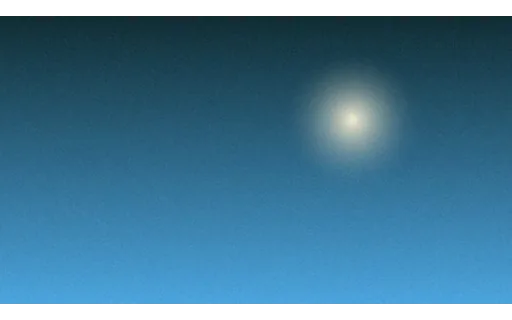
A smooth vertical gradient whose hue drifts across the clip, with one soft glow for structure. Almost no high-frequency detail, so it provokes banding and blocking in exactly the way flat skies do in real footage — the hardest case for a low-bitrate encoder. One of eight shared base plates: every AI-video suite in this library degrades one of these rather than inventing its own footage, so results across suites are comparable. Encoded at CRF 14 — well above the house CRF 30 — because a reference compressed as hard as the material under test puts the measurement floor above the effect being measured.
The clean reference for the detail-chart denoise set — no noise added, encoded at CRF 14. Every noisy clip in this group was produced from these exact pixels, so PSNR, SSIM and LPIPS against this file are meaningful rather than approximate.
Gaussian σ=5 applied to the detail-chart base plate with seed 9000. Light sensor noise — the level a modern camera produces at base ISO. Subtle enough that an over-aggressive denoiser does more damage than the noise did. Paired with the clean ground truth in this group, so denoiser output can be scored numerically. Encoded at CRF 19, where the light noise could otherwise be confused with compression artefacts.
Gaussian σ=15 applied to the detail-chart base plate with seed 9017. Moderate Gaussian noise, roughly a mid-ISO handheld shot. The level most denoise benchmarks use. Paired with the clean ground truth in this group, so denoiser output can be scored numerically. Encoded at CRF 19, where the light noise could otherwise be confused with compression artefacts.
Gaussian σ=30 applied to the detail-chart base plate with seed 9034. Heavy Gaussian noise where fine detail and noise overlap in amplitude, so recovery requires temporal information rather than spatial smoothing alone. Paired with the clean ground truth in this group, so denoiser output can be scored numerically. Encoded at CRF 24 rather than 19: random noise is incompressible, and at this amplitude the codec's own artefacts sit far below the noise floor, so a coarser quantiser saves several megabytes without affecting any measurement.
Gaussian σ=50 applied to the detail-chart base plate with seed 9051. Severe noise approaching the signal level. Included as the failure case — most denoisers hallucinate structure here, which is exactly what the paired reference exposes. Paired with the clean ground truth in this group, so denoiser output can be scored numerically. Encoded at CRF 24 rather than 19: random noise is incompressible, and at this amplitude the codec's own artefacts sit far below the noise floor, so a coarser quantiser saves several megabytes without affecting any measurement.
Salt and pepper 2% applied to the detail-chart base plate with seed 9068. Two per cent of pixels forced to pure black or white — impulse noise from sensor faults and transmission errors. Defeats Gaussian-assuming filters, which smear each spike instead of rejecting it. Paired with the clean ground truth in this group, so denoiser output can be scored numerically. Encoded at CRF 19, where the light noise could otherwise be confused with compression artefacts.
Salt and pepper 8% applied to the detail-chart base plate with seed 9085. Dense impulse noise. A median filter handles this trivially and a Gaussian one cannot, so it separates the two families of denoiser immediately. Paired with the clean ground truth in this group, so denoiser output can be scored numerically. Encoded at CRF 24 rather than 19: random noise is incompressible, and at this amplitude the codec's own artefacts sit far below the noise floor, so a coarser quantiser saves several megabytes without affecting any measurement.
Multiplicative speckle applied to the detail-chart base plate with seed 9102. Multiplicative rather than additive noise, so its amplitude scales with local brightness — the pattern seen in ultrasound and radar. Additive-noise models systematically under-correct highlights. Paired with the clean ground truth in this group, so denoiser output can be scored numerically. Encoded at CRF 24 rather than 19: random noise is incompressible, and at this amplitude the codec's own artefacts sit far below the noise floor, so a coarser quantiser saves several megabytes without affecting any measurement.
Poisson shot noise applied to the detail-chart base plate with seed 9119. Photon shot noise, signal-dependent and the physically correct model for low-light capture. Dark regions are proportionally far noisier than bright ones. Paired with the clean ground truth in this group, so denoiser output can be scored numerically. Encoded at CRF 24 rather than 19: random noise is incompressible, and at this amplitude the codec's own artefacts sit far below the noise floor, so a coarser quantiser saves several megabytes without affecting any measurement.
The clean reference for the gradient-sky denoise set — no noise added, encoded at CRF 14. Every noisy clip in this group was produced from these exact pixels, so PSNR, SSIM and LPIPS against this file are meaningful rather than approximate.
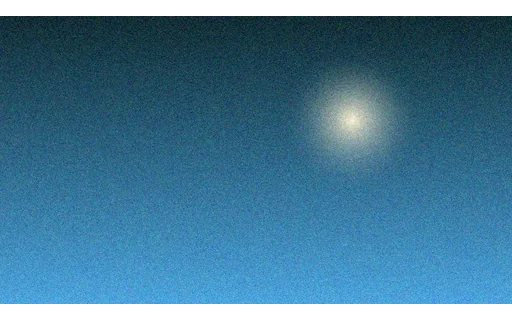
Gaussian σ=5 applied to the gradient-sky base plate with seed 9000. Light sensor noise — the level a modern camera produces at base ISO. Subtle enough that an over-aggressive denoiser does more damage than the noise did. Paired with the clean ground truth in this group, so denoiser output can be scored numerically. Encoded at CRF 19, where the light noise could otherwise be confused with compression artefacts.
Gaussian σ=15 applied to the gradient-sky base plate with seed 9017. Moderate Gaussian noise, roughly a mid-ISO handheld shot. The level most denoise benchmarks use. Paired with the clean ground truth in this group, so denoiser output can be scored numerically. Encoded at CRF 19, where the light noise could otherwise be confused with compression artefacts.
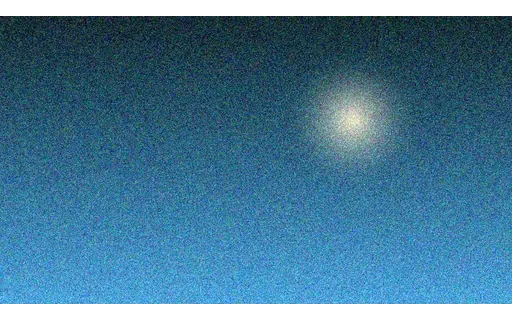
Gaussian σ=30 applied to the gradient-sky base plate with seed 9034. Heavy Gaussian noise where fine detail and noise overlap in amplitude, so recovery requires temporal information rather than spatial smoothing alone. Paired with the clean ground truth in this group, so denoiser output can be scored numerically. Encoded at CRF 24 rather than 19: random noise is incompressible, and at this amplitude the codec's own artefacts sit far below the noise floor, so a coarser quantiser saves several megabytes without affecting any measurement.
Gaussian σ=50 applied to the gradient-sky base plate with seed 9051. Severe noise approaching the signal level. Included as the failure case — most denoisers hallucinate structure here, which is exactly what the paired reference exposes. Paired with the clean ground truth in this group, so denoiser output can be scored numerically. Encoded at CRF 24 rather than 19: random noise is incompressible, and at this amplitude the codec's own artefacts sit far below the noise floor, so a coarser quantiser saves several megabytes without affecting any measurement.
Salt and pepper 2% applied to the gradient-sky base plate with seed 9068. Two per cent of pixels forced to pure black or white — impulse noise from sensor faults and transmission errors. Defeats Gaussian-assuming filters, which smear each spike instead of rejecting it. Paired with the clean ground truth in this group, so denoiser output can be scored numerically. Encoded at CRF 19, where the light noise could otherwise be confused with compression artefacts.
Salt and pepper 8% applied to the gradient-sky base plate with seed 9085. Dense impulse noise. A median filter handles this trivially and a Gaussian one cannot, so it separates the two families of denoiser immediately. Paired with the clean ground truth in this group, so denoiser output can be scored numerically. Encoded at CRF 24 rather than 19: random noise is incompressible, and at this amplitude the codec's own artefacts sit far below the noise floor, so a coarser quantiser saves several megabytes without affecting any measurement.
Multiplicative speckle applied to the gradient-sky base plate with seed 9102. Multiplicative rather than additive noise, so its amplitude scales with local brightness — the pattern seen in ultrasound and radar. Additive-noise models systematically under-correct highlights. Paired with the clean ground truth in this group, so denoiser output can be scored numerically. Encoded at CRF 24 rather than 19: random noise is incompressible, and at this amplitude the codec's own artefacts sit far below the noise floor, so a coarser quantiser saves several megabytes without affecting any measurement.
Poisson shot noise applied to the gradient-sky base plate with seed 9119. Photon shot noise, signal-dependent and the physically correct model for low-light capture. Dark regions are proportionally far noisier than bright ones. Paired with the clean ground truth in this group, so denoiser output can be scored numerically. Encoded at CRF 24 rather than 19: random noise is incompressible, and at this amplitude the codec's own artefacts sit far below the noise floor, so a coarser quantiser saves several megabytes without affecting any measurement.
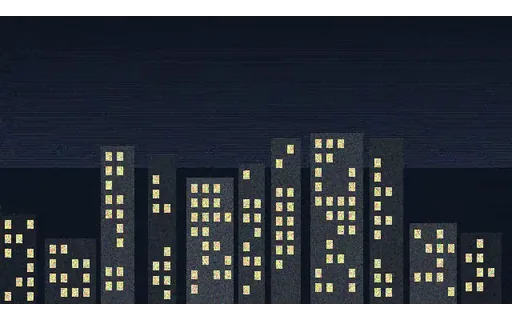
The clean reference for the pan-city denoise set — no noise added, encoded at CRF 14. Every noisy clip in this group was produced from these exact pixels, so PSNR, SSIM and LPIPS against this file are meaningful rather than approximate.
Gaussian σ=5 applied to the pan-city base plate with seed 9000. Light sensor noise — the level a modern camera produces at base ISO. Subtle enough that an over-aggressive denoiser does more damage than the noise did. Paired with the clean ground truth in this group, so denoiser output can be scored numerically. Encoded at CRF 19, where the light noise could otherwise be confused with compression artefacts.
Gaussian σ=15 applied to the pan-city base plate with seed 9017. Moderate Gaussian noise, roughly a mid-ISO handheld shot. The level most denoise benchmarks use. Paired with the clean ground truth in this group, so denoiser output can be scored numerically. Encoded at CRF 19, where the light noise could otherwise be confused with compression artefacts.
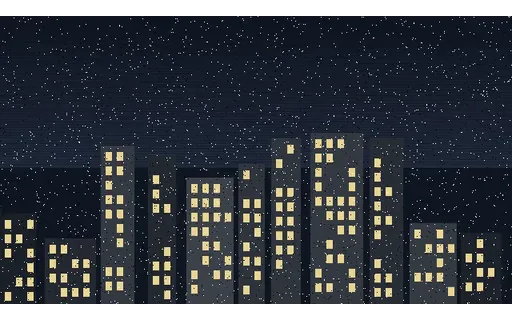
Gaussian σ=30 applied to the pan-city base plate with seed 9034. Heavy Gaussian noise where fine detail and noise overlap in amplitude, so recovery requires temporal information rather than spatial smoothing alone. Paired with the clean ground truth in this group, so denoiser output can be scored numerically. Encoded at CRF 24 rather than 19: random noise is incompressible, and at this amplitude the codec's own artefacts sit far below the noise floor, so a coarser quantiser saves several megabytes without affecting any measurement.
Gaussian σ=50 applied to the pan-city base plate with seed 9051. Severe noise approaching the signal level. Included as the failure case — most denoisers hallucinate structure here, which is exactly what the paired reference exposes. Paired with the clean ground truth in this group, so denoiser output can be scored numerically. Encoded at CRF 24 rather than 19: random noise is incompressible, and at this amplitude the codec's own artefacts sit far below the noise floor, so a coarser quantiser saves several megabytes without affecting any measurement.
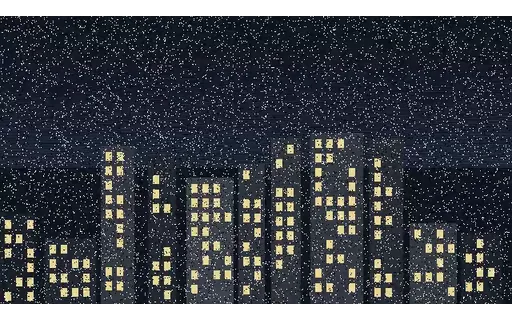
Salt and pepper 2% applied to the pan-city base plate with seed 9068. Two per cent of pixels forced to pure black or white — impulse noise from sensor faults and transmission errors. Defeats Gaussian-assuming filters, which smear each spike instead of rejecting it. Paired with the clean ground truth in this group, so denoiser output can be scored numerically. Encoded at CRF 19, where the light noise could otherwise be confused with compression artefacts.
Salt and pepper 8% applied to the pan-city base plate with seed 9085. Dense impulse noise. A median filter handles this trivially and a Gaussian one cannot, so it separates the two families of denoiser immediately. Paired with the clean ground truth in this group, so denoiser output can be scored numerically. Encoded at CRF 24 rather than 19: random noise is incompressible, and at this amplitude the codec's own artefacts sit far below the noise floor, so a coarser quantiser saves several megabytes without affecting any measurement.
Multiplicative speckle applied to the pan-city base plate with seed 9102. Multiplicative rather than additive noise, so its amplitude scales with local brightness — the pattern seen in ultrasound and radar. Additive-noise models systematically under-correct highlights. Paired with the clean ground truth in this group, so denoiser output can be scored numerically. Encoded at CRF 24 rather than 19: random noise is incompressible, and at this amplitude the codec's own artefacts sit far below the noise floor, so a coarser quantiser saves several megabytes without affecting any measurement.
Poisson shot noise applied to the pan-city base plate with seed 9119. Photon shot noise, signal-dependent and the physically correct model for low-light capture. Dark regions are proportionally far noisier than bright ones. Paired with the clean ground truth in this group, so denoiser output can be scored numerically. Encoded at CRF 24 rather than 19: random noise is incompressible, and at this amplitude the codec's own artefacts sit far below the noise floor, so a coarser quantiser saves several megabytes without affecting any measurement.
We use Google Analytics and show ads via Adsterra and Infolinks. Non-essential cookies and ad scripts run only after you allow the matching categories. See our cookie policy.