Skip to content
Novus Examples

Downscaled clips with their full-resolution ground truth

Low-resolution clips produced from a documented high-quality source by a recorded filter, so super-resolution output can be measured against the original rather than judged by eye.

31 of 31 files
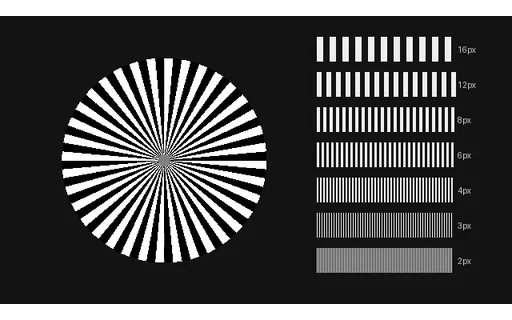
Preview of Base Plate — Detail — Siemens Star and Frequency Wedges
mp4
68.3 KB

Base Plate — Detail — Siemens Star and Frequency Wedges

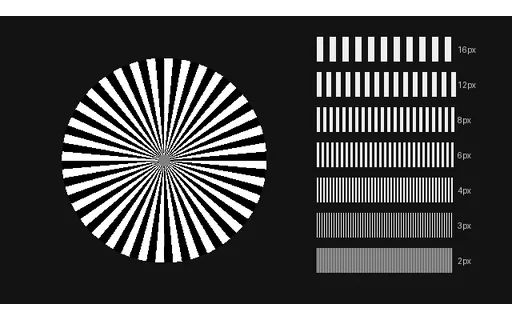
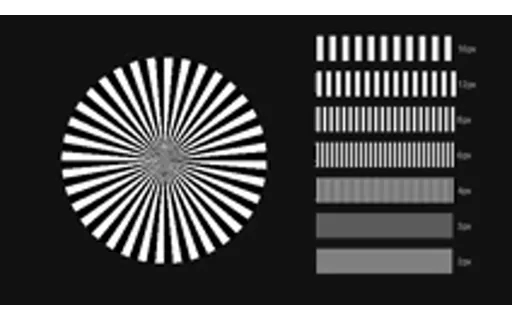
A 36-spoke Siemens star under a slow zoom, plus bar-pair wedges from 16 pixels down to 2. Detail runs right down to the Nyquist limit, which is exactly where super-resolution and denoise either recover structure or invent it. One of eight shared base plates: every AI-video suite in this library degrades one of these rather than inventing its own footage, so results across suites are comparable. Encoded at CRF 14 — well above the house CRF 30 — because a reference compressed as hard as the material under test puts the measurement floor above the effect being measured.

Preview of Super-Resolution Ground Truth — detail-chart
mp4
68.3 KB

Super-Resolution Ground Truth — detail-chart

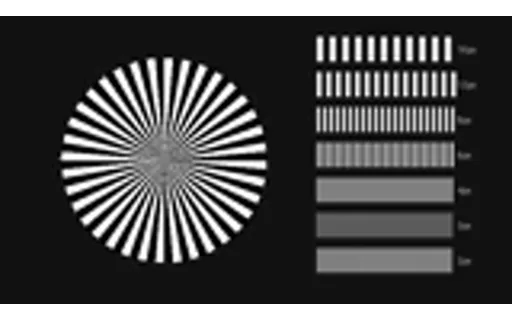
The full-resolution reference for the detail-chart super-resolution set at 640x360. Every low-resolution input in this group was produced by downscaling these exact pixels with a recorded filter, so an upscaler's output can be compared against the true original instead of against another upscale.

Preview of Super-Resolution Input — detail-chart, ÷2 Bicubic
mp4
32.8 KB

Super-Resolution Input — detail-chart, ÷2 Bicubic

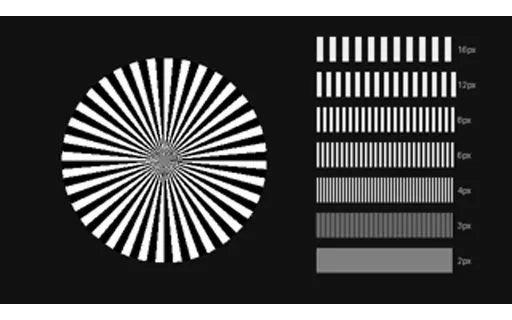
The detail-chart plate downscaled 2× to 320x180 using a bicubic filter. The standard downscale in most benchmarks. Mild ringing at edges, and the filter most super-resolution models are trained to invert — so it flatters them. Upscale it back to 640x360 and score against the ground truth in this group — the filter is recorded because which one was used changes the difficulty far more than the scale factor does.

Preview of Super-Resolution Input — detail-chart, ÷2 Area / box
mp4
34.6 KB

Super-Resolution Input — detail-chart, ÷2 Area / box

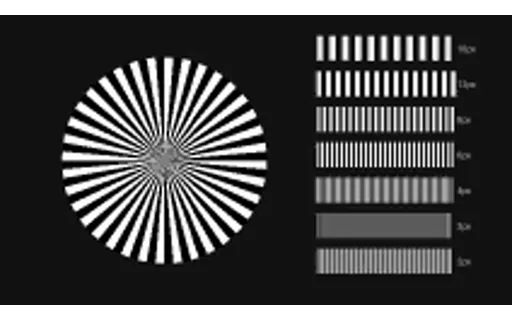
The detail-chart plate downscaled 2× to 320x180 using a area / box filter. Simple pixel averaging, what a camera's binning path actually does. Softer than bicubic and not what most models saw in training, which makes it a fairer test. Upscale it back to 640x360 and score against the ground truth in this group — the filter is recorded because which one was used changes the difficulty far more than the scale factor does.

Preview of Super-Resolution Input — detail-chart, ÷2 Nearest neighbour
mp4
28.6 KB

Super-Resolution Input — detail-chart, ÷2 Nearest neighbour

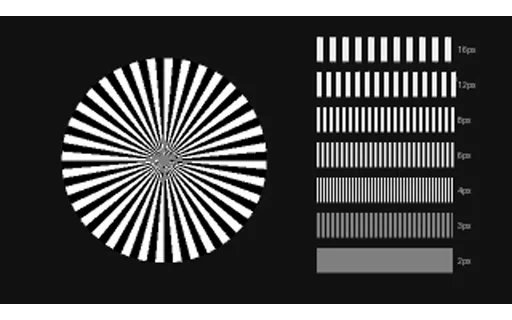
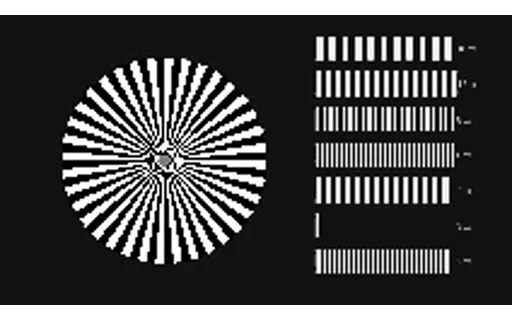
The detail-chart plate downscaled 2× to 320x180 using a nearest neighbour filter. Point sampling with no filtering at all, so downscaling aliases hard. The Siemens star folds into moiré, and no amount of upscaling can recover what aliasing destroyed. Upscale it back to 640x360 and score against the ground truth in this group — the filter is recorded because which one was used changes the difficulty far more than the scale factor does.

Preview of Super-Resolution Input — detail-chart, ÷3 Bicubic
mp4
20.8 KB

Super-Resolution Input — detail-chart, ÷3 Bicubic

The detail-chart plate downscaled 3× to 212x120 using a bicubic filter. The standard downscale in most benchmarks. Mild ringing at edges, and the filter most super-resolution models are trained to invert — so it flatters them. Upscale it back to 640x360 and score against the ground truth in this group — the filter is recorded because which one was used changes the difficulty far more than the scale factor does.

Preview of Super-Resolution Input — detail-chart, ÷3 Area / box
mp4
22.1 KB

Super-Resolution Input — detail-chart, ÷3 Area / box

The detail-chart plate downscaled 3× to 212x120 using a area / box filter. Simple pixel averaging, what a camera's binning path actually does. Softer than bicubic and not what most models saw in training, which makes it a fairer test. Upscale it back to 640x360 and score against the ground truth in this group — the filter is recorded because which one was used changes the difficulty far more than the scale factor does.

Preview of Super-Resolution Input — detail-chart, ÷3 Nearest neighbour
mp4
17.4 KB

Super-Resolution Input — detail-chart, ÷3 Nearest neighbour

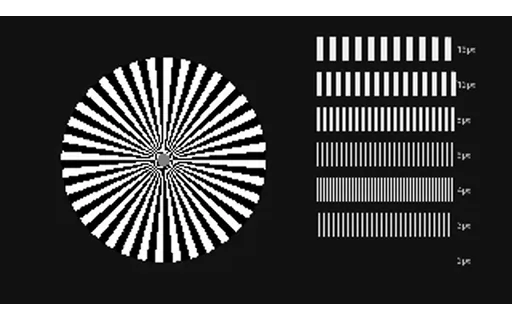
The detail-chart plate downscaled 3× to 212x120 using a nearest neighbour filter. Point sampling with no filtering at all, so downscaling aliases hard. The Siemens star folds into moiré, and no amount of upscaling can recover what aliasing destroyed. Upscale it back to 640x360 and score against the ground truth in this group — the filter is recorded because which one was used changes the difficulty far more than the scale factor does.

Preview of Super-Resolution Input — detail-chart, ÷4 Bicubic
mp4
14.6 KB

Super-Resolution Input — detail-chart, ÷4 Bicubic

The detail-chart plate downscaled 4× to 160x90 using a bicubic filter. The standard downscale in most benchmarks. Mild ringing at edges, and the filter most super-resolution models are trained to invert — so it flatters them. Upscale it back to 640x360 and score against the ground truth in this group — the filter is recorded because which one was used changes the difficulty far more than the scale factor does.

Preview of Super-Resolution Input — detail-chart, ÷4 Area / box
mp4
15.5 KB

Super-Resolution Input — detail-chart, ÷4 Area / box

The detail-chart plate downscaled 4× to 160x90 using a area / box filter. Simple pixel averaging, what a camera's binning path actually does. Softer than bicubic and not what most models saw in training, which makes it a fairer test. Upscale it back to 640x360 and score against the ground truth in this group — the filter is recorded because which one was used changes the difficulty far more than the scale factor does.

Preview of Super-Resolution Input — detail-chart, ÷4 Nearest neighbour
mp4
12.4 KB

Super-Resolution Input — detail-chart, ÷4 Nearest neighbour

The detail-chart plate downscaled 4× to 160x90 using a nearest neighbour filter. Point sampling with no filtering at all, so downscaling aliases hard. The Siemens star folds into moiré, and no amount of upscaling can recover what aliasing destroyed. Upscale it back to 640x360 and score against the ground truth in this group — the filter is recorded because which one was used changes the difficulty far more than the scale factor does.

Preview of Super-Resolution Ground Truth — text-motion
mp4
37.7 KB

Super-Resolution Ground Truth — text-motion

The full-resolution reference for the text-motion super-resolution set at 640x360. Every low-resolution input in this group was produced by downscaling these exact pixels with a recorded filter, so an upscaler's output can be compared against the true original instead of against another upscale.

Preview of Super-Resolution Input — text-motion, ÷2 Bicubic
mp4
18.5 KB

Super-Resolution Input — text-motion, ÷2 Bicubic

The text-motion plate downscaled 2× to 320x180 using a bicubic filter. The standard downscale in most benchmarks. Mild ringing at edges, and the filter most super-resolution models are trained to invert — so it flatters them. Upscale it back to 640x360 and score against the ground truth in this group — the filter is recorded because which one was used changes the difficulty far more than the scale factor does.

Preview of Super-Resolution Input — text-motion, ÷2 Area / box
mp4
26.9 KB

Super-Resolution Input — text-motion, ÷2 Area / box

The text-motion plate downscaled 2× to 320x180 using a area / box filter. Simple pixel averaging, what a camera's binning path actually does. Softer than bicubic and not what most models saw in training, which makes it a fairer test. Upscale it back to 640x360 and score against the ground truth in this group — the filter is recorded because which one was used changes the difficulty far more than the scale factor does.

Preview of Super-Resolution Input — text-motion, ÷2 Nearest neighbour
mp4
27 KB

Super-Resolution Input — text-motion, ÷2 Nearest neighbour

The text-motion plate downscaled 2× to 320x180 using a nearest neighbour filter. Point sampling with no filtering at all, so downscaling aliases hard. The Siemens star folds into moiré, and no amount of upscaling can recover what aliasing destroyed. Upscale it back to 640x360 and score against the ground truth in this group — the filter is recorded because which one was used changes the difficulty far more than the scale factor does.

Preview of Super-Resolution Input — text-motion, ÷3 Bicubic
mp4
9.4 KB

Super-Resolution Input — text-motion, ÷3 Bicubic

The text-motion plate downscaled 3× to 212x120 using a bicubic filter. The standard downscale in most benchmarks. Mild ringing at edges, and the filter most super-resolution models are trained to invert — so it flatters them. Upscale it back to 640x360 and score against the ground truth in this group — the filter is recorded because which one was used changes the difficulty far more than the scale factor does.

Preview of Super-Resolution Input — text-motion, ÷3 Area / box
mp4
15.3 KB

Super-Resolution Input — text-motion, ÷3 Area / box

The text-motion plate downscaled 3× to 212x120 using a area / box filter. Simple pixel averaging, what a camera's binning path actually does. Softer than bicubic and not what most models saw in training, which makes it a fairer test. Upscale it back to 640x360 and score against the ground truth in this group — the filter is recorded because which one was used changes the difficulty far more than the scale factor does.

Preview of Super-Resolution Input — text-motion, ÷3 Nearest neighbour
mp4
31.2 KB

Super-Resolution Input — text-motion, ÷3 Nearest neighbour

The text-motion plate downscaled 3× to 212x120 using a nearest neighbour filter. Point sampling with no filtering at all, so downscaling aliases hard. The Siemens star folds into moiré, and no amount of upscaling can recover what aliasing destroyed. Upscale it back to 640x360 and score against the ground truth in this group — the filter is recorded because which one was used changes the difficulty far more than the scale factor does.

Preview of Super-Resolution Input — text-motion, ÷4 Bicubic
mp4
6.5 KB

Super-Resolution Input — text-motion, ÷4 Bicubic

The text-motion plate downscaled 4× to 160x90 using a bicubic filter. The standard downscale in most benchmarks. Mild ringing at edges, and the filter most super-resolution models are trained to invert — so it flatters them. Upscale it back to 640x360 and score against the ground truth in this group — the filter is recorded because which one was used changes the difficulty far more than the scale factor does.

Preview of Super-Resolution Input — text-motion, ÷4 Area / box
mp4
8.8 KB

Super-Resolution Input — text-motion, ÷4 Area / box

The text-motion plate downscaled 4× to 160x90 using a area / box filter. Simple pixel averaging, what a camera's binning path actually does. Softer than bicubic and not what most models saw in training, which makes it a fairer test. Upscale it back to 640x360 and score against the ground truth in this group — the filter is recorded because which one was used changes the difficulty far more than the scale factor does.

Preview of Super-Resolution Input — text-motion, ÷4 Nearest neighbour
mp4
22.9 KB

Super-Resolution Input — text-motion, ÷4 Nearest neighbour

The text-motion plate downscaled 4× to 160x90 using a nearest neighbour filter. Point sampling with no filtering at all, so downscaling aliases hard. The Siemens star folds into moiré, and no amount of upscaling can recover what aliasing destroyed. Upscale it back to 640x360 and score against the ground truth in this group — the filter is recorded because which one was used changes the difficulty far more than the scale factor does.

Preview of Super-Resolution Ground Truth — pan-city
mp4
37.9 KB

Super-Resolution Ground Truth — pan-city

The full-resolution reference for the pan-city super-resolution set at 640x360. Every low-resolution input in this group was produced by downscaling these exact pixels with a recorded filter, so an upscaler's output can be compared against the true original instead of against another upscale.

Preview of Super-Resolution Input — pan-city, ÷2 Bicubic
mp4
21 KB

Super-Resolution Input — pan-city, ÷2 Bicubic

The pan-city plate downscaled 2× to 320x180 using a bicubic filter. The standard downscale in most benchmarks. Mild ringing at edges, and the filter most super-resolution models are trained to invert — so it flatters them. Upscale it back to 640x360 and score against the ground truth in this group — the filter is recorded because which one was used changes the difficulty far more than the scale factor does.

Preview of Super-Resolution Input — pan-city, ÷2 Area / box
mp4
25.2 KB

Super-Resolution Input — pan-city, ÷2 Area / box

The pan-city plate downscaled 2× to 320x180 using a area / box filter. Simple pixel averaging, what a camera's binning path actually does. Softer than bicubic and not what most models saw in training, which makes it a fairer test. Upscale it back to 640x360 and score against the ground truth in this group — the filter is recorded because which one was used changes the difficulty far more than the scale factor does.

Preview of Super-Resolution Input — pan-city, ÷2 Nearest neighbour
mp4
19.3 KB

Super-Resolution Input — pan-city, ÷2 Nearest neighbour

The pan-city plate downscaled 2× to 320x180 using a nearest neighbour filter. Point sampling with no filtering at all, so downscaling aliases hard. The Siemens star folds into moiré, and no amount of upscaling can recover what aliasing destroyed. Upscale it back to 640x360 and score against the ground truth in this group — the filter is recorded because which one was used changes the difficulty far more than the scale factor does.

Preview of Super-Resolution Input — pan-city, ÷3 Bicubic
mp4
25.2 KB

Super-Resolution Input — pan-city, ÷3 Bicubic

The pan-city plate downscaled 3× to 212x120 using a bicubic filter. The standard downscale in most benchmarks. Mild ringing at edges, and the filter most super-resolution models are trained to invert — so it flatters them. Upscale it back to 640x360 and score against the ground truth in this group — the filter is recorded because which one was used changes the difficulty far more than the scale factor does.

Preview of Super-Resolution Input — pan-city, ÷3 Area / box
mp4
26 KB

Super-Resolution Input — pan-city, ÷3 Area / box

The pan-city plate downscaled 3× to 212x120 using a area / box filter. Simple pixel averaging, what a camera's binning path actually does. Softer than bicubic and not what most models saw in training, which makes it a fairer test. Upscale it back to 640x360 and score against the ground truth in this group — the filter is recorded because which one was used changes the difficulty far more than the scale factor does.

Preview of Super-Resolution Input — pan-city, ÷3 Nearest neighbour
mp4
20.8 KB

Super-Resolution Input — pan-city, ÷3 Nearest neighbour

The pan-city plate downscaled 3× to 212x120 using a nearest neighbour filter. Point sampling with no filtering at all, so downscaling aliases hard. The Siemens star folds into moiré, and no amount of upscaling can recover what aliasing destroyed. Upscale it back to 640x360 and score against the ground truth in this group — the filter is recorded because which one was used changes the difficulty far more than the scale factor does.

Preview of Super-Resolution Input — pan-city, ÷4 Bicubic
mp4
14.8 KB

Super-Resolution Input — pan-city, ÷4 Bicubic

The pan-city plate downscaled 4× to 160x90 using a bicubic filter. The standard downscale in most benchmarks. Mild ringing at edges, and the filter most super-resolution models are trained to invert — so it flatters them. Upscale it back to 640x360 and score against the ground truth in this group — the filter is recorded because which one was used changes the difficulty far more than the scale factor does.

Preview of Super-Resolution Input — pan-city, ÷4 Area / box
mp4
16.2 KB

Super-Resolution Input — pan-city, ÷4 Area / box

The pan-city plate downscaled 4× to 160x90 using a area / box filter. Simple pixel averaging, what a camera's binning path actually does. Softer than bicubic and not what most models saw in training, which makes it a fairer test. Upscale it back to 640x360 and score against the ground truth in this group — the filter is recorded because which one was used changes the difficulty far more than the scale factor does.

Preview of Super-Resolution Input — pan-city, ÷4 Nearest neighbour
mp4
13.9 KB

Super-Resolution Input — pan-city, ÷4 Nearest neighbour

The pan-city plate downscaled 4× to 160x90 using a nearest neighbour filter. Point sampling with no filtering at all, so downscaling aliases hard. The Siemens star folds into moiré, and no amount of upscaling can recover what aliasing destroyed. Upscale it back to 640x360 and score against the ground truth in this group — the filter is recorded because which one was used changes the difficulty far more than the scale factor does.