
json
116 BSecurity Contact JSON — 06
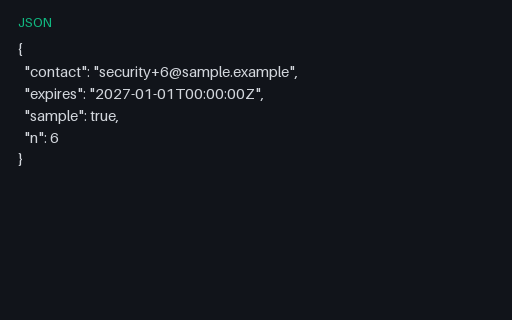
Well-known security contact JSON SAMPLE #6.
- File
- JSON · Well Known
- Use case
- Web assets
Search files, editable visual templates, and live browser targets from one registry-backed directory. Filtered query views stay crawlable for links but are deliberately noindex; the stable taxonomy pages below remain the canonical search surfaces.
Page 5 of 7; 24 results per page.
Well-known security contact JSON SAMPLE #6.
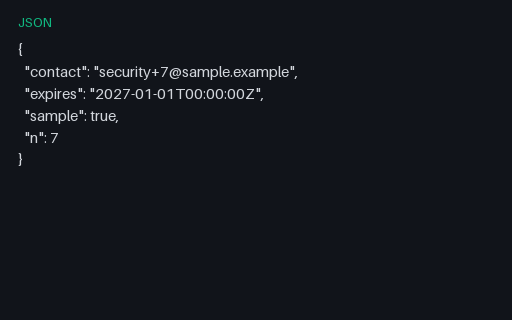
Well-known security contact JSON SAMPLE #7.
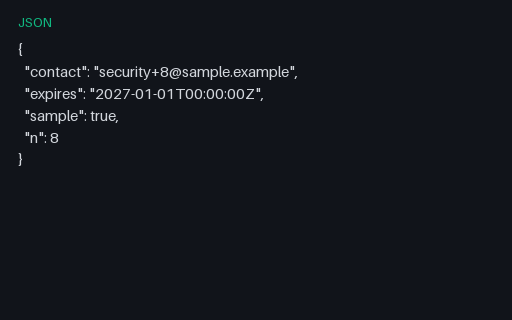
Well-known security contact JSON SAMPLE #8.
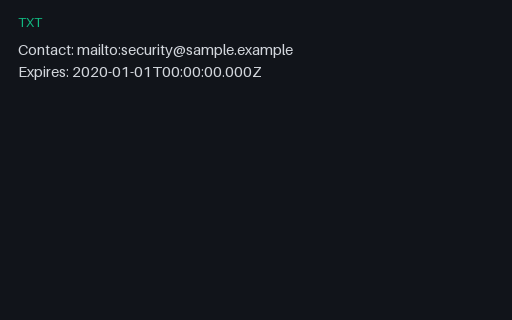
RFC 9116 security.txt SAMPLE variant (security-txt-expired.txt) for well-known parsers.
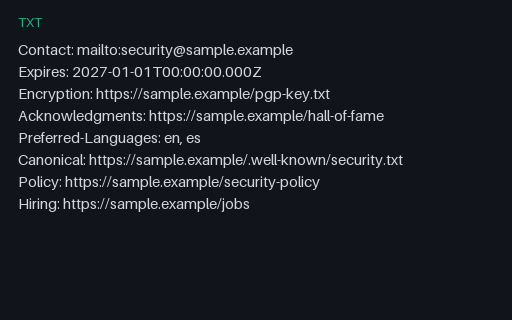
RFC 9116 security.txt SAMPLE variant (security-txt-full.txt) for well-known parsers.
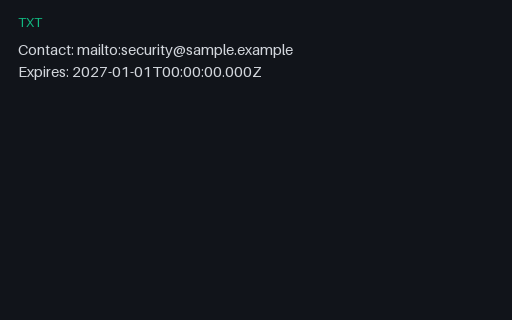
RFC 9116 security.txt SAMPLE variant (security-txt-minimal.txt) for well-known parsers.
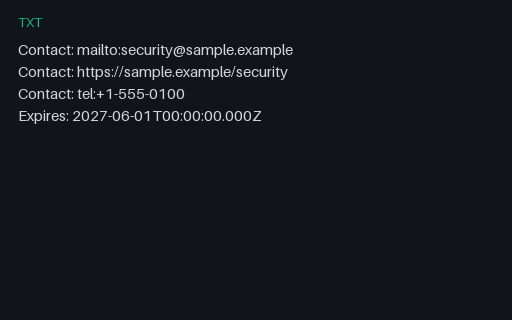
RFC 9116 security.txt SAMPLE variant (security-txt-multi-contact.txt) for well-known parsers.
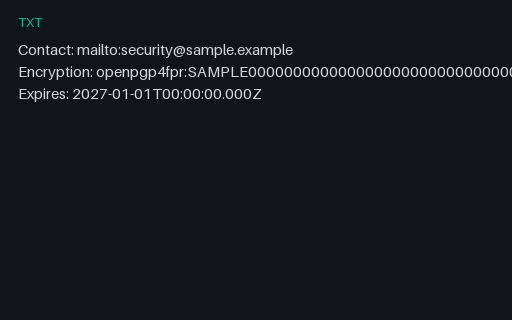
RFC 9116 security.txt SAMPLE variant (security-txt-pgp.txt) for well-known parsers.
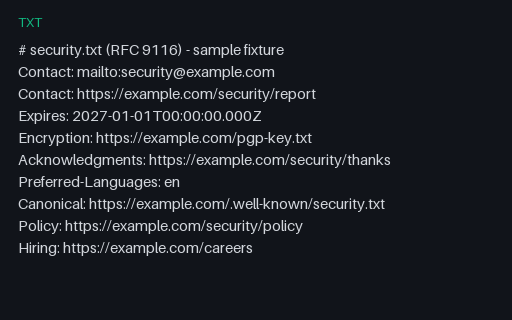
An RFC 9116 security.txt with Contact, Expires, Encryption, and Policy fields — normally served at /.well-known/security.txt, for testing security.txt parsers.
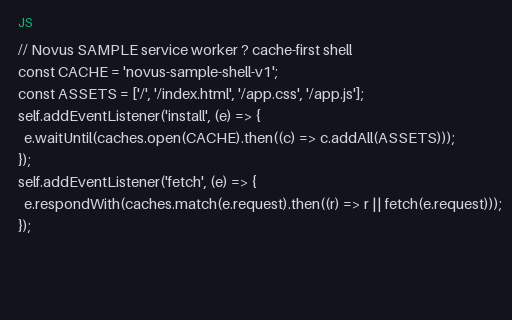
Cache-first SAMPLE service worker for PWA offline-shell registration tests.
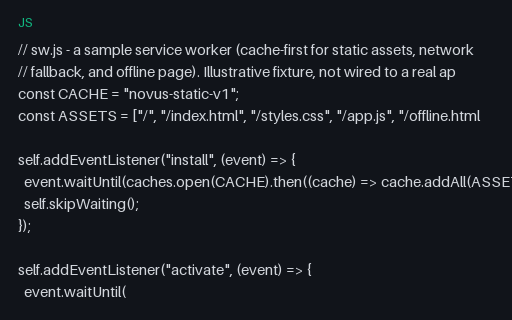
A sample cache-first service worker handling install, activate, and fetch events with an offline fallback — for testing service-worker registration, JS parsers, and PWA tooling.
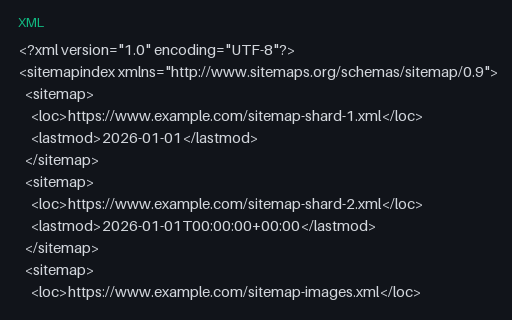
A sitemap index listing three child sitemaps, one dated with a plain date, one with a full W3C datetime, and one with no lastmod at all. Two of the children ship alongside it, so a crawler can be walked from index to URL.
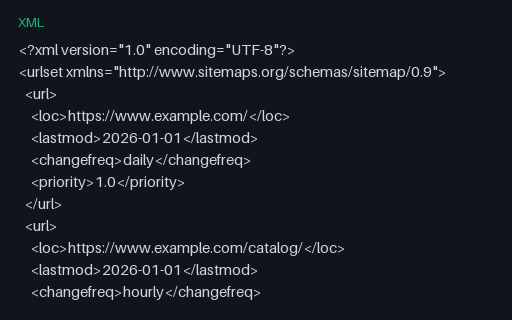
The first child of the sitemap index: six core URLs with a deliberately uneven mix of lastmod, changefreq and priority, including one entry that carries nothing but a loc. For testing that optional sitemap fields really are optional.
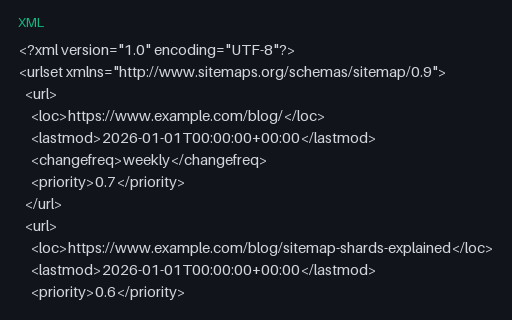
The second child of the sitemap index: six URLs dated with W3C datetimes in two different timezone offsets, including a changefreq of never and a priority of 0.1. For testing datetime normalisation and priority ordering.
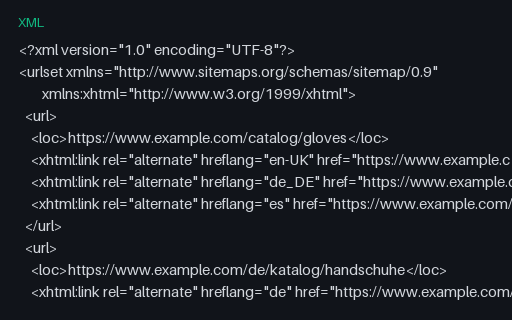
A deliberately invalid hreflang cluster: an `en-UK` region that does not exist, an underscore locale, a German page that never links back, a Spanish self-reference dropped to http, and no x-default anywhere. For testing that an international audit reports each defect rather than the first one.
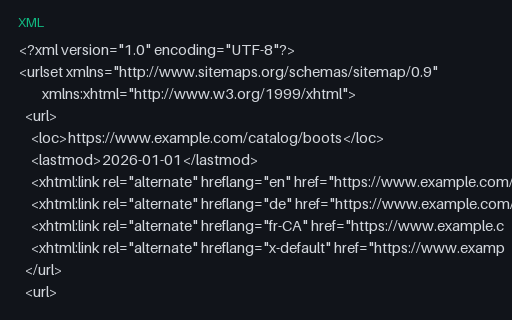
A sitemap whose three URLs form a complete hreflang cluster: every page lists every locale including itself and a shared x-default. This is the shape an international audit should pass, and the reference twin of the broken cluster.
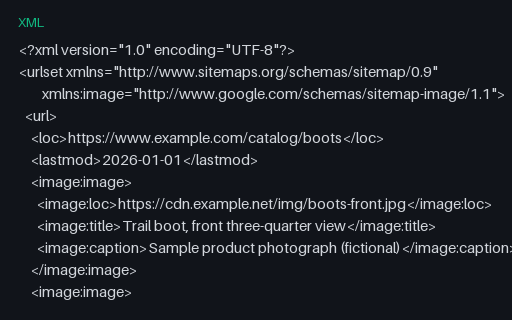
A sitemap using the image extension namespace: six images across three pages, with and without titles and captions, in JPEG, WebP and AVIF. For testing extension-namespace parsing and image-discovery pipelines.
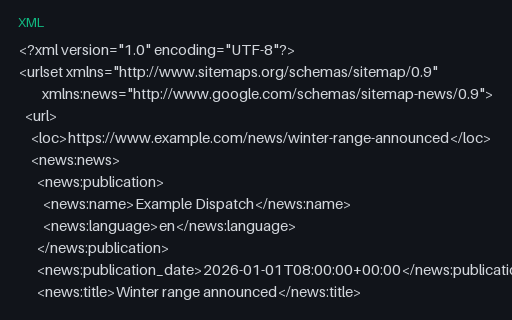
A two-URL news sitemap with publication name, language, publication date and headline for an English and a German article. For testing nested extension elements and per-article language handling.
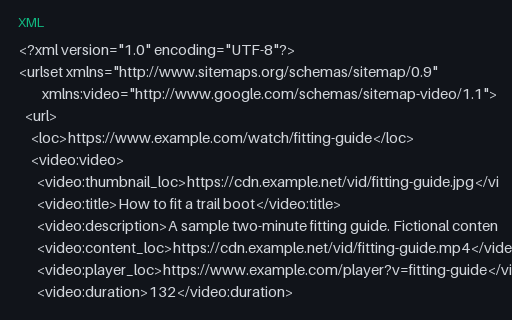
A sitemap using the video extension namespace: one fully populated entry with duration, rating, view count, country restriction and tags, and one minimal entry with only the required children plus a player attribute. For testing video-sitemap parsers and their attribute handling.
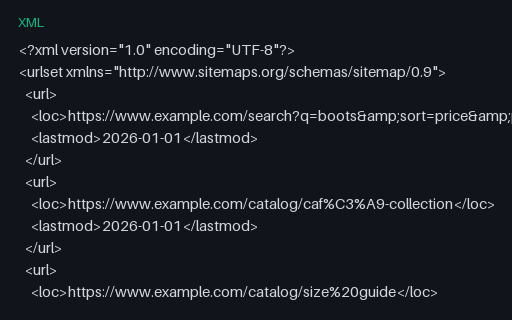
A sitemap of URLs that need both layers of escaping the format demands: ampersands written as XML entities and reserved characters percent-encoded, plus a punycode host. For testing that a parser unescapes exactly once and does not double-decode.
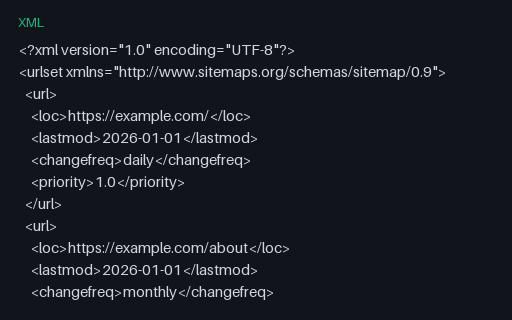
An XML sitemap (sitemaps.org 0.9) with loc, lastmod, changefreq, and priority for several URLs — for testing sitemap parsers and crawl-scheduling tools.
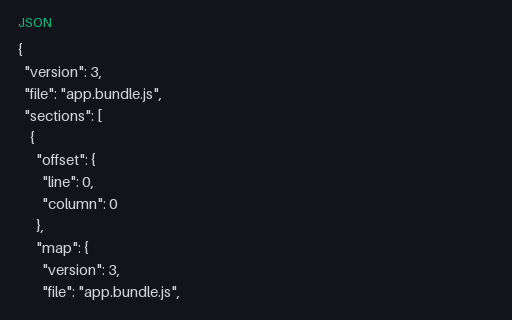
An index map: instead of a top-level `mappings` string it carries a `sections` array of offset-and-map pairs, the form used when several independently built chunks are concatenated. For testing decoders that assume every map has mappings at the root.
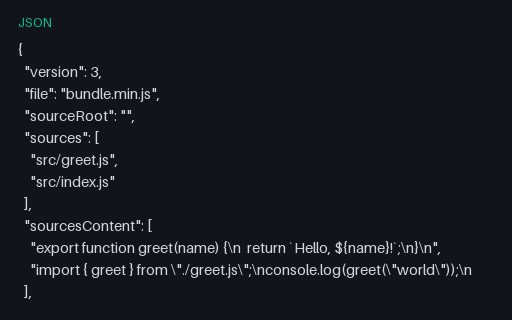
A complete v3 source map for the minified bundle: two sources with their full original text inlined in sourcesContent, two names, and five VLQ-encoded mapping segments. For testing source-map decoders and stack-trace symbolication without any network fetch of the originals.
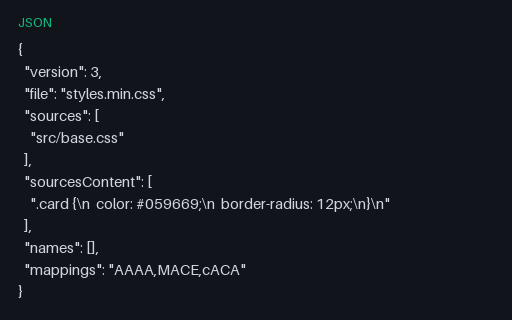
The v3 map for the minified stylesheet: one source with its text inlined, an empty names array, and three segments covering the selector and both declarations. For testing that a decoder handles maps with no names at all.
We use Google Analytics and show ads via Adsterra. Non-essential cookies and ad scripts run only after you allow the matching categories. See our cookie policy.