
csv
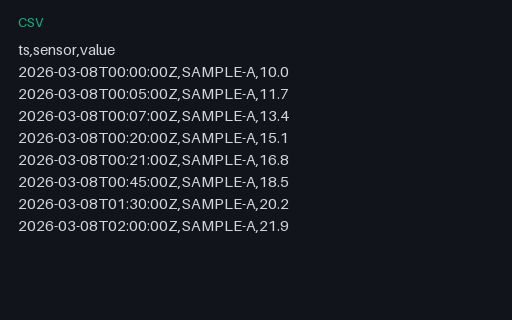
305 BTime-series — Irregular Intervals (CSV)
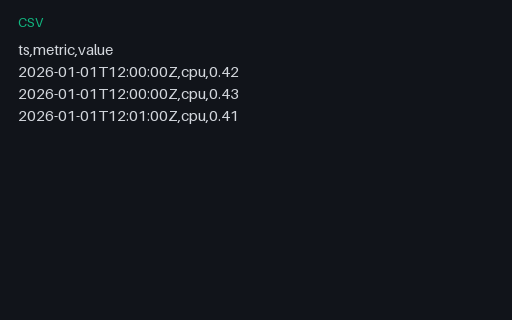
Sensor readings at irregular minute gaps — tests time-series resampling and gap detection.
- File
- CSV · Timeseries · 8 rows
- Use case
- Time-series dataData import+1· Conversion set
Irregular timestamps, DST gaps, and duplicate keys for time-series importers and charting libraries.
Sensor readings at irregular minute gaps — tests time-series resampling and gap detection.
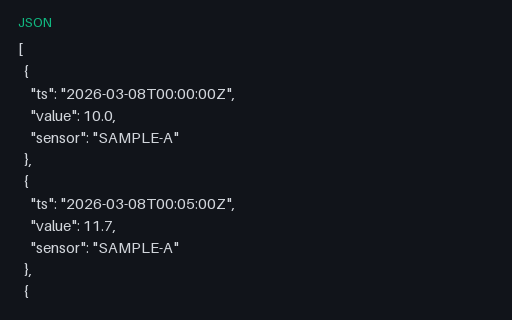
JSON twin of irregular-interval sensor readings for charting library tests.
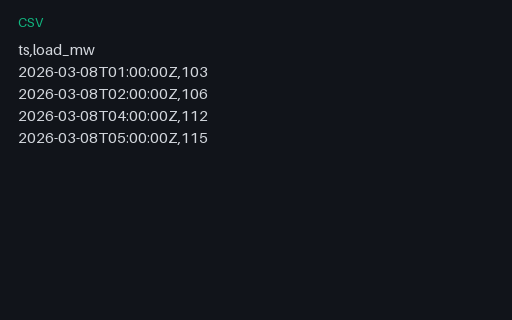
Hourly load data skipping the 03:00 hour on DST spring-forward day — tests timezone/DST gap handling.
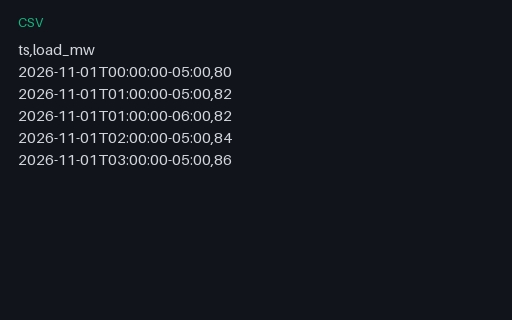
Load readings with a repeated 01:00 local hour on fall-back DST — tests ambiguous timestamp handling.
Two rows share the same timestamp key — tests deduplication and last-write-wins policies.
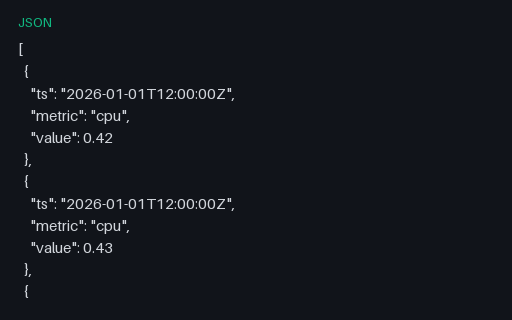
JSON array with duplicate timestamp keys for ingestion pipeline tests.
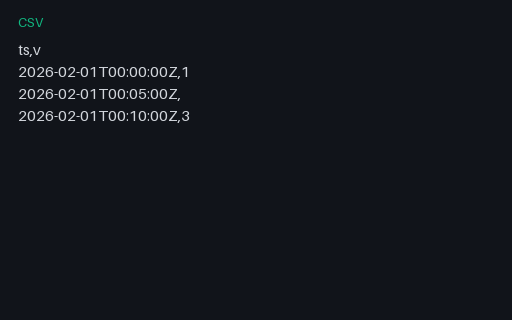
Series with an explicit null value at a missing sample point.
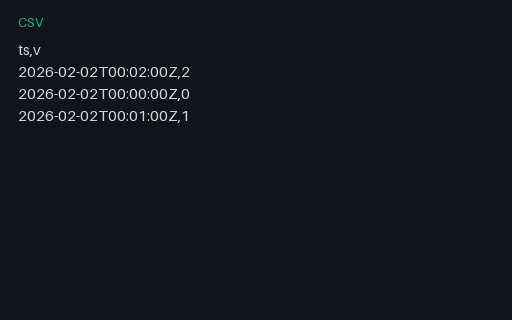
Timestamps out of chronological order — tests sort-on-ingest behaviour.
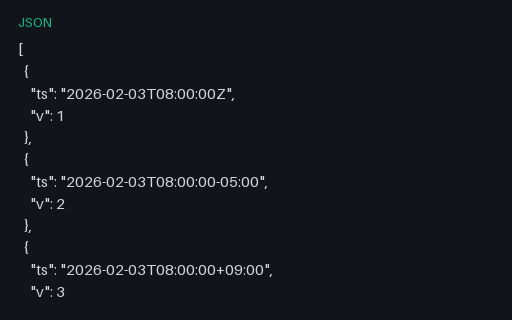
Same nominal instant expressed in Z, -05:00, and +09:00 offsets.
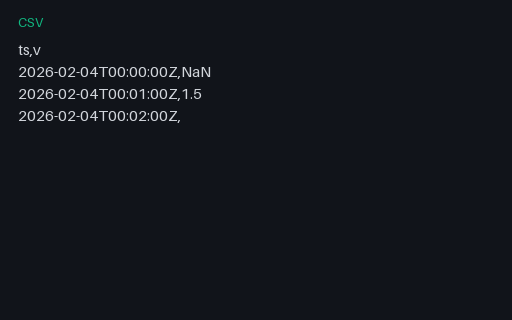
CSV with NaN string and empty cells representing missing measurements.
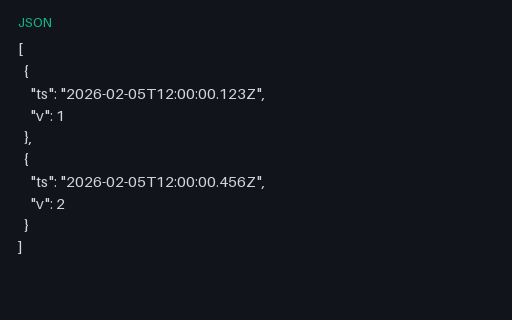
Sub-second millisecond timestamps for precision parsing tests.
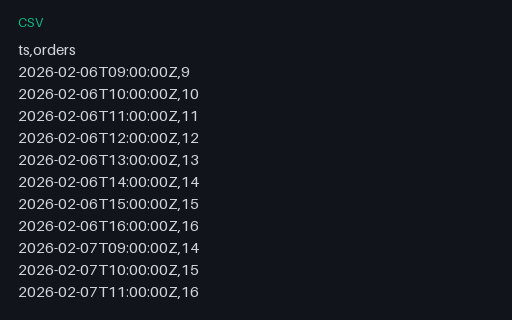
Hourly order counts weekdays only (09–16 UTC) across three SAMPLE days.
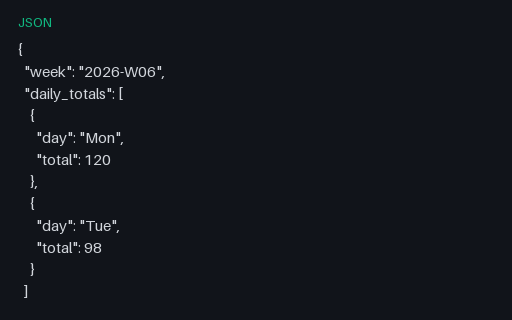
Pre-aggregated weekly totals JSON for rollup/chart tests.
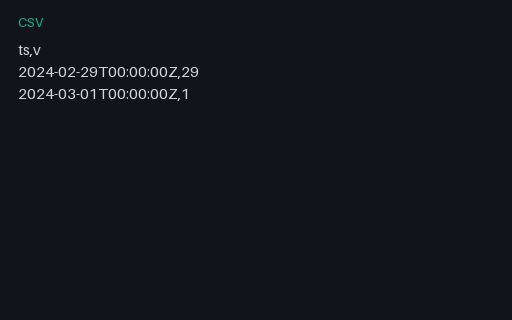
Readings spanning Feb 29 leap day — calendar edge case.
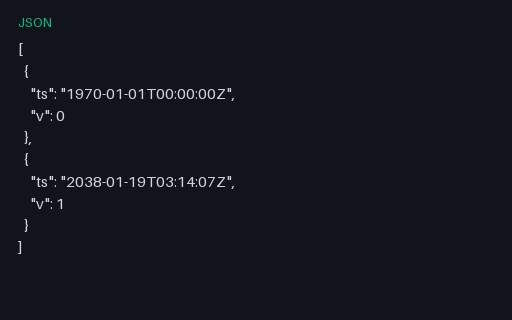
Timestamps at Unix epoch and classic 32-bit Y2038 boundary.
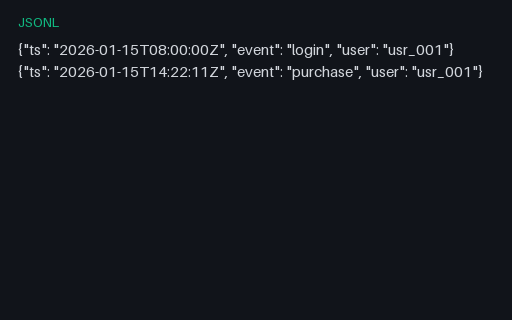
Sparse event log in JSON Lines — two events hours apart for event-stream ingestion tests.
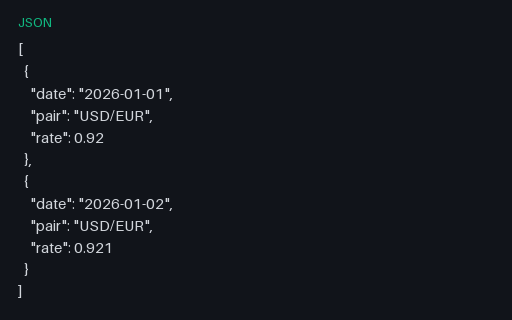
Daily USD/EUR SAMPLE rates for FX chart and conversion tests.
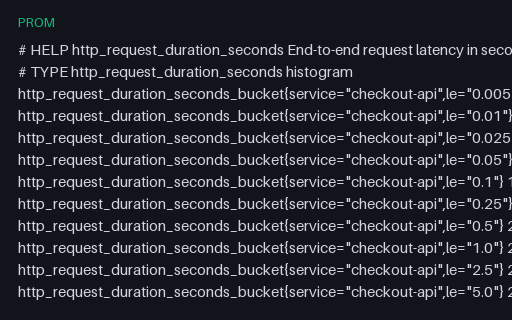
A classic Prometheus histogram: eleven finite le buckets plus +Inf, with monotonically non-decreasing cumulative counts and matching _sum and _count series. The fixture for bucket ordering, cumulative arithmetic and histogram_quantile interpolation.
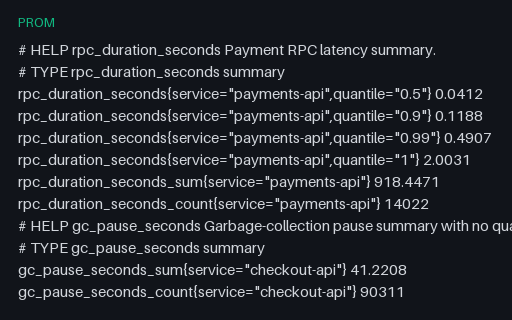
Two summary families — one exposing four client-side quantiles including quantile="1" for the observed maximum, and one exposing only _sum and _count, which is legal and common. Summaries cannot be re-aggregated across instances, and this fixture is where that gets tested.
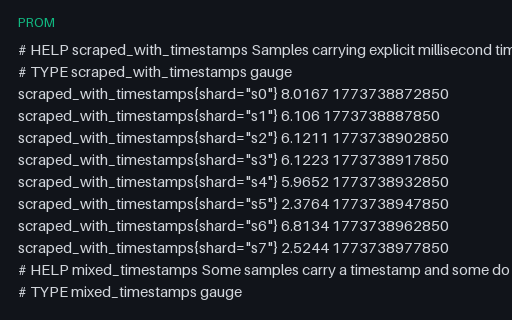
Samples with explicit millisecond timestamps alongside samples without any, including one an hour stale and one an hour in the future. Optional timestamps are the part of the exposition format most parsers get wrong, and out-of-window samples are what a scraper must reject rather than backfill.
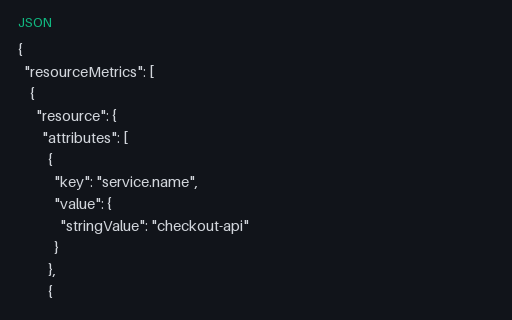
An OTLP explicit-bucket histogram over the same latency distribution as the Prometheus fixture — but with per-bucket counts rather than cumulative ones, and one more bucket count than bounds. Converting between the two is where most OTLP-to-Prometheus bridges get the arithmetic wrong.
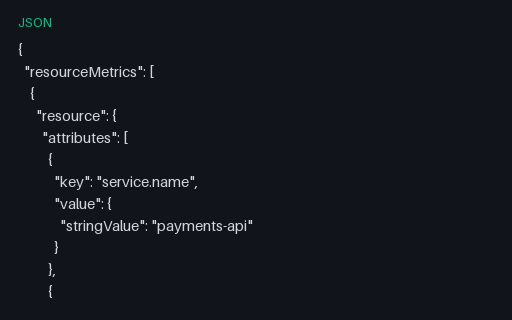
An exponential histogram at scale 3 — eight buckets per power of two — with a negative offset, a zero bucket and its threshold. Bucket i covers (base^(offset+i), base^(offset+i+1)], and getting that indexing wrong silently shifts every percentile, which is what this fixture is for.
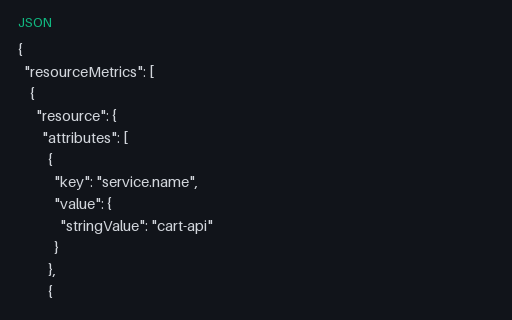
A monotonic counter that drops from 94,880 to 1,120 when its process restarts, with startTimeUnixNano changing at exactly that point to mark the reset. Rate calculations that subtract consecutive values without checking the start timestamp produce a large negative rate here.
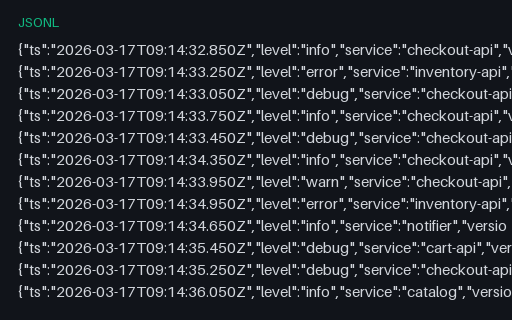
Records whose ts field moves backwards seven times while emitted_seq stays monotonic — what a buffered shipper produces when several workers flush concurrently. The fixture for sort-on-ingest, late-arrival windows and any index that assumes append order equals time order.
We use Google Analytics and show ads via Adsterra. Non-essential cookies and ad scripts run only after you allow the matching categories. See our cookie policy.