
HTML Snippet — Meta Description Sample
Minimal SAMPLE HTML (meta-description-sample) for meta/JSON-LD/DOM parser tests.
<!doctype html><html lang="en"><head><meta charset="utf-8"><meta name="description" content="SAMPLE meta description for crawler tests."><title>Meta Description SAMPLE</title></head><body><p>Body SAMPLE.</p></body></html>
Specifications
- Wave
- I
- Role
- html-snippet
Testing contract
Expected to pass- Scenario
- Exercise HTML Snippet — Meta Description Sample in its source workflow. Minimal SAMPLE HTML (meta-description-sample) for meta/JSON-LD/DOM parser tests.
- Expected result
- source has 0 form elements and 0 named-or-unnamed input/select/textarea controls; table count=0; headings=0. Declared feature checks: role=html-snippet.
What is a .html file?
HTML (HyperText Markup Language) is the structural markup language of the web, using nested tags to define document content, semantics, and links. It is typically paired with CSS for presentation and JavaScript for behavior. It is the foundational format rendered by browsers.
How to use this file
Use an example HTML file to test parsers, DOM construction, sanitization of untrusted markup, and rendering or scraping pipelines.
How to use this file for testing
“HTML Snippet — Meta Description Sample” is a deterministic Novus Examples fixture for Editor testing, Web assets. Text-based files you can open, edit, and download directly in the browser editor.
Documented properties for this file: html-snippet. Compare results against paired or grouped companions on this page when present (clean↔damaged, searchable↔scanned, or format twins) so scores stay reproducible across runs.
Download the file once, keep the path stable in CI or local scripts, and treat the spec table as the contract: dimensions, seeds, field lists, and roles are intentional. Corrupt or invalid samples are labelled as such, expect parsers to fail loudly rather than silently accept them.
Document fixtures list their internal structure (pages, fields, tracked changes, embedded objects) in the spec table. Test extractors, converters, and OCR against that known structure, and compare searchable↔scanned or format-twin companions when present.
Related files
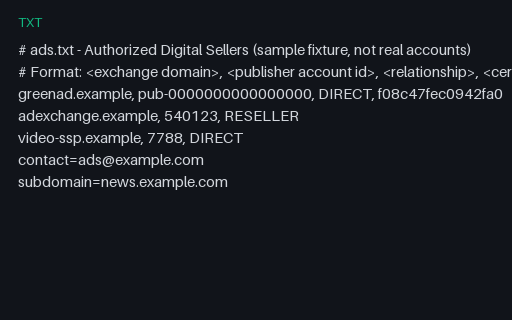
- txtads.txtAn IAB ads.txt listing authorised digital sellers with account IDs and relationships (sample data) — for testing ads.txt parsers and ad-fraud tooling.
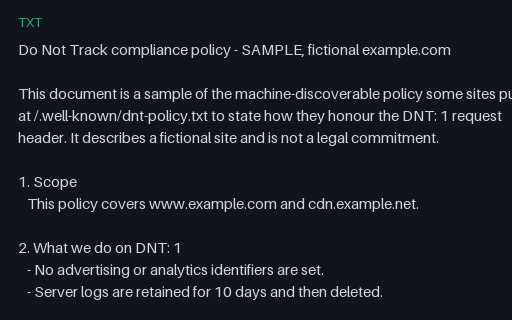
- txtdnt-policy.txt (Do Not Track compliance statement)A sample machine-discoverable Do Not Track policy of the kind served at /.well-known/dnt-policy.txt, stating retention windows, exceptions and a contact for a fictional site. For testing crawlers and privacy scanners that look for the document and read its version header.
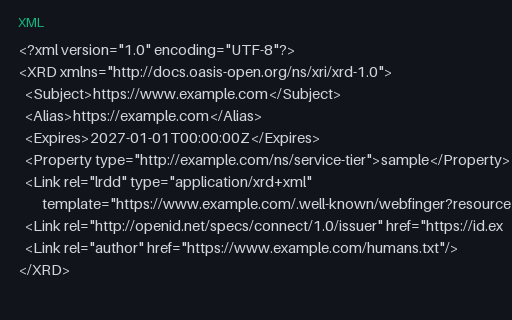
- xmlhost-meta (XRD, XML form)Host metadata in its original XRD form: a subject, an alias, an expiry, one property, and three Link elements including an lrdd template with a {uri} placeholder. Paired with the JRD twin that carries exactly the same data.
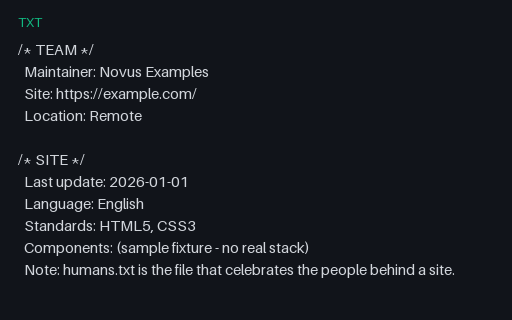
- txthumans.txtA humans.txt crediting the people and stack behind a site, in the conventional TEAM/SITE block format — for testing plain-text metadata parsers.
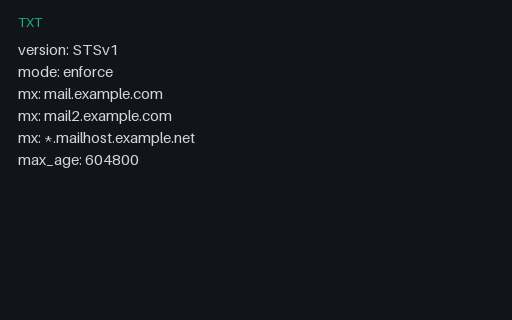
- txtmta-sts.txt (RFC 8461 SMTP MTA-STS policy)An SMTP MTA-STS policy in enforce mode listing three MX patterns, one of them a wildcard, with a seven-day max_age. RFC 8461 specifies CRLF line endings, so this fixture is written with them deliberately - for testing policy parsers that split on bare LF.
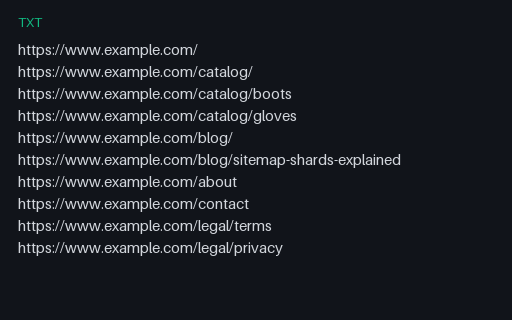
- txtPlain-text sitemap (one URL per line)The plain-text sitemap format the sitemaps.org protocol also accepts: one absolute URL per line, no markup, UTF-8 encoded. For testing that a crawler supports the text form as well as XML.
Generated by generation/pad_wave_i.py. Free for any use, no attribution required, license.