
fdf
268 BWire/ACH Form Data (FDF)
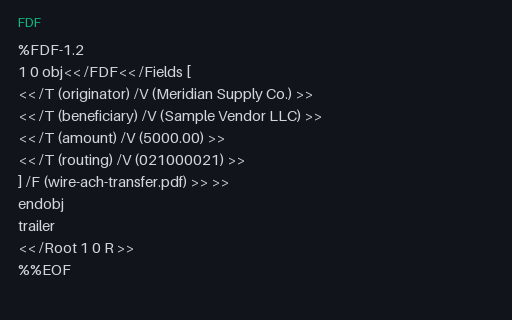
FDF sample values for the wire/ACH AcroForm.
- File
- FDF · Finance
- Use case
- Form testingPDF form filling· Conversion set
Find files, editable templates and browser test targets by what you need to make or test. Explore complete business kits for connected records, templates and expected results.
Page 215 of 221; 24 results per page.
FDF sample values for the wire/ACH AcroForm.
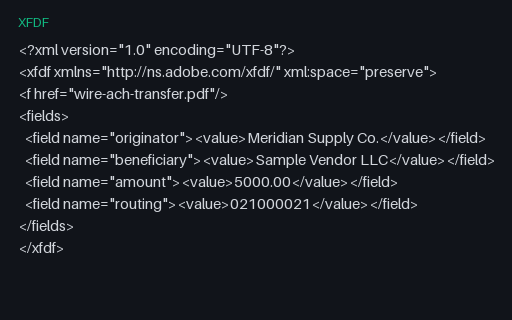
XFDF twin of the wire/ACH form data.
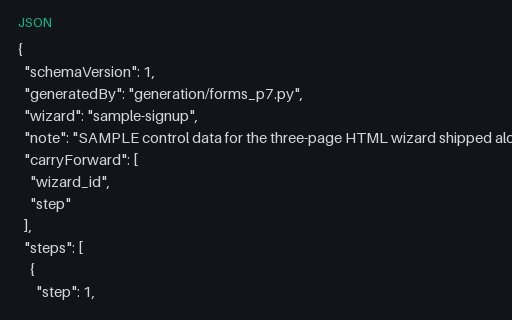
The control data for the three-page sample sign-up wizard: which fields each page owns, which are mandatory, what is carried forward and which file comes next. Lets a driver plan the whole flow before opening a page.
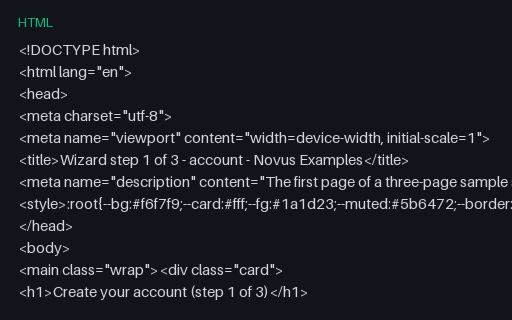
Page one of a three-file sign-up wizard. Each page validates only its own fields and hands the wizard identifier forward in a hidden control, which is the pattern multi-page form automation has to follow.
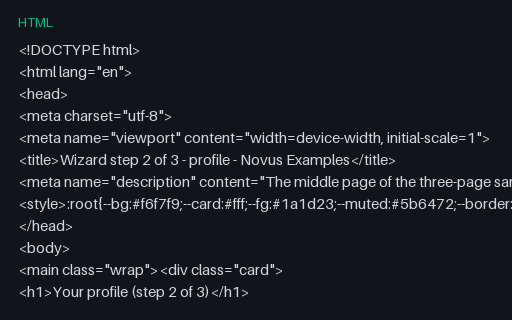
Page two of the sign-up wizard. It repeats the wizard identifier, advances the step counter and collects profile fields, so a driver can be tested on resuming a flow it did not start.
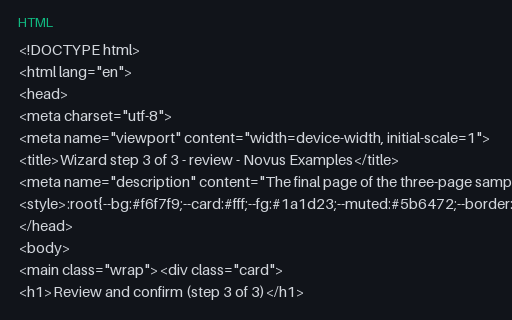
Page three of the sign-up wizard. It echoes the earlier answers into read-only controls that are still submitted, so a driver can be tested on the difference between a summary rendered as text and one rendered as form state.
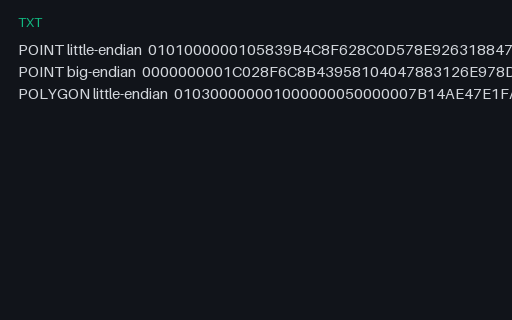
The same point encoded both ways, plus a polygon, as uppercase hex — the form WKB takes when it travels through a text column or a SQL console. The byte-order flag is the first byte of each string, so the two point encodings differ everywhere after it.
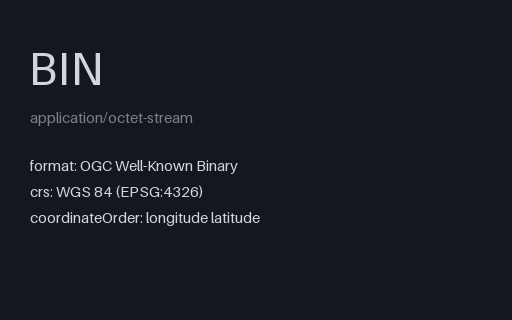
Twenty-one raw bytes: a byte-order flag, a little-endian geometry-type code of 1, and two float64 ordinates. This is the wire format PostGIS, GeoPackage and most spatial drivers actually move geometry in.
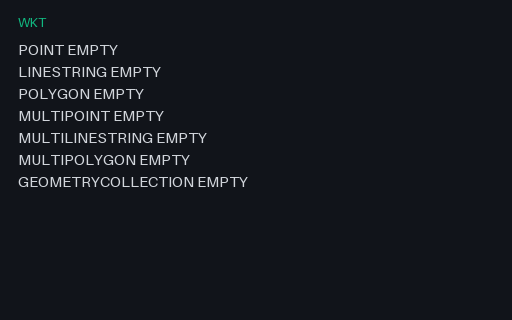
One EMPTY value for each WKT geometry type, one per line. Empty geometries are what spatial operations return when nothing is left, and round-tripping them is where a database driver usually turns a typed empty into a plain NULL.
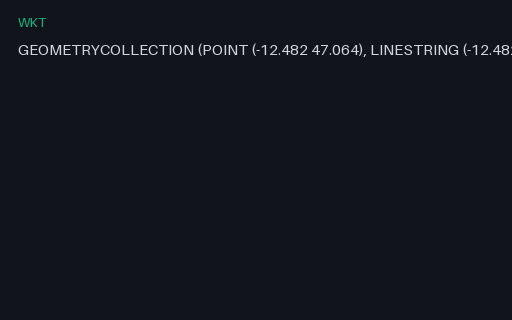
A single WKT value for a point, a line and a polygon in one value. WKT nests with bare parentheses and no type tags on the inner parts, so the number and depth of brackets is the only thing that distinguishes a polygon ring from a multipolygon member — which is where hand-written parsers go wrong.
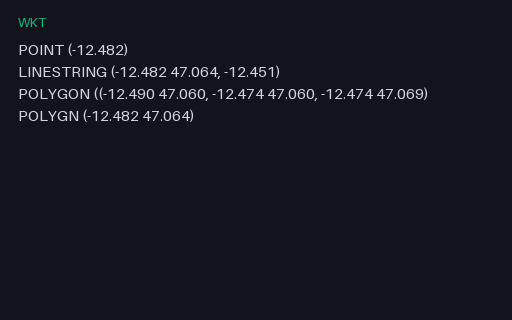
Intentionally invalid: four WKT strings that each break in a different way — a point with one ordinate, a line whose last vertex is ragged, a polygon missing a closing bracket, and a misspelled keyword. Good parsers report which line and which character failed.
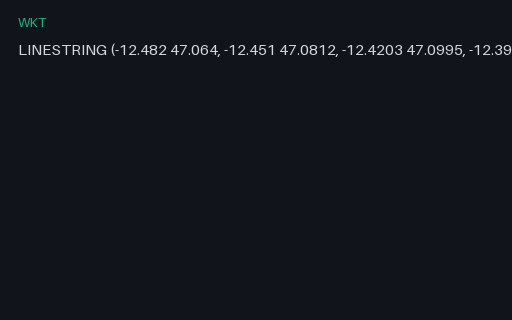
A single WKT value for the four-vertex Coast Road. WKT nests with bare parentheses and no type tags on the inner parts, so the number and depth of brackets is the only thing that distinguishes a polygon ring from a multipolygon member — which is where hand-written parsers go wrong.
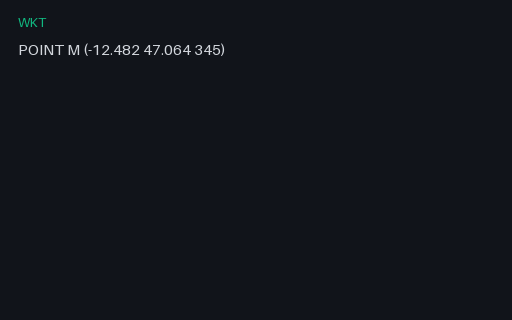
A point with an M (measure) ordinate rather than a Z. Written without the tag this is indistinguishable from a Z geometry, and a parser that assumes the third ordinate is elevation silently converts a 345-second measure into a 345-metre altitude.
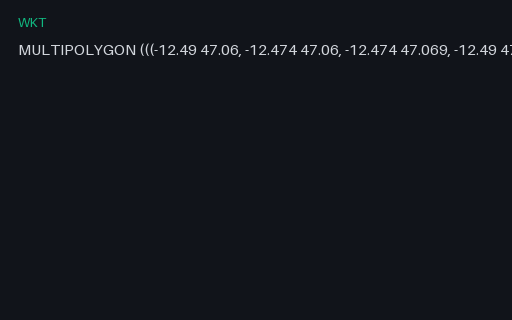
A single WKT value for all three parcels in one geometry. WKT nests with bare parentheses and no type tags on the inner parts, so the number and depth of brackets is the only thing that distinguishes a polygon ring from a multipolygon member — which is where hand-written parsers go wrong.

A single WKT value for the Kestrel Bay town centre. WKT nests with bare parentheses and no type tags on the inner parts, so the number and depth of brackets is the only thing that distinguishes a polygon ring from a multipolygon member — which is where hand-written parsers go wrong.
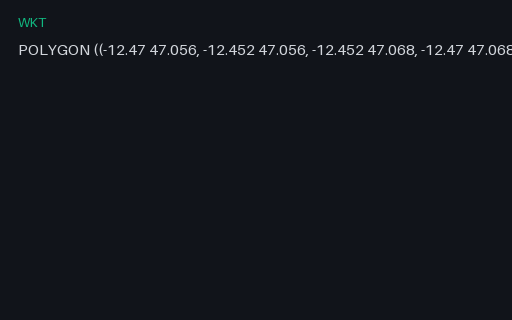
A single WKT value for the Mill Court parcel and its courtyard. WKT nests with bare parentheses and no type tags on the inner parts, so the number and depth of brackets is the only thing that distinguishes a polygon ring from a multipolygon member — which is where hand-written parsers go wrong.
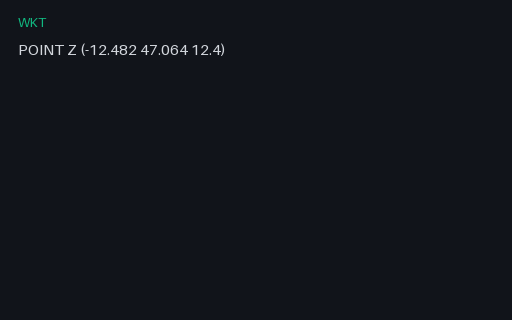
A point with an explicit Z dimension tag. Some producers write `POINT Z (x y z)` and others write `POINT(x y z)` with no tag at all, so a parser has to cope with the dimension being declared or merely implied by the ordinate count.
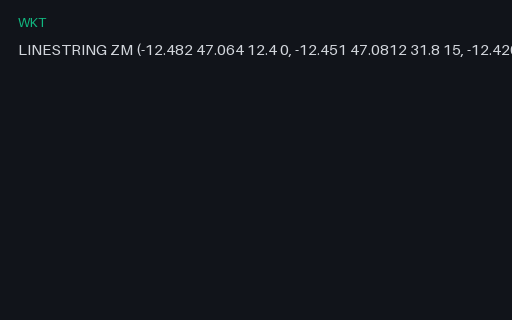
A three-vertex line carrying both elevation and a measure, so each position has four ordinates. GeoJSON tops out at three, which makes this the fixture that shows what a WKT-to-GeoJSON conversion has to drop and whether it says so.
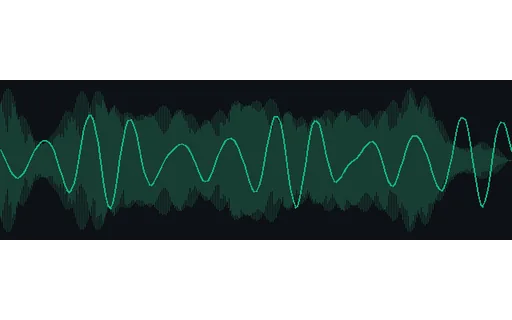
The clip as Windows Media Audio (WMA v2) in an ASF container — Microsoft's lossy codec. For testing WMA decoding and conversion to open formats.
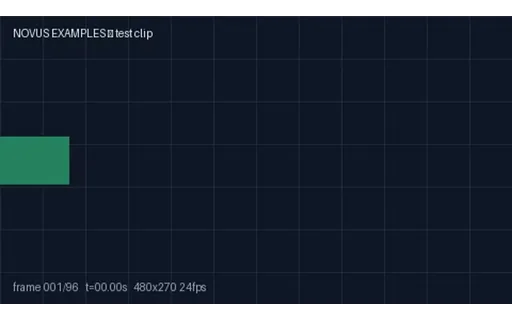
The clip as Windows Media Video (WMV2 in an ASF container) — Microsoft's legacy video format. For testing WMV decoding and conversion to open formats.
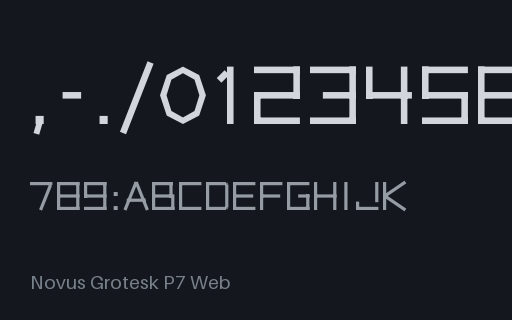
The same CFF (Type 2) face in a WOFF container, 55 percent of the raw sfnt size. Compare it against the other three containers in this group to see how much of a web font's weight is the format and how much is the design. Original typeface, free to use.
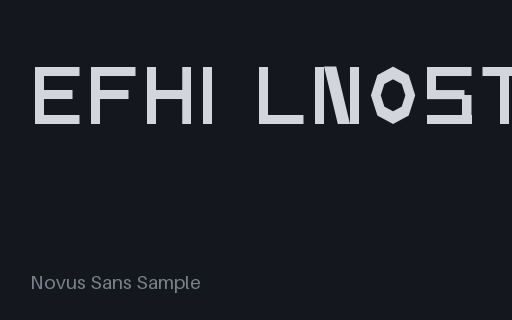
The Novus Sans Sample demonstration typeface as WOFF (TrueType-flavoured web font) — one member of a TTF/OTF/WOFF/WOFF2 conversion set built from scratch with fontTools. Original and free to use; a fixture for testing font loading, subsetting, and conversion.
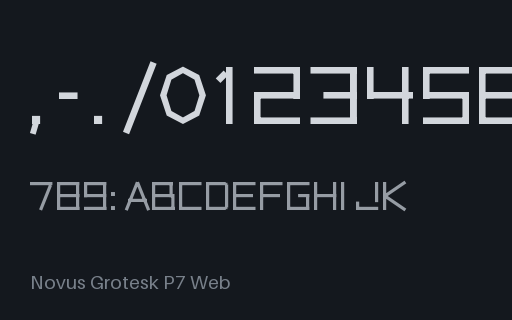
The same TrueType (glyf) face in a WOFF container, 49 percent of the raw sfnt size. Compare it against the other three containers in this group to see how much of a web font's weight is the format and how much is the design. Original typeface, free to use.
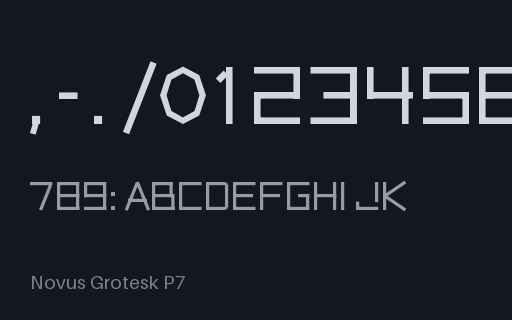
The wght variable font wrapped as WOFF — the same fvar/gvar payload in the web container, for testing that a compressor or a CDN pipeline preserves variation data. Original typeface, free to use.
We use Google Analytics and show ads via Adsterra. Non-essential cookies and ad scripts run only after you allow the matching categories. See our cookie policy.