
srt
62 BSRT — Soft-Sub Companion
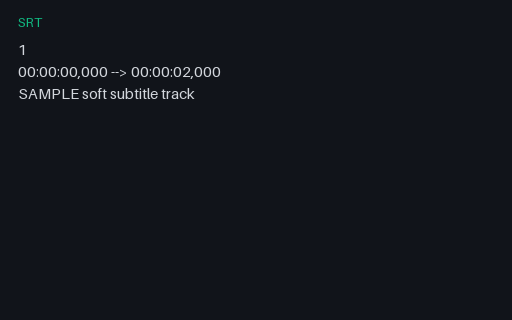
Companion SRT for the soft-sub MP4 — same SAMPLE cue timings.
- File
- SRT · Subs
- Use case
- Subtitle parsingConversion testing· Conversion set
Search files, editable visual templates, and live browser targets from one registry-backed directory. Filtered query views stay crawlable for links but are deliberately noindex; the stable taxonomy pages below remain the canonical search surfaces.
Page 14 of 17; 24 results per page.
Companion SRT for the soft-sub MP4 — same SAMPLE cue timings.
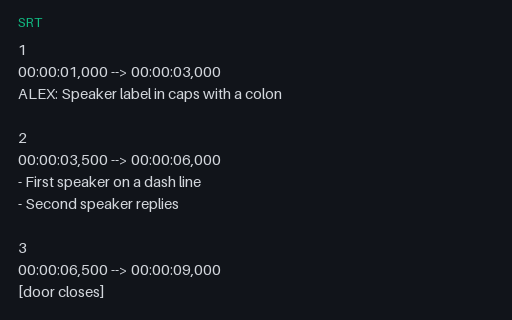
The conventions captioners actually use — speaker names in caps, leading dashes for alternating dialogue, square brackets and parentheses for sound effects, and music notes around lyrics. None is part of the SubRip grammar, so tools that extract speaker names or strip non-speech cues have to pattern-match them. Useful for testing transcript extraction and caption-cleaning passes.
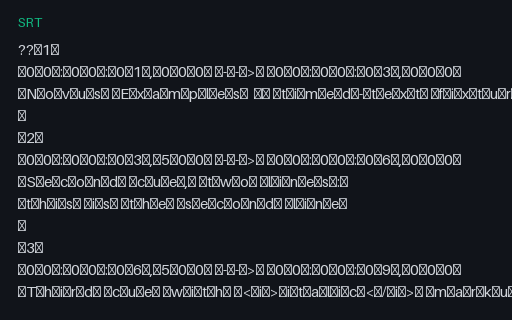
UTF-16 big-endian with a BOM — the byte order most decoders forget to handle, since little-endian dominates in practice. Identical cue content across the whole set, so any difference in a parser's output is an encoding bug and nothing else.
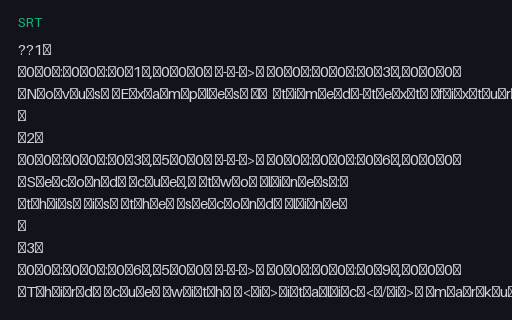
UTF-16 little-endian with a BOM. Every second byte is NUL, so a parser that reads bytes as UTF-8 or ASCII sees a file that appears to start and end immediately. Tools must detect the BOM, not assume UTF-8. Identical cue content across the whole set, so any difference in a parser's output is an encoding bug and nothing else.
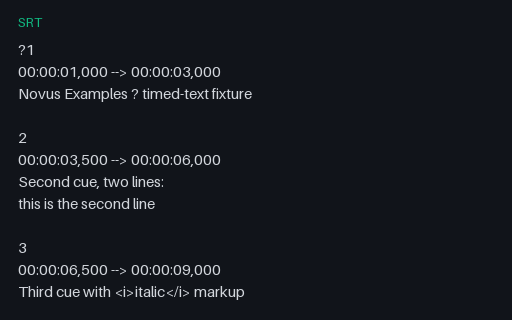
Both awkward properties at once — a BOM and CRLF endings — which is what a file saved by Notepad on Windows actually looks like. Identical cue content across the whole set, so any difference in a parser's output is an encoding bug and nothing else.
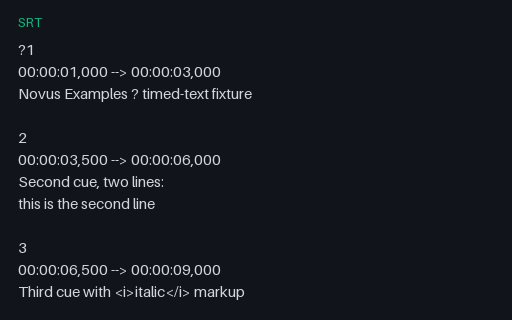
UTF-8 with a leading U+FEFF byte-order mark. Windows caption tools emit this constantly, and a parser that does not strip it sees the BOM as part of the first cue number and fails to match its index. Identical cue content across the whole set, so any difference in a parser's output is an encoding bug and nothing else.
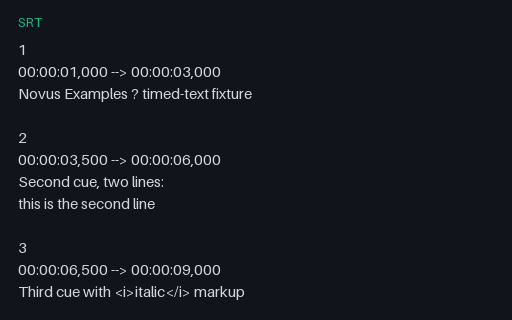
UTF-8 with Windows CRLF line endings. Parsers that split on a bare \n leave a trailing carriage return on every line, which usually surfaces as a stray box glyph at the end of each caption. Identical cue content across the whole set, so any difference in a parser's output is an encoding bug and nothing else.
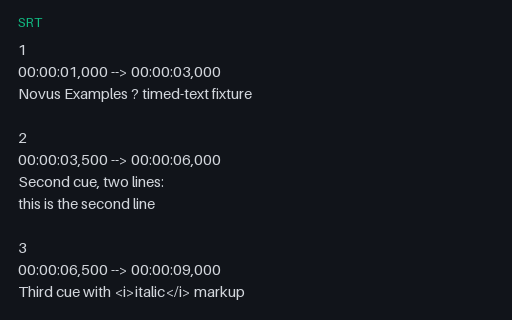
Plain UTF-8, no byte-order mark, Unix LF line endings. The reference member of this set — every other file here carries the same five cues, so a parser's output can be diffed against this one. Identical cue content across the whole set, so any difference in a parser's output is an encoding bug and nothing else.
Video QC companion SAMPLE (desync-caption.srt) for Wave G suites.
Video QC companion SAMPLE (bars-caption.srt) for Wave G suites.
Video QC companion SAMPLE (portrait-caption.srt) for Wave G suites.
Video QC companion SAMPLE (square-caption.srt) for Wave G suites.
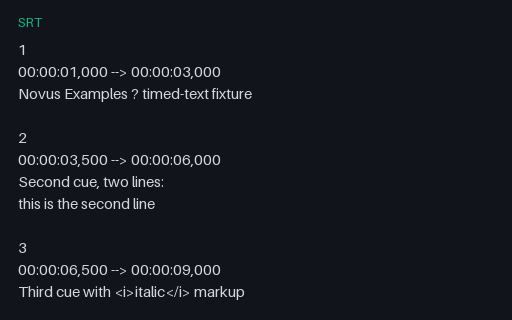
The same cues in Windows-1252, the legacy code page behind most real-world caption mojibake. Pure ASCII until the curly quotes and em dash, which encode as single bytes 0x93, 0x94 and 0x97 — none of which is valid UTF-8. A tool that assumes UTF-8 either raises or silently substitutes replacement characters exactly where the punctuation was. There is no BOM and no in-band signal, so correct handling requires either charset detection or being told.
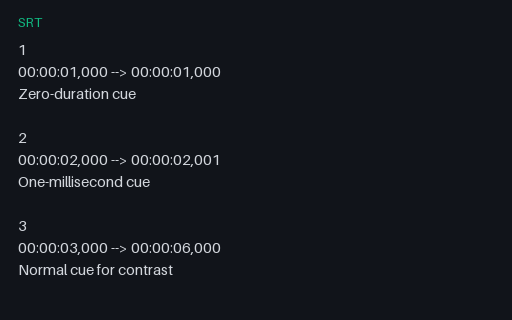
A cue whose start and end are identical, and one lasting a single millisecond. Both appear in machine-generated captions from forced-alignment tools. A renderer that computes a display duration and divides by it, or that filters out non-positive durations without saying so, mishandles these.
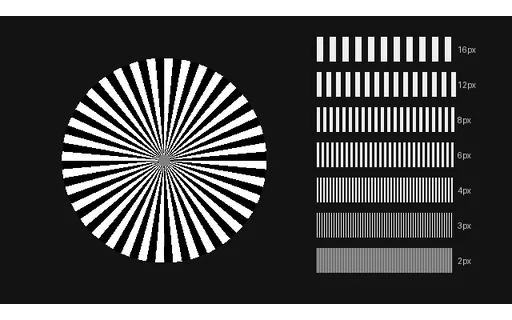
The locked-off reference for the detail-chart stabilisation set — any motion in this clip is subject motion, not camera motion. The shaky clips in this group are this footage with a recorded synthetic camera path applied, so residual motion after stabilisation can be measured against zero rather than eyeballed.

The locked-off reference for the pan-city stabilisation set — any motion in this clip is subject motion, not camera motion. The shaky clips in this group are this footage with a recorded synthetic camera path applied, so residual motion after stabilisation can be measured against zero rather than eyeballed.
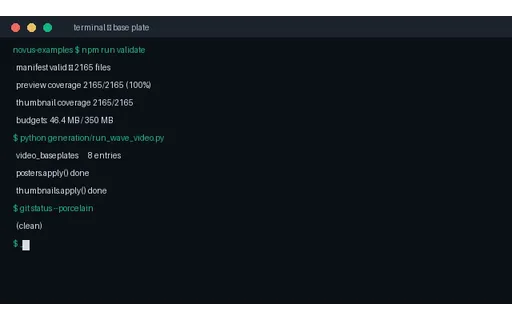
The locked-off reference for the text-motion stabilisation set — any motion in this clip is subject motion, not camera motion. The shaky clips in this group are this footage with a recorded synthetic camera path applied, so residual motion after stabilisation can be measured against zero rather than eyeballed.
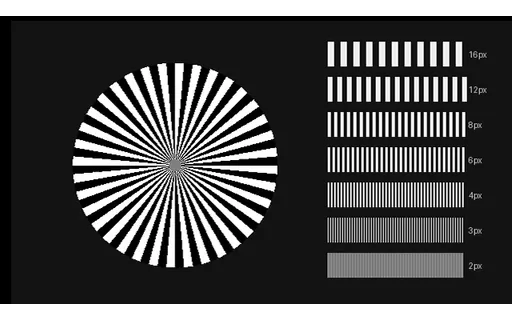
Heavy handheld camera shake applied to the locked-off detail-chart plate: up to 12.0 px of translation at 6.5 Hz, seed 5131. Twelve-pixel excursions at a slower, larger cadence: running, or a long lens. Requires real trajectory smoothing rather than frame-to-frame alignment. Uncovered edges are filled black rather than padded, so the crop a stabiliser needs is visible in the input.
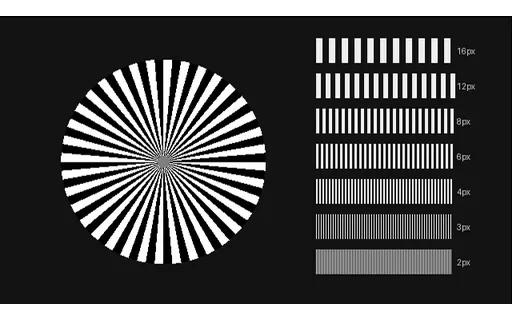
High-frequency jitter camera shake applied to the locked-off detail-chart plate: up to 2.5 px of translation and 0.5° of roll at 23.0 Hz, seed 5193. Small, fast jitter near the frame rate — vibration from a vehicle or a drone motor. Aliases against the sampling rate, so naive low-pass smoothing of the path leaves it almost untouched. Uncovered edges are filled black rather than padded, so the crop a stabiliser needs is visible in the input.
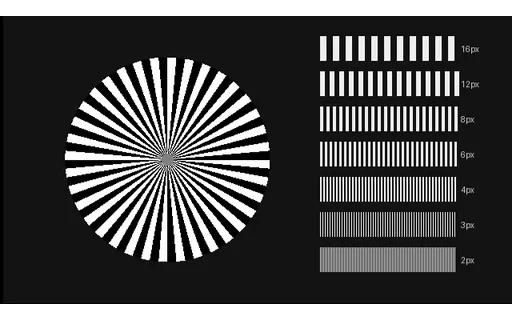
Light handheld camera shake applied to the locked-off detail-chart plate: up to 3.0 px of translation at 11.0 Hz, seed 5100. Sub-pixel-to-3-pixel translation at walking cadence — the residual wobble left after in-body stabilisation. Easy to correct, and the case where over-correction visibly crops the frame for nothing. Uncovered edges are filled black rather than padded, so the crop a stabiliser needs is visible in the input.
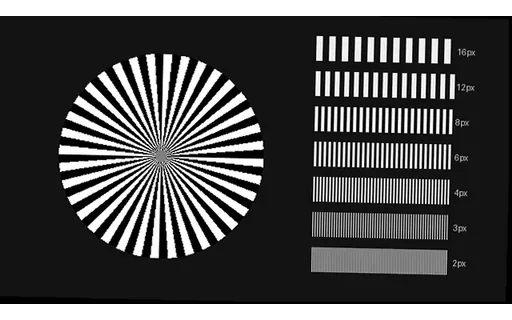
Rotational roll camera shake applied to the locked-off detail-chart plate: up to 4.0 px of translation and 1.6° of roll at 8.0 Hz, seed 5162. Translation plus up to 1.6° of roll. Translation-only stabilisers cannot fix roll at all, so this immediately separates 2-DOF from full-affine implementations. Uncovered edges are filled black rather than padded, so the crop a stabiliser needs is visible in the input.

Heavy handheld camera shake applied to the locked-off pan-city plate: up to 12.0 px of translation at 6.5 Hz, seed 5131. Twelve-pixel excursions at a slower, larger cadence: running, or a long lens. Requires real trajectory smoothing rather than frame-to-frame alignment. Uncovered edges are filled black rather than padded, so the crop a stabiliser needs is visible in the input.

High-frequency jitter camera shake applied to the locked-off pan-city plate: up to 2.5 px of translation and 0.5° of roll at 23.0 Hz, seed 5193. Small, fast jitter near the frame rate — vibration from a vehicle or a drone motor. Aliases against the sampling rate, so naive low-pass smoothing of the path leaves it almost untouched. Uncovered edges are filled black rather than padded, so the crop a stabiliser needs is visible in the input.

Light handheld camera shake applied to the locked-off pan-city plate: up to 3.0 px of translation at 11.0 Hz, seed 5100. Sub-pixel-to-3-pixel translation at walking cadence — the residual wobble left after in-body stabilisation. Easy to correct, and the case where over-correction visibly crops the frame for nothing. Uncovered edges are filled black rather than padded, so the crop a stabiliser needs is visible in the input.
We use Google Analytics and show ads via Adsterra. Non-essential cookies and ad scripts run only after you allow the matching categories. See our cookie policy.