
SAMPLE Leaf Certificate — No SAN Extension
A pre-RFC 6125-style certificate carrying only a Common Name and no subjectAltName extension. Every current browser and most TLS libraries reject it outright, which makes it a precise legacy-compatibility probe.
-----BEGIN CERTIFICATE-----
MIIE4TCCA0mgAwIBAgIDcBAIMA0GCSqGSIb3DQEBCwUAMF8xCzAJBgNVBAYTAlpa
MSIwIAYDVQQKDBlOb3Z1cyBFeGFtcGxlcyBTQU1QTEUgUEtJMSwwKgYDVQQDDCNO
b3Z1cyBFeGFtcGxlcyBTQU1QTEUgSXNzdWluZyBDQSBJMjAeFw0yNjAxMDEwMDAw
MDBaFw0yNzAxMDEwMDAwMDBaMFUxCzAJBgNVBAYTAlpaMSIwIAYDVQQKDBlOb3Z1
cyBFeGFtcGxlcyBTQU1QTEUgUEtJMSIwIAYDVQQDDBlsZWdhY3kucGtpLnNhbXBs
ZS5leGFtcGxlMIIBIjANBgkqhkiG9w0BAQEFAAOCAQ8AMIIBCgKCAQEAvFQ+FKvp
OhgmcptUhCZk9Qi/Lc9ginBBdHVVfX7GBD1Lre3h2zBK0ZuqzKhrXjag+hMcyRVo
lyoPnfpCGmn+Jr2QtPAE0UjuG07wWf1I6dhg7dPHjkeWAEzDqT2tb244jnYKVPVz
Tj7X6L3BUveZfFiKqzGZp2peQSJ56Coe13XSRdtDUtoG1VYu50Ps9QJR6oKv9b0u
juKc7dhL/ea6vWrcgVLggKj02auQehLqZ8HOasmxPpr/LW0kcEwCShbHPc2qkgZ7
YqNocxbSB9AdO1Fn3GRVAcY1huI3nLPQ4xL7bzmiinyEac0nPRfcyzIrtZI/3LHa
NrW7lSbMWX+9twIDAQABo4IBLjCCASowDAYDVR0TAQH/BAIwADAdBgNVHQ4EFgQU
R1HSbgZvIOtvLlwLfReh+R8Uqu8wDgYDVR0PAQH/BAQDAgWgMBMGA1UdJQQMMAoG
CCsGAQUFBwMBMB8GA1UdIwQYMBaAFA/JJEwP3Hm2qrazNxmlTwOQ39D6MEAGA1Ud
HwQ5MDcwNaAzoDGGL2h0dHA6Ly9jcmwucGtpLnNhbXBsZS5leGFtcGxlL2lzc3Vp
bmctY2EtaTIuY3JsMHMGCCsGAQUFBwEBBGcwZTAqBggrBgEFBQcwAYYeaHR0cDov
L29jc3AucGtpLnNhbXBsZS5leGFtcGxlMDcGCCsGAQUFBzAChitodHRwOi8vcGtp
LnNhbXBsZS5leGFtcGxlL2lzc3VpbmctY2EtaTIuY3J0MA0GCSqGSIb3DQEBCwUA
A4IBgQCWyVpKm33+ctXPV8GS6nGi2vCdCIgs9DurOghJ2jymEgKlpBrtGLath2fQ
7o+H55cQcIh/c7ruLL24HsL7lXhC3oLcNhTRkPFY8wv+pVPrqzspDPtrx3Qzv6a1
jOw1xm+dDsSM0B9x/LatHNJryG21I8u/ika3gEc9TKHD7ErhO8frtOhbES58LKTt
3Ds0bDBYncQaD6pJVl9nw0qw1Ot3/1BC7uM8beGTu7tmmfFr7BbCrt1k2ivwVXUQ
e1oTycj/ndbhXeqGwd6/mvgWQF7/3LxyVcqbsWc3b1OTahmDwPdI2r4aj1ZB5KQz
SyHcvjebcFUVbtHxiucrGyFGlPT6Gf6ZTk9NWdffpuz0vigkyGhfF7D8K+EYC1YL
PQ4WnsiRjUW0o/+9wOdqJG1kTDp5sHnWWbLHyczbJNWdE4m5oUhKZC7F5D290Dtm
ZFwTf0Z9b0FxLJoaYE7nZN2B5DjrjtpOozH0ju3qT/tRTFCNZnw4nMtCsKPjDzmX
D/O8gb8=
-----END CERTIFICATE-----
Specifications
- Cn
- legacy.pki.sample.example
- San
- absent
- Issue
- no subjectAltName extension at all
- Serial
- 0x701008
- Sample Only
- true
- Seed
- 70117
Testing contract
Expected to fail- Scenario
- Present this certificate for hostname legacy.pki.sample.example to the client under test.
- Expected result
- The client rejects it for a missing subjectAltName rather than matching the Common Name.
What is a .pem file?
PEM (Privacy-Enhanced Mail) is a text container that Base64-encodes DER binary data between BEGIN/END header lines, used to hold X.509 certificates, certificate requests, and keys. A single .pem file may contain a certificate, a chain, or a private key, which makes it the most common format for TLS material.
How to use this file
Use an example .pem certificate to test X.509 and TLS parsers, PEM decoders, certificate-chain validators, and PEM-to-DER converters. This is published sample material — never a real production key.
How to use this file for testing
“SAMPLE Leaf Certificate — No SAN Extension” is a deterministic Novus Examples fixture for Certificate & key testing, Error handling. Self-signed X.509 certificates (PEM, CRT, DER), a CSR, RSA and Ed25519 keys, an SSH public key, a PKCS#12 bundle, and an htpasswd file — all published sample-only material, for testing certificate parsers, TLS tooling, keystore importers, and PEM/DER decoders.
Documented properties for this file: seed 70117. Compare results against paired or grouped companions on this page when present (clean↔damaged, searchable↔scanned, or format twins) so scores stay reproducible across runs.
Download the file once, keep the path stable in CI or local scripts, and treat the spec table as the contract: dimensions, seeds, field lists, and roles are intentional. Corrupt or invalid samples are labelled as such — expect parsers to fail loudly rather than silently accept them.
This is published, SAMPLE-only security material — never a real secret. Point certificate, key, or token parsers at it, test PEM/DER decoding and PKCS handling, and confirm your tooling reads the documented fields; any sample password is printed on this page.
This is a published, sample-only certificate/key. Parse it, verify the chain or signature, and test PEM↔DER conversion — never deploy it anywhere real.
Related files
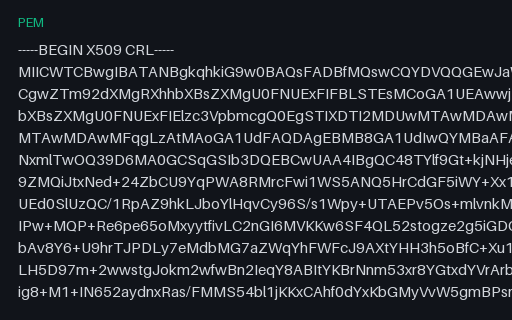
- pemSAMPLE Certificate Revocation List — EmptyA correctly signed CRL with an absent revokedCertificates field — what a CA publishes when it has revoked nothing. Parsers that assume the list is always present tend to fault here rather than report zero entries.
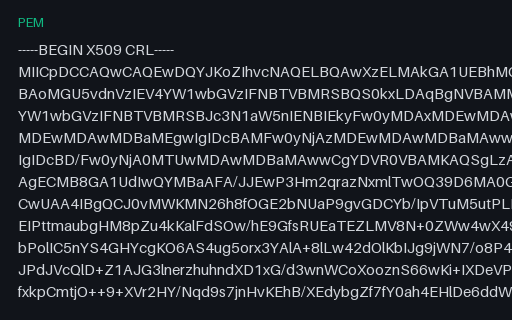
- pemSAMPLE Certificate Revocation List — StaleA validly signed CRL whose nextUpdate passed in 2020. Whether a client hard-fails, soft-fails, or silently trusts stale revocation data is a real policy decision, and this is the fixture that reveals which one it made.
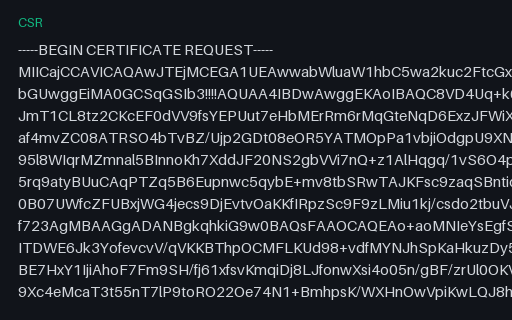
- csrSAMPLE CSR — Intentionally Corrupt Base64An intentionally corrupt PKCS#10 request: the PEM armour is intact but four illegal characters have been substituted into the Base64 body, so decoding fails part-way. It exists to check that a CSR intake path reports a parse error instead of a stack trace or a partially populated record.
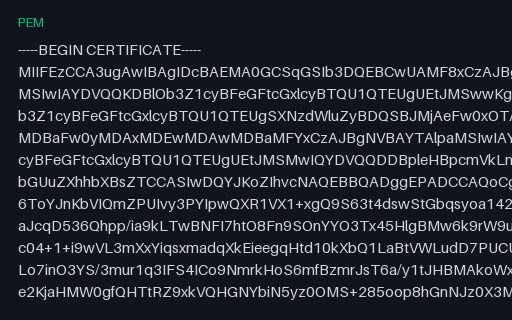
- pemSAMPLE Leaf Certificate — ExpiredA correctly signed leaf whose notAfter fell in the past (2020). The only thing wrong with it is the clock, which makes it the clean way to assert that an expiry error is reported as expiry and not as a signature failure.
- pemSAMPLE Leaf Certificate — Not Yet ValidThe mirror of the expired leaf: identical in every respect except that notBefore is 2035, so it is rejected from the other side of the validity window. Pairs with it to prove a verifier distinguishes the two clock errors.
- pemSAMPLE Leaf Certificate — RevokedA leaf that is valid in every structural respect and revoked in the matching CRL and OCSP response shipped alongside it. It is the fixture that proves a client actually performs revocation checking rather than stopping at path building.
Generated by generation/security_p7.py. Free for any use, no attribution required — license.