
Android strings.xml — Spanish
The Spanish Android strings.xml (as res/values-es/) — for testing Android resource parsers, plurals, and string-array localization.
<?xml version="1.0" encoding="utf-8"?>
<resources>
    <string name="app_name">Novus Example</string>
    <!-- Greeting shown on the home screen -->
    <string name="greeting">Hola</string>
    <!-- Welcome message with the user's name -->
    <string name="welcome">Bienvenido, %1$s</string>
    <!-- Save button label -->
    <string name="save">Guardar</string>
    <!-- Cancel button label -->
    <string name="cancel">Cancelar</string>
    <!-- Search field placeholder -->
    <string name="search">Buscar</string>
    <!-- Settings menu item -->
    <string name="settings">Configuración</string>
    <!-- Log out menu item -->
    <string name="logout">Cerrar sesión</string>
    <plurals name="items_count">
        <item quantity="one">%d elemento</item>
        <item quantity="other">%d elementos</item>
    </plurals>
    <string-array name="sections">
        <item>Inicio</item>
        <item>Perfil</item>
        <item>Ajustes</item>
    </string-array>
</resources>
Specifications
- Format
- Android resources
- Language
- es (values-es/)
- Features
- string, plurals, string-array
- Placeholder
- %1$s
What is a .xml file?
XML (Extensible Markup Language) is a verbose, self-describing markup language using nested tags, attributes, and namespaces to represent structured, hierarchical data. It supports schemas, entities, and validation and underlies many document and data formats. It remains common in enterprise, publishing, and interchange contexts.
How to use this file
Use an example XML file to test parsers, namespace and schema validation, XPath queries, and protection against entity-expansion and external-entity attacks.
How to use this file for testing
“Android strings.xml — Spanish” is a deterministic Novus Examples fixture for Localization catalogs, Internationalization, Editor testing. Gettext PO/POT, XLIFF, Apple .strings, Flutter .arb, Android strings.xml, .NET .resx, and i18next JSON — with RTL and CJK variants — for testing localization pipelines, translation-memory tools, and catalog converters.
Documented properties for this file: es (values-es/) · placeholder %1$s · Android resources. Compare results against paired or grouped companions on this page when present (clean↔damaged, searchable↔scanned, or format twins) so scores stay reproducible across runs.
Download the file once, keep the path stable in CI or local scripts, and treat the spec table as the contract: dimensions, seeds, field lists, and roles are intentional. Corrupt or invalid samples are labelled as such — expect parsers to fail loudly rather than silently accept them.
Translation-catalog fixtures carry the same message set across formats, each with its native placeholder syntax. Test your i18n loader, catalog converter, or translation-memory tool, and use the RTL and CJK variants to check bidirectional text and Unicode handling.
Load the catalog with your i18n framework and verify placeholder interpolation and plural handling; the RTL and CJK variants exercise bidirectional text and font fallback.
Code examples
import xml.etree.ElementTree as ET

tree = ET.parse("strings-es.xml")
root = tree.getroot()
print(root.tag, [c.tag for c in root][:5])
Related files
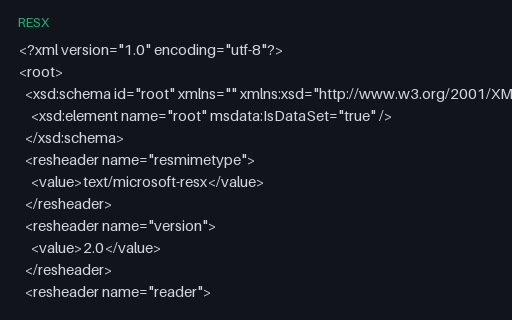
- resx.NET RESX — EnglishA .NET Resources.resx file (English) with the standard ResX schema and resheader block plus name/value string data and comments, using {0} composite-format placeholders.
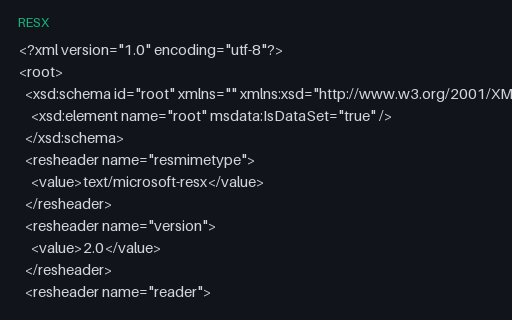
- resx.NET RESX — SpanishThe Spanish satellite RESX (Resources.es.resx) — for testing .NET resource parsers and culture-based resource resolution against the same keys.
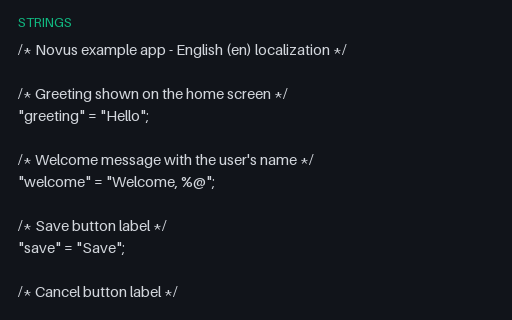
- stringsApple .strings — EnglishAn Apple Localizable.strings file (English) — quoted key = value pairs with comments and %@ placeholders, as iOS/macOS apps use per-locale in .lproj folders.
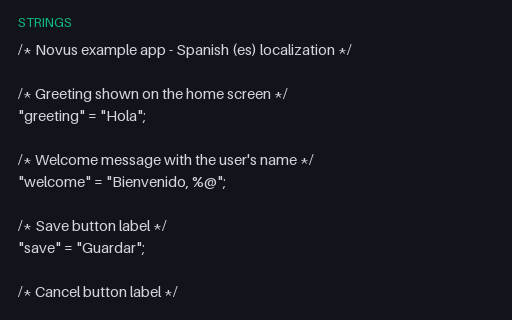
- stringsApple .strings — SpanishThe Spanish twin of the Apple .strings catalog — for testing .strings parsers and en/es diffing against the same keys.
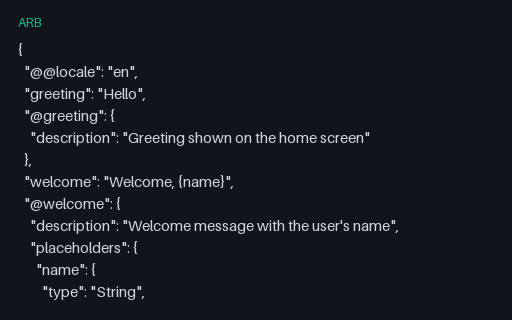
- arbFlutter ARB — EnglishA Flutter Application Resource Bundle (English) — JSON messages with matching @key metadata (descriptions and typed placeholders) using ICU {name} syntax, as Flutter's gen-l10n consumes.
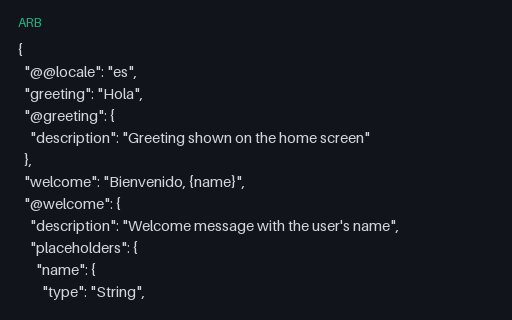
- arbFlutter ARB — SpanishThe Spanish twin of the Flutter ARB bundle — for testing ARB parsers, the gen-l10n pipeline, and ICU placeholder handling.
Generated by generation/localization.py. Free for any use, no attribution required — license.