
Sample JWT (HS256)
A sample JSON Web Token (JWT) signed with HS256 using a published example secret — verifiable but powerless — for testing JWT decoders and validators. Sample only, never for production. Paired with its decoded claims.
eyJhbGciOiJIUzI1NiIsInR5cCI6IkpXVCJ9.eyJzdWIiOiJzYW1wbGUtdXNlci0wMSIsIm5hbWUiOiJFeGFtcGxlIFVzZXIiLCJyb2xlIjoiZGVtbyIsImlzcyI6Im5vdnVzLWV4YW1wbGVzIiwiaWF0IjoxNzY3MjI1NjAwLCJleHAiOjE3OTg3NjE2MDAsIm5vdGUiOiJTQU1QTEUgVE9LRU4gXHUyMDE0IHNpZ25lZCB3aXRoIGEgcHVibGljIGV4YW1wbGUgc2VjcmV0LiBOb3QgZm9yIHByb2R1Y3Rpb24uIn0.ase-yAnjHYb-YvndC3eORYxgjr2X1Xn83dH04Po6P38
Specifications
- Format
- JSON Web Token
- Algorithm
- HS256
- Claims
- sub, name, role, iss, iat, exp
- Label
- SAMPLE ONLY — public secret, not for production
What is a .jwt file?
A JWT (JSON Web Token) is a compact, URL-safe token made of three base64url-encoded parts — a header, a payload of claims, and a signature — separated by dots. It is widely used to carry authentication and authorisation claims between services.
How to use this file
Use a sample JWT to test token decoding, claim extraction, and signature verification. Never use an example token's secret in production.
How to use this file for testing
“Sample JWT (HS256)” is a deterministic Novus Examples fixture for Conversion testing, Editor testing. The same content exported across many formats and linked as a group, so you can convert one and diff against the expected twin.
Documented properties for this file: HS256 · JSON Web Token. Compare results against paired or grouped companions on this page when present (clean↔damaged, searchable↔scanned, or format twins) so scores stay reproducible across runs.
Download the file once, keep the path stable in CI or local scripts, and treat the spec table as the contract: dimensions, seeds, field lists, and roles are intentional. Corrupt or invalid samples are labelled as such — expect parsers to fail loudly rather than silently accept them.
Data fixtures document their exact quirks — delimiters, encodings, null handling, schema, and row counts — in the spec table. Point your parser or importer at the file and assert it handles the documented edge cases; clean and deliberately-messy siblings make before/after diffs straightforward.
Code examples
cut -d. -f1 sample.jwt | base64 -d; echo
cut -d. -f2 sample.jwt | base64 -d; echo    # payload claims
Related files
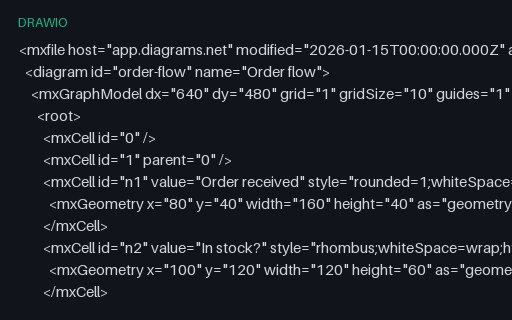
- drawiodraw.io Diagram (XML)A draw.io (diagrams.net) diagram in its native mxGraphModel XML — a small flowchart — for testing draw.io import/export and XML parsing of diagram files.
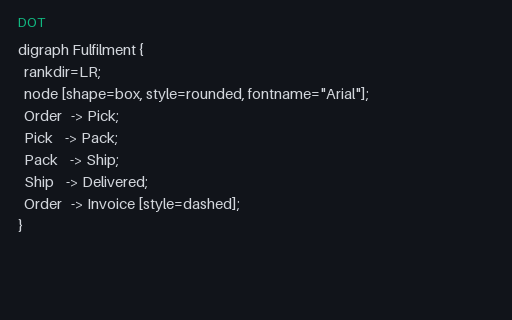
- dotGraphviz DOT GraphA Graphviz DOT directed graph describing a fulfilment pipeline — for testing DOT parsing, Graphviz rendering, and DOT-to-SVG/PNG conversion.
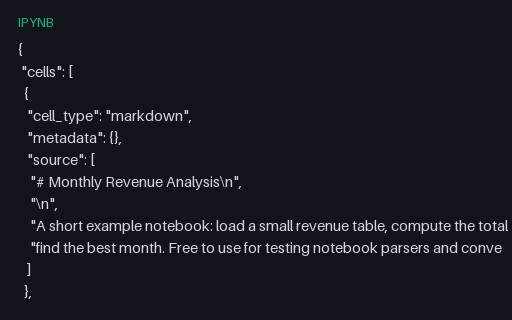
- ipynbJupyter Notebook (IPYNB)A valid Jupyter notebook (nbformat 4.5) with markdown cells, code cells, and real outputs (stdout stream and an execute result) — for testing notebook parsers, nbconvert, and JSON tooling.
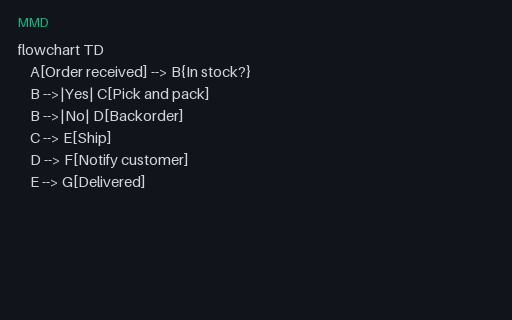
- mmdMermaid Flowchart (MMD)A Mermaid flowchart of an order-fulfilment process as diagrams-as-code — for testing Mermaid rendering, diagram-to-image conversion, and Markdown pipelines that embed Mermaid.
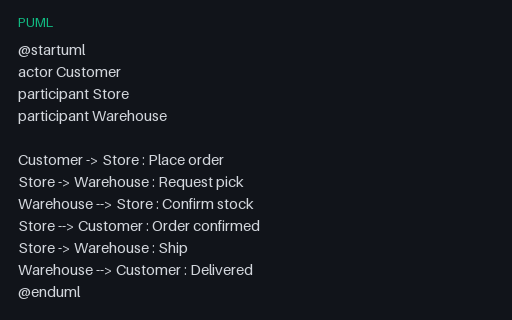
- pumlPlantUML Sequence DiagramA PlantUML sequence diagram of an order interaction (customer, store, warehouse) as diagrams-as-code — for testing PlantUML parsing and diagram rendering pipelines.
- svgAnimated Spinner (SVG)An animated loading spinner using SMIL (animateTransform) — a self-contained animated SVG for testing whether a renderer or converter handles SVG animation, and how it rasterises an animated frame.

Generated by generation/q8_extras.py. Free for any use, no attribution required — license.