

png
16.5 KB
Colour-Matched Subject: Cut-out (512px)
Ground-truth cut-out for the colour-matched hard case.
- File
- PNG · Background Removal · 512 × 512 px
- Use case
- Background removal· Conversion set
Find files, editable templates and browser test targets by what you need to make or test. Explore complete business kits for connected records, templates and expected results.
Page 32 of 221; 24 results per page.
Ground-truth cut-out for the colour-matched hard case.

Subject colours deliberately match the background clutter: a hard segmentation case.

Binary mask for the colour-matched hard case.
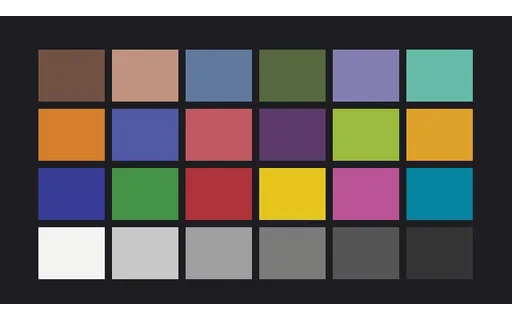
The full-colour reference for the colour-patches colourisation set. Every desaturated clip in this group was derived from these exact pixels with a documented luma transform, so a colouriser's output can be scored against the true colours, and on this plate the 24 patch values are fixed and published, so the comparison can be made per patch rather than as a whole-frame average.

The full-colour reference for the gradient-sky colourisation set. Every desaturated clip in this group was derived from these exact pixels with a documented luma transform, so a colouriser's output can be scored against the true colours.

The full-colour reference for the pan-city colourisation set. Every desaturated clip in this group was derived from these exact pixels with a documented luma transform, so a colouriser's output can be scored against the true colours.
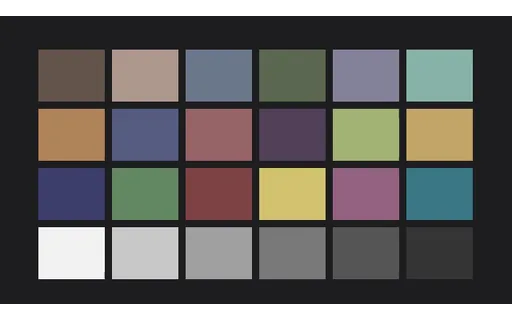
The colour-patches plate with 50% of its saturation removed, leaving 50% of the original chroma. This is the faded-archive case rather than the black-and-white one: some colour information survives, so the task is restoration rather than invention, and a model that ignores the residual chroma is throwing away the strongest signal it has.
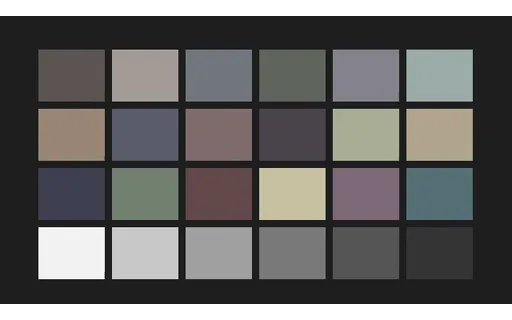
The colour-patches plate with 80% of its saturation removed, leaving 19% of the original chroma. This is the faded-archive case rather than the black-and-white one: some colour information survives, so the task is restoration rather than invention, and a model that ignores the residual chroma is throwing away the strongest signal it has.
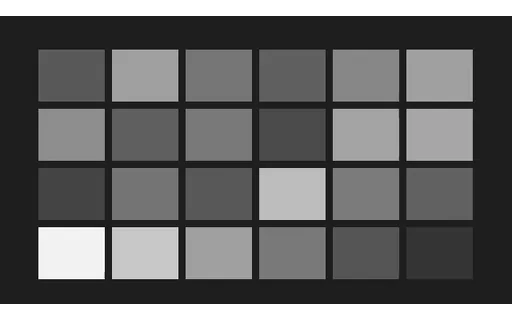
The colour-patches plate desaturated using Rec. 601 luma weights. Rec. 601 weights instead: the SD standard, and still the default in a surprising amount of software. The greys differ measurably from the 709 version, which is a good check on whether a pipeline knows which standard it is using.
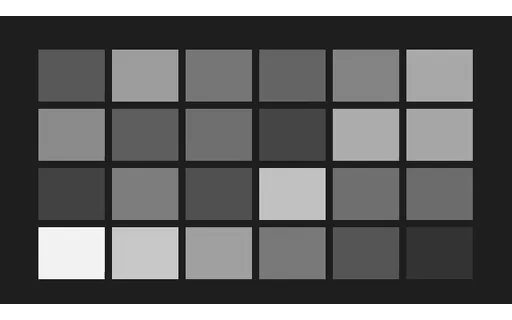
The colour-patches plate desaturated using Rec. 709 luma weights. Converted with Rec. 709 luma weights, the correct coefficients for HD material. All chroma is gone, so a colouriser has nothing to recover from and must infer it entirely.

The gradient-sky plate with 50% of its saturation removed, leaving 50% of the original chroma. This is the faded-archive case rather than the black-and-white one: some colour information survives, so the task is restoration rather than invention, and a model that ignores the residual chroma is throwing away the strongest signal it has.

The gradient-sky plate with 80% of its saturation removed, leaving 19% of the original chroma. This is the faded-archive case rather than the black-and-white one: some colour information survives, so the task is restoration rather than invention, and a model that ignores the residual chroma is throwing away the strongest signal it has.
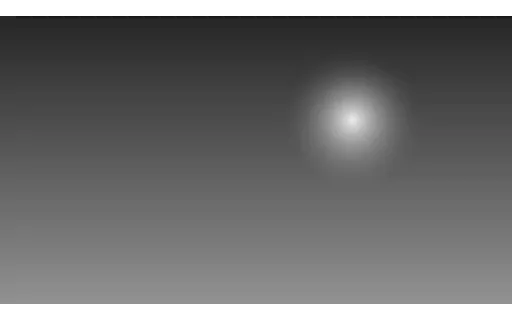
The gradient-sky plate desaturated using Rec. 601 luma weights. Rec. 601 weights instead: the SD standard, and still the default in a surprising amount of software. The greys differ measurably from the 709 version, which is a good check on whether a pipeline knows which standard it is using.

The gradient-sky plate desaturated using Rec. 709 luma weights. Converted with Rec. 709 luma weights, the correct coefficients for HD material. All chroma is gone, so a colouriser has nothing to recover from and must infer it entirely.

The pan-city plate with 50% of its saturation removed, leaving 50% of the original chroma. This is the faded-archive case rather than the black-and-white one: some colour information survives, so the task is restoration rather than invention, and a model that ignores the residual chroma is throwing away the strongest signal it has.

The pan-city plate with 80% of its saturation removed, leaving 19% of the original chroma. This is the faded-archive case rather than the black-and-white one: some colour information survives, so the task is restoration rather than invention, and a model that ignores the residual chroma is throwing away the strongest signal it has.

The pan-city plate desaturated using Rec. 601 luma weights. Rec. 601 weights instead: the SD standard, and still the default in a surprising amount of software. The greys differ measurably from the 709 version, which is a good check on whether a pipeline knows which standard it is using.

The pan-city plate desaturated using Rec. 709 luma weights. Converted with Rec. 709 luma weights, the correct coefficients for HD material. All chroma is gone, so a colouriser has nothing to recover from and must infer it entirely.

True-colour ground truth for the fruit colourization suite. Compare a colourizer's output against this reference to score accuracy.

True-colour ground truth for the mug colourization suite. Compare a colourizer's output against this reference to score accuracy.

True-colour ground truth for the plant colourization suite. Compare a colourizer's output against this reference to score accuracy.

Greyscale input for colourizing the fruit scene. Pair with the colour ground truth in this group.

Sepia input for colourizing the fruit scene. Pair with the colour ground truth in this group.

Greyscale input for colourizing the mug scene. Pair with the colour ground truth in this group.
We use Google Analytics and show ads via Adsterra. Non-essential cookies and ad scripts run only after you allow the matching categories. See our cookie policy.