
json
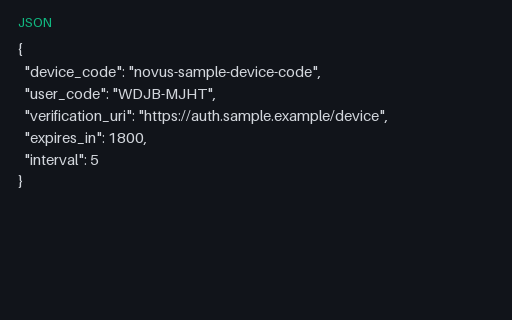
182 BOAuth Device Code Response — SAMPLE
SAMPLE OAuth device-authorization response for device-flow client tests.
- File
- JSON · Oauth
- Use case
- JWT / JWKS testingAPI testing
Find files, editable templates and browser test targets by what you need to make or test. Explore complete business kits for connected records, templates and expected results.
Page 2 of 6; 24 results per page.
SAMPLE OAuth device-authorization response for device-flow client tests.
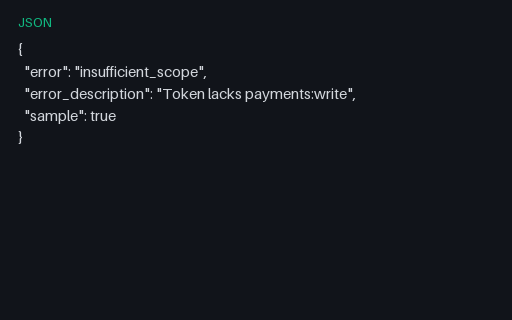
OAuth 2.0 SAMPLE error JSON (insufficient_scope) for client error-path tests.
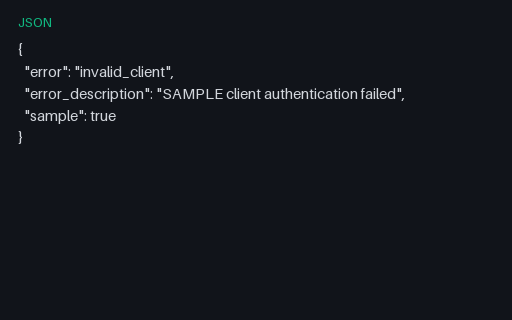
OAuth 2.0 SAMPLE error JSON (invalid_client) for client error-path tests.
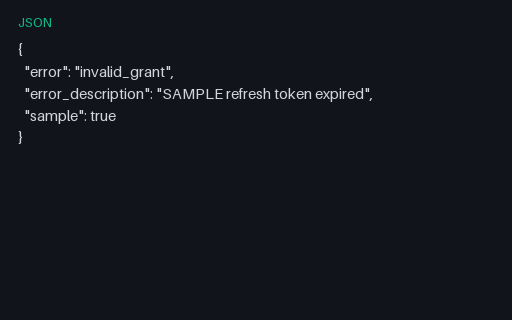
OAuth 2.0 SAMPLE error JSON (invalid_grant) for client error-path tests.
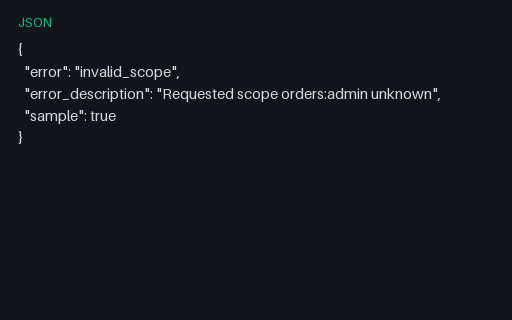
OAuth 2.0 SAMPLE error JSON (invalid_scope) for client error-path tests.
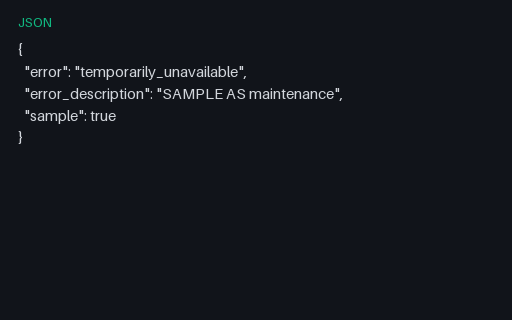
OAuth 2.0 SAMPLE error JSON (temporarily_unavailable) for client error-path tests.
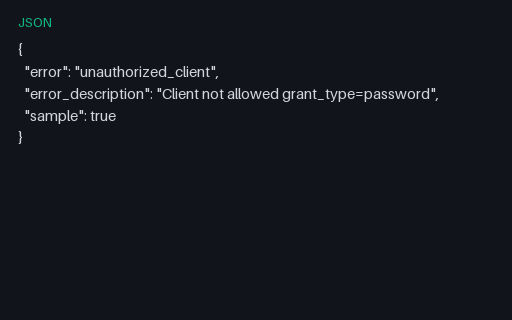
OAuth 2.0 SAMPLE error JSON (unauthorized_client) for client error-path tests.
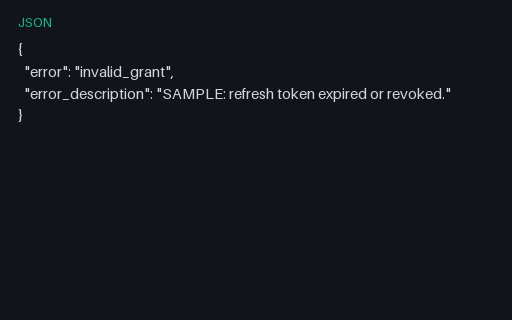
SAMPLE OAuth error JSON for token-endpoint failure handling.
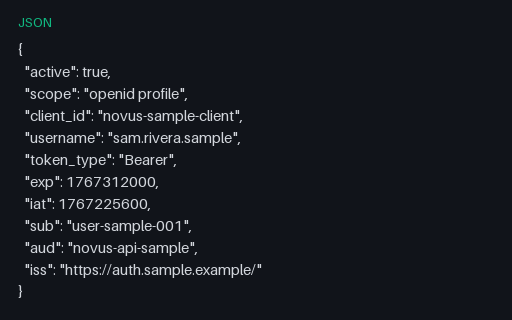
SAMPLE RFC 7662-style token introspection response for auth middleware tests.
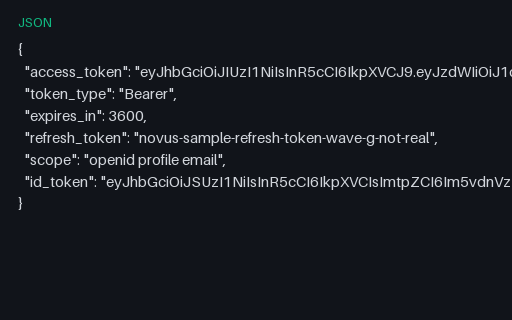
SAMPLE OAuth 2.0 token endpoint JSON with access, refresh, and id_token fields.
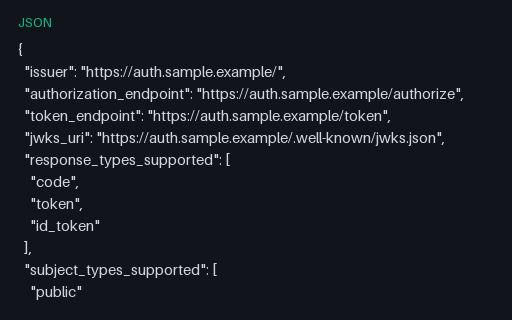
SAMPLE OpenID Connect discovery document for OIDC client and metadata parsers.
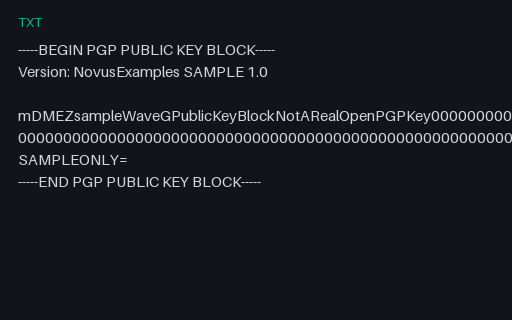
ASCII-armored SAMPLE-shaped PGP public key placeholder for armor detectors (not a cryptographically valid key).
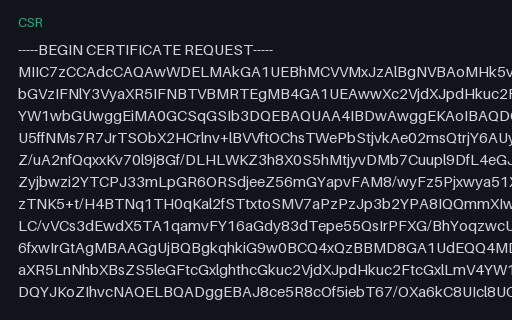
PKCS#10 certificate signing request SAMPLE for CSR parsers and CA tooling smoke tests.
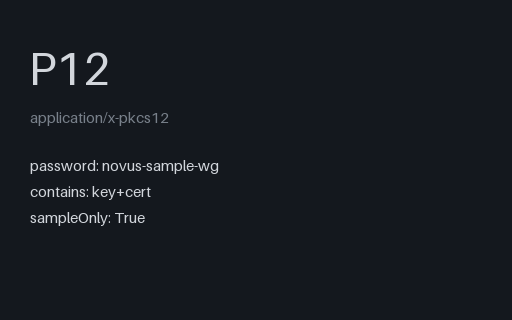
SAMPLE PKCS#12 keystore (password `novus-sample-wg`) for keystore importer tests. Not byte-stable.
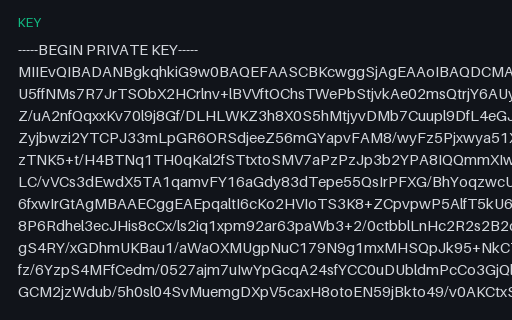
Published SAMPLE RSA-2048 private key (PKCS#8 PEM). Never use for a real identity.
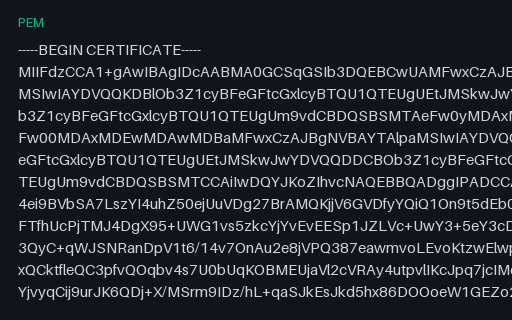
The two CA certificates concatenated in trust-store order, the shape a `--cafile` or `ca-bundle.crt` argument expects. Point a client at this and every other valid p7 leaf becomes verifiable.
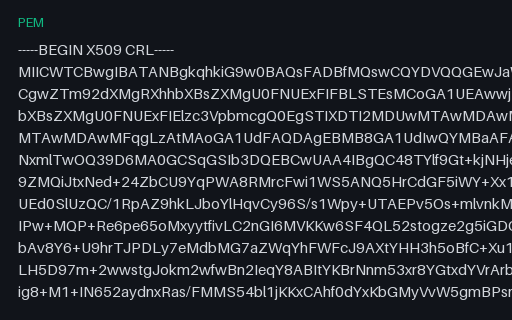
A correctly signed CRL with an absent revokedCertificates field — what a CA publishes when it has revoked nothing. Parsers that assume the list is always present tend to fault here rather than report zero entries.
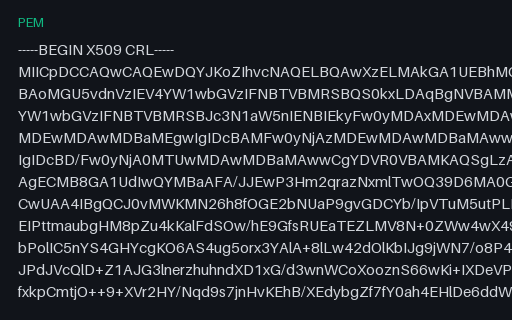
A validly signed CRL whose nextUpdate passed in 2020. Whether a client hard-fails, soft-fails, or silently trusts stale revocation data is a real policy decision, and this is the fixture that reveals which one it made.
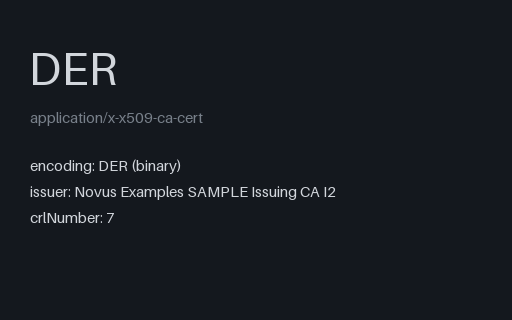
Binary DER twin of the SAMPLE CRL — the exact encoding a CRL distribution point serves over HTTP. Use it to test binary CRL fetching and caching paths that never see PEM armour.
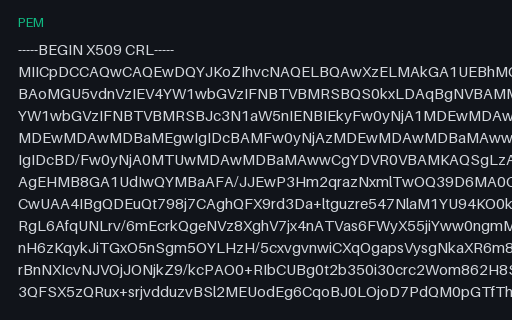
The issuing CA's revocation list, PEM-armoured, naming the revoked SAMPLE leaf (keyCompromise) plus a second serial with no matching certificate file — because a real CRL lists serials, not certificates. Signed by the same intermediate that issued them.
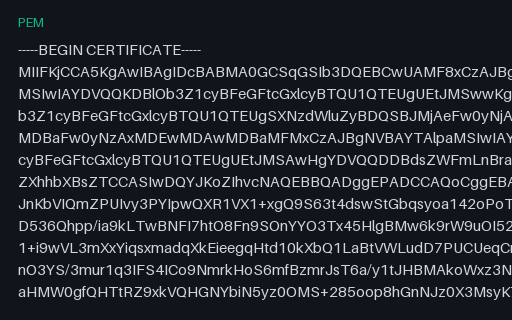
The bundle a TLS server actually presents: leaf first, then the issuing CA, with the root deliberately omitted because clients must already trust it. This is the correct-by-construction reference for the chain-order fixtures beside it.
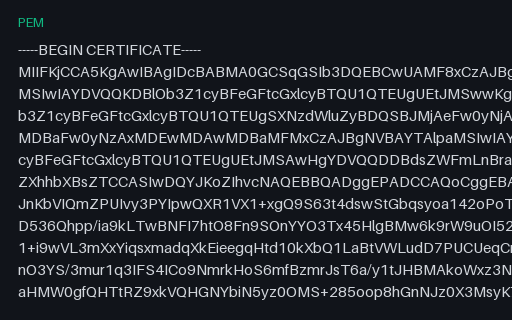
The same chain with the self-signed root appended. Sending the root is legal and common, merely wasteful, so a verifier must ignore the extra anchor rather than treat it as an error.
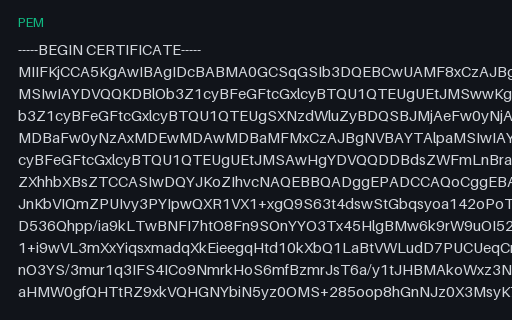
Leaf plus root with the issuing CA left out — the single most common TLS misconfiguration, and the one that works in browsers with a cached intermediate and fails everywhere else. Use it to prove a client does not silently paper over the gap.
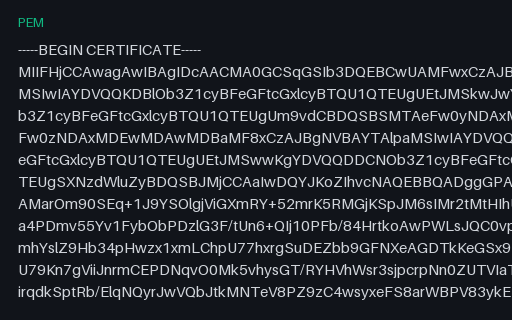
The leaf and intermediate concatenated backwards. Strict servers reject the file outright while tolerant path builders reorder it silently, so it cleanly separates the two behaviours.
We use Google Analytics and show ads via Adsterra. Non-essential cookies and ad scripts run only after you allow the matching categories. See our cookie policy.