
Convert v2 Archive SHA-256 List
GNU-style SHA-256 list for the two canonical TAR members, preserving relative paths and full lowercase digests. Stable P8 artifact p8-convert-archive-sha256.
12d51e7b315f99dcb7e5d1144e32ac04272f67f0a36026edb9ea4fad605c34da  project/brief.md
b195dbf3188cce0e1d917d54149749aab8377754834433656c7d32132de6415e  project/config.json
Specifications
- Members
- 2
- Digest Hex Length
- 64
- Delivery Mode
- download-only
- Provider
- converter-v2
- Provenance
- Synthetic deterministic P8 fixture generated by generation/p8_content.py; seed namespace 2026082300
- Fixture Reserve
- convert-v2
Testing contract
Reference control- Scenario
- Parse each checksum line, reject absolute paths, and verify extracted member bytes.
- Expected result
- Two 64-character lowercase SHA-256 digests validate project/brief.md and project/config.json exactly.
What is a .txt file?
TXT is a plain-text file containing unformatted character data with no styling or structure beyond line breaks. Its interpretation depends on character encoding, most commonly UTF-8, and on line-ending convention. It is the most universal and portable text container.
How to use this file
Use an example TXT to test encoding detection, line-ending (LF versus CRLF) handling, and any tool that reads or streams raw text input.
How to use this file for testing
“Convert v2 Archive SHA-256 List” is a deterministic Novus Examples fixture for Conversion testing, Metadata testing. The same content exported across many formats and linked as a group, so you can convert one and diff against the expected twin.
Documented properties for this file: TXT · 169 bytes. Compare results against paired or grouped companions on this page when present (clean↔damaged, searchable↔scanned, or format twins) so scores stay reproducible across runs.
Download the file once, keep the path stable in CI or local scripts, and treat the spec table as the contract: dimensions, seeds, field lists, and roles are intentional. Corrupt or invalid samples are labelled as such — expect parsers to fail loudly rather than silently accept them.
Archive fixtures are documented down to their member list (shown on this page) and are deliberately safe — no zip bombs, executables, or hidden payloads. Test extractors against nested, unicode, empty, and encrypted variants.
Related files
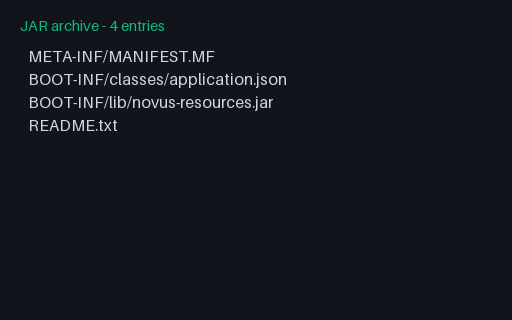
- jarJAR With a Nested Library JARThe nested-JAR layout an executable fat jar uses: a manifest with a Class-Path entry and a second JAR stored uncompressed under BOOT-INF/lib so it can be read in place without being extracted first. It contains resources only - properties, JSON and text, no compiled bytecode - and the manifest uses the CRLF line endings the JAR specification requires.
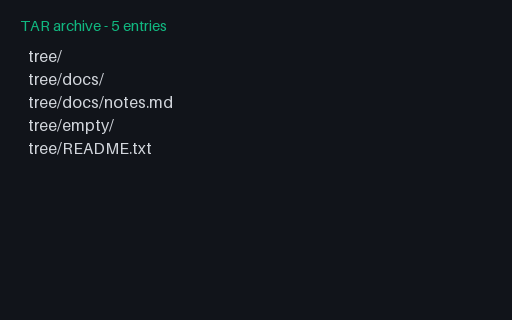
- tarTAR - Directory Members and an Empty DirectoryThree directory records with distinct modes, one of which - tree/empty/ - has no members underneath it and therefore exists only because the record does. A reader that synthesises directories from member paths alone silently loses it, and loses the 0750 and 0700 modes on the other two.
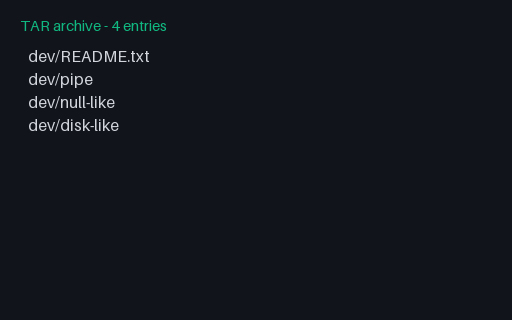
- tarTAR - FIFO and Device Node RecordsA FIFO, a character device and a block device, each a header with no data blocks and with the device numbers in the devmajor/devminor fields. Unprivileged extraction cannot create the two device nodes, so the correct behaviour is to skip them with a warning rather than to abort the whole archive or to create empty regular files in their place.
- tarTAR - GNU FormatGNU tar's extension of the same header, identified by its own magic: long names get their own 'L' record, oversized numeric fields switch to base-256, and sparse files get an in-header map. All three archives in this group hold byte-identical members with identical ownership and modification times, so any other difference a reader reports between them comes from the header encoding alone.
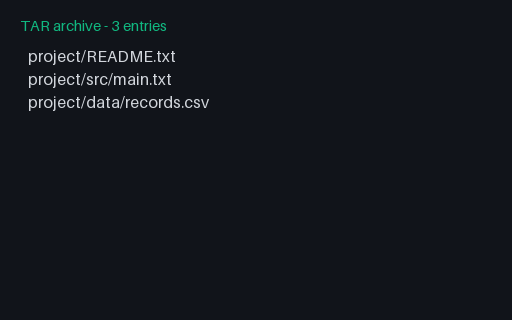
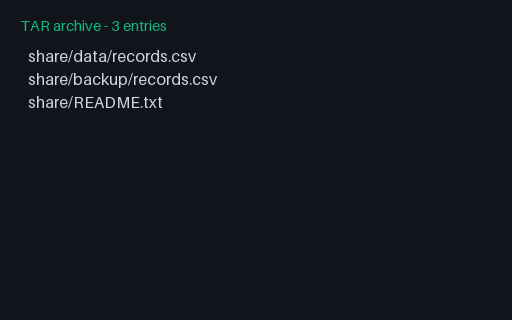
- tarTAR - Hard Link Membershare/backup/records.csv is a hard link to a member that appears earlier in the stream, so its content is stored exactly once. Order matters: a reader that extracts members out of sequence, or that copies content instead of linking, changes both the on-disk byte count and the inode relationship the archive is describing.
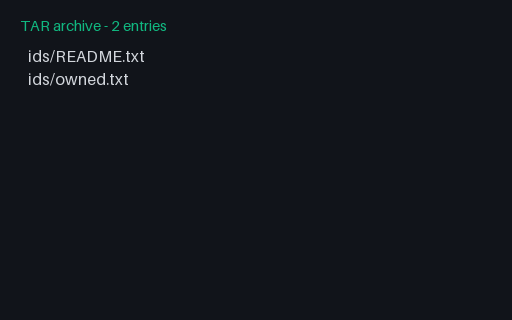
- tarTAR - Large UID/GID (GNU base-256)The uid and gid fields hold 7 octal digits, so they top out at 2097151. This member is owned by uid 3000000, which needs GNU base-256 encoding: the field's high bit is set and the remaining bytes are a big-endian integer. Its group sibling encodes the same ownership the other way, so a reader can be checked against both without a second variable.
Generated by generation/p8_content.py. Free for any use, no attribution required — license.