
Detection Annotations — Pascal VOC (XML)
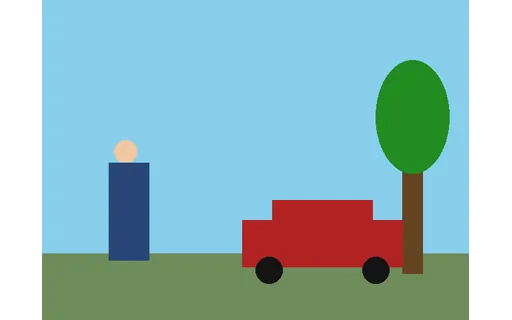
The same detection boxes in the Pascal VOC XML format — a per-image annotation with size, and one object element per box with pixel corner coordinates. The XML twin of the COCO and YOLO annotations.
<annotation>
  <folder>vision</folder>
  <filename>street-scene.png</filename>
  <source>
    <database>Novus Examples</database>
  </source>
  <size>
    <width>640</width>
    <height>480</height>
    <depth>3</depth>
  </size>
  <segmented>0</segmented>
  <object>
    <name>person</name>
    <pose>Unspecified</pose>
    <truncated>0</truncated>
    <difficult>0</difficult>
    <bndbox>
      <xmin>90</xmin>
      <ymin>210</ymin>
      <xmax>160</xmax>
      <ymax>390</ymax>
    </bndbox>
  </object>
  <object>
    <name>car</name>
    <pose>Unspecified</pose>
    <truncated>0</truncated>
    <difficult>0</difficult>
    <bndbox>
      <xmin>300</xmin>
      <ymin>300</ymin>
      <xmax>540</xmax>
      <ymax>420</ymax>
    </bndbox>
  </object>
  <object>
    <name>tree</name>
    <pose>Unspecified</pose>
    <truncated>0</truncated>
    <difficult>0</difficult>
    <bndbox>
      <xmin>500</xmin>
      <ymin>90</ymin>
      <xmax>610</xmax>
      <ymax>410</ymax>
    </bndbox>
  </object>
</annotation>
Specifications
- Format
- Pascal VOC
- Objects
- 3
- Bbox
- xmin, ymin, xmax, ymax
What is a .xml file?
XML (Extensible Markup Language) is a verbose, self-describing markup language using nested tags, attributes, and namespaces to represent structured, hierarchical data. It supports schemas, entities, and validation and underlies many document and data formats. It remains common in enterprise, publishing, and interchange contexts.
How to use this file
Use an example XML file to test parsers, namespace and schema validation, XPath queries, and protection against entity-expansion and external-entity attacks.
How to use this file for testing
“Detection Annotations — Pascal VOC (XML)” is a deterministic Novus Examples fixture for Computer vision, ML training data, Conversion testing. A rendered detection scene annotated in COCO, YOLO, and Pascal-VOC formats — for testing annotation loaders, format converters, and vision pipelines against a known image.
Documented properties for this file: Pascal VOC. Compare results against paired or grouped companions on this page when present (clean↔damaged, searchable↔scanned, or format twins) so scores stay reproducible across runs.
Download the file once, keep the path stable in CI or local scripts, and treat the spec table as the contract: dimensions, seeds, field lists, and roles are intentional. Corrupt or invalid samples are labelled as such — expect parsers to fail loudly rather than silently accept them.
AI/ML fixtures are fully synthetic with documented schemas — no real people or data. Test data loaders, tokenizers, annotation converters, embedding/vector stores, or eval-metric parsers against the known structure and fixed seeds.
Code examples
import xml.etree.ElementTree as ET

tree = ET.parse("annotations.voc.xml")
root = tree.getroot()
print(root.tag, [c.tag for c in root][:5])
Related files
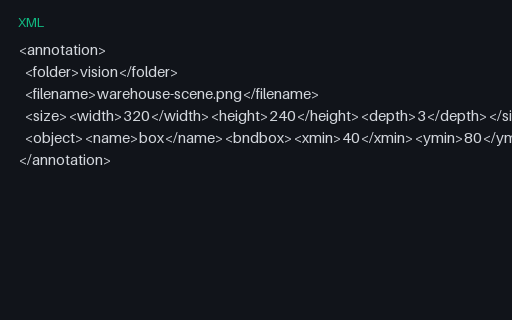
- xmlDetection Annotations — Warehouse Pascal VOC (XML)Pascal VOC XML annotations for the warehouse detection scene.
- pngObject-detection Scene (PNG, 640×480)A simple rendered street scene with a person, a car, and a tree at known pixel coordinates — the image the COCO, YOLO, and Pascal-VOC annotation twins describe. A fixture for testing object-detection loaders and annotation converters.
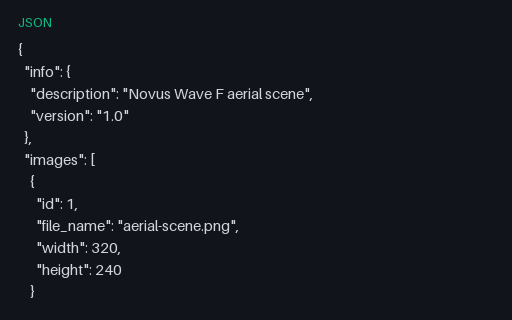
- jsonDetection Annotations — Aerial COCO (JSON)COCO JSON with bounding boxes and polygon segmentation for the aerial scene.
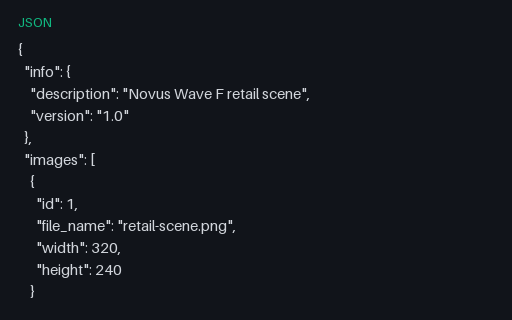
- jsonDetection Annotations — Retail COCO (JSON)COCO JSON with bounding boxes and polygon segmentation for the retail scene.
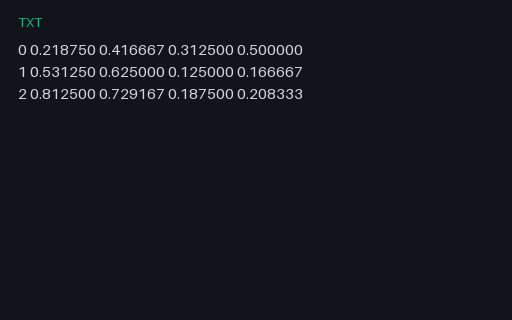
- txtDetection Annotations — Retail YOLO (TXT)YOLO-format normalised boxes for the retail detection scene.
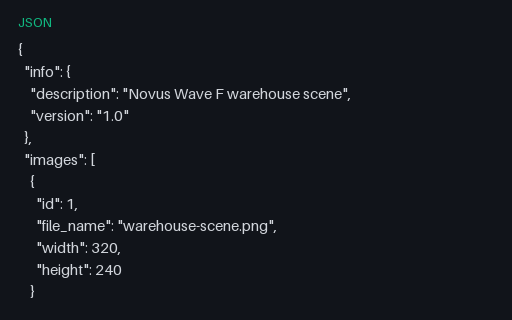
- jsonDetection Annotations — Warehouse COCO (JSON)COCO JSON with bounding boxes and polygon segmentation for the warehouse scene.
Generated by generation/ai_datasets.py. Free for any use, no attribution required — license.