
Segmentation Input — Orbiting Solids
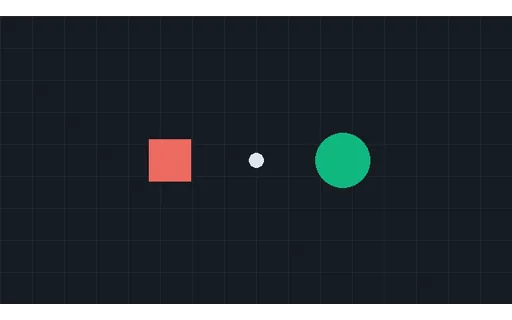
Two hard-edged objects orbiting in antiphase over a grid, plus a static centre marker. The objects cross in front of the grid and reach the frame edges, so occlusion and boundary handling both get exercised. Every frame has an exact mask in this group.
Browser-playable test video · 2 seconds
Specifications
- Resolution
- 640x360
- Fps
- 24
- Objects
- 3
- Motion
- two objects orbiting in antiphase, one static
- Role
- segmentation input
- Reference
- vid-segmentation-solids-gt
- Crf
- 19
- Base Plate
- solids
Testing contract
Expected to pass- Scenario
- Segment the clip and score the result against the instance-mask ground truth in this group.
- Expected result
- The scene holds 3 objects at 640x360 24 fps - two objects orbiting in antiphase, one static - and the reference is vid-segmentation-solids-gt. Because two objects orbit in antiphase they periodically approach one another, so identity swaps between frames are visible in the score rather than averaged away.
What is a .mp4 file?
MP4 (MPEG-4 Part 14) is the dominant container for digital video, holding video, audio, subtitle, and metadata tracks in a tree of typed boxes. `ftyp` declares the brand, `moov` carries the sample tables that make seeking possible, and `mdat` holds the media; when an encoder writes `moov` last, playback cannot begin until the file has fully downloaded, which a faststart remux fixes. It derives from Apple's QuickTime format, generalized by ISO into the ISOBMFF base that MOV, 3GP, and HEIF share.
How to use this file
Use an example MP4 to test box parsing and track detection, seeking, range-request streaming, and transcode or thumbnail pipelines: verifying that a file with a trailing `moov` box is still handled, and that codec support is checked per track rather than inferred from the extension.
How to use this file for testing
“Segmentation Input — Orbiting Solids” is a deterministic Novus Examples fixture for Video segmentation, Video QA. Hard-edged and anti-aliased subjects in motion, each shipped with the exact per-frame mask used to create it, for scoring video object segmentation and rotoscoping frame by frame instead of spot-checking.
Documented properties for this file: segmentation input · 24 fps. Compare results against paired or grouped companions on this page when present (clean↔damaged, searchable↔scanned, or format twins) so scores stay reproducible across runs.
Download the file once, keep the path stable in CI or local scripts, and treat the spec table as the contract: dimensions, seeds, field lists, and roles are intentional. Corrupt or invalid samples are labelled as such, expect parsers to fail loudly rather than silently accept them.
Media fixtures are short and synthetic by design. Prefer waveform or transcript ground truth in the same group when measuring ASR, trim, upscale, or sync tools; do not assume broadcast-quality masters.
Code examples
<video controls preload="metadata" width="640" src="orbit-scene.mp4"></video>Related files
- mp4Base Plate — Orbit — Hard-Edged SolidsA green disc and a red square orbiting the centre in antiphase over a grid. Hard edges and flat fills make the boundary unambiguous, so segmentation and tracking output can be scored against exact geometry rather than a judgement call. One of eight shared base plates: every AI-video suite in this library degrades one of these rather than inventing its own footage, so results across suites are comparable. Encoded at CRF 14 — well above the house CRF 30 — because a reference compressed as hard as the material under test puts the measurement floor above the effect being measured.
- mp4Base Plate — Subject on Chroma FieldAn anti-aliased figure moving over a chroma-green field with a deliberate lighting falloff, so the key is not perfectly flat. Ships with a per-frame alpha ground truth, which is what makes matting output measurable instead of merely inspectable. One of eight shared base plates: every AI-video suite in this library degrades one of these rather than inventing its own footage, so results across suites are comparable. Encoded at CRF 14 — well above the house CRF 30 — because a reference compressed as hard as the material under test puts the measurement floor above the effect being measured.

- mp4Matting Ground Truth — Per-Frame Alpha MatteThe exact per-frame alpha used to composite every clip in this group, as an 8-bit greyscale clip: white is opaque subject, black is background, and edges carry genuine intermediate values because the matte is anti-aliased rather than binary. This is what makes matting output measurable — compare a predicted alpha against this frame by frame instead of inspecting a composite and forming an opinion.

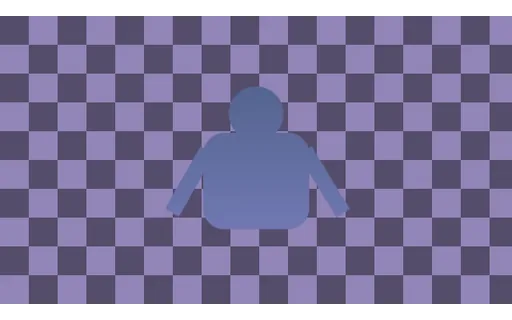
- mp4Matting Input — Subject on Busy patternedThe same subject and the same alpha, composited over busy patterned — no chroma screen, which is the case a general background-removal model actually has to handle. Score the predicted alpha against the ground-truth matte in this group.
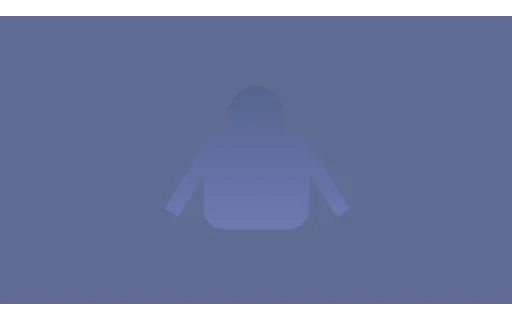
- mp4Matting Input — Subject on Colour close to subjectThe same subject and the same alpha, composited over colour close to subject — no chroma screen, which is the case a general background-removal model actually has to handle. The background colour deliberately sits close to the subject's own, so colour alone cannot separate them and the model must use shape and motion. Score the predicted alpha against the ground-truth matte in this group.
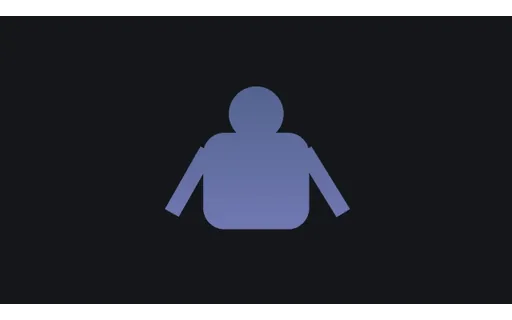
- mp4Matting Input — Subject on Dark studioThe same subject and the same alpha, composited over dark studio — no chroma screen, which is the case a general background-removal model actually has to handle. Score the predicted alpha against the ground-truth matte in this group.
Generated by generation/video_ai_suites.py. Free for any use, no attribution required, license.