
GitHub Actions Reusable Workflow Caller
The calling half of a reusable-workflow pair: a workflow_dispatch trigger with a choice input, two jobs that call the same reusable workflow with different arguments, and a third that consumes their outputs through needs.
name: Release

on:
  workflow_dispatch:
    inputs:
      environment:
        description: Target environment
        required: true
        default: staging
        type: choice
        options: [staging, production]

permissions:
  contents: read

jobs:
  staging:
    uses: ./.github/workflows/reusable-build.yml
    with:
      environment: staging
      node-version: "20"

  production:
    needs: staging
    if: inputs.environment == 'production'
    uses: ./.github/workflows/reusable-build.yml
    with:
      environment: production

  announce:
    needs: [staging, production]
    runs-on: ubuntu-latest
    steps:
      - run: echo "built ${{ needs.staging.outputs.artifact-name }}"
Specifications
- System
- GitHub Actions
- Trigger
- workflow_dispatch
- Jobs
- 3
- Calls Reusable
- ./.github/workflows/reusable-build.yml
- Needs Edges
- 3
Testing contract
Expected to pass- Scenario
- Follow a `uses:` reference from a caller job to a reusable workflow and check the `needs` graph
- Expected result
- Three jobs resolve, two reference the same reusable workflow file, and the needs graph is acyclic with announce last
What is a .yml file?
YML is an alternate file extension for YAML, a human-readable data-serialization format based on indentation, key-value mappings, and lists. The content and parsing rules are identical to .yaml; only the extension differs. It is widely used for CI and application configuration files.
How to use this file
Use an example YML file to test that config loaders treat .yml and .yaml identically, and to exercise indentation, comment, and multi-document parsing.
How to use this file for testing
“GitHub Actions Reusable Workflow Caller” is a deterministic Novus Examples fixture for Config testing, Config parsing, Editor testing. TOML, INI, YAML, .env, and dotfile configuration samples with nested sections and typed values — for testing config parsers, loaders, and environment tooling.
Documented properties for this file: YML · 698 bytes. Compare results against paired or grouped companions on this page when present (clean↔damaged, searchable↔scanned, or format twins) so scores stay reproducible across runs.
Download the file once, keep the path stable in CI or local scripts, and treat the spec table as the contract: dimensions, seeds, field lists, and roles are intentional. Corrupt or invalid samples are labelled as such — expect parsers to fail loudly rather than silently accept them.
Pipeline and infrastructure fixtures are inert configuration: steps reference fictional images and scripts, and nothing here executes. Run your linter, schema validator, migrator, or policy engine against them, and expect the deprecated-syntax and intentionally invalid variants to be rejected.
Point your config loader at the file and assert it reads the documented sections and typed values, including any deliberately-tricky nesting or comments.
Code examples
import yaml  # pip install pyyaml

with open("release-caller.yml") as f:
    data = yaml.safe_load(f)
print(data)
Related files
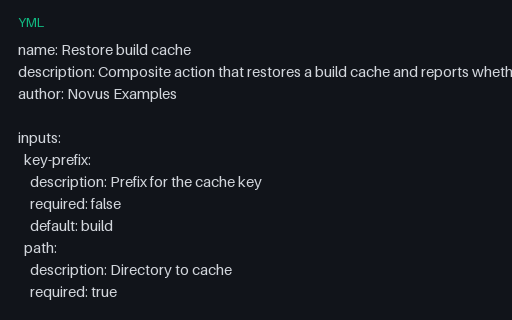
- ymlGitHub Actions Composite Action DefinitionAn action.yml-shaped composite action definition with typed inputs, a declared output bound to a step output, and a branding block. Distinct from a workflow file, and a common blind spot in workflow linters that only understand .github/workflows.
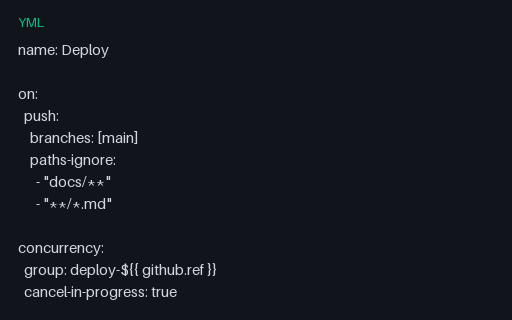
- ymlGitHub Actions Concurrency and EnvironmentA deployment workflow exercising the blocks that governance tools care about: a concurrency group with cancel-in-progress, paths-ignore filters, a named environment with a URL, and a job timeout. All hosts are example.invalid.
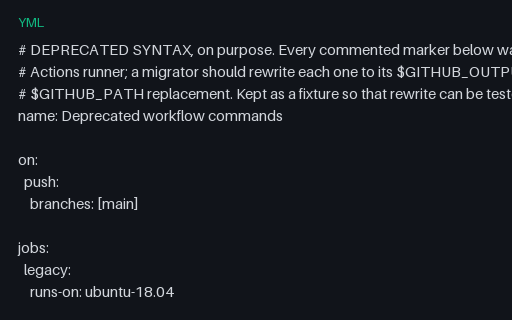
- ymlGitHub Actions Deprecated Workflow CommandsA deprecated-syntax workflow: ::set-output, ::set-env and ::add-path markers, a retired runner label, and v2 action pins. Every construct here was removed from the runner, so an upgrade migrator can be scored on whether it rewrites all of them.
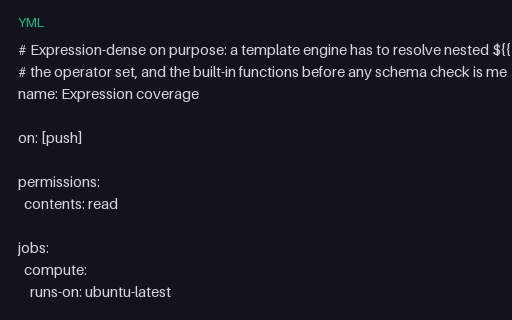
- ymlGitHub Actions Expression and Function CoverageAn expression-dense workflow: fromJSON-generated matrix axes, hashFiles cache keys, format and join calls, a folded multi-line if condition, and the && / || coalescing idiom that stands in for a ternary. For testing template resolvers before any schema check.
- ymlGitHub Actions Matrix Include and ExcludeThe matrix case that expanders get wrong: a 3x3 base grid, two exclude rules, and one include entry that adds a combination and an extra key. Nine minus two plus one is eight jobs, documented in the specs so an expansion can be scored exactly.
- ymlGitHub Actions Node Matrix WorkflowA GitHub Actions CI workflow with a two-axis build matrix (three Node versions across two runners), an npm cache, and a conditional artifact upload. Six matrix combinations, so a workflow linter or matrix expander has a documented answer to check against.
Generated by generation/pipelines.py. Free for any use, no attribution required — license.