
Python — Hello World
The classic hello-world in idiomatic Python 3, with a shebang, a module docstring, and the standard main guard — the minimal correct program for testing highlighters and interpreters.
#!/usr/bin/env python3
"""The classic first program, in idiomatic Python 3."""


def main() -> None:
    print("Hello, world!")


if __name__ == "__main__":
    main()
Specifications
- Language
- Python
- Kind
- hello-world
- Lines
- 10
- Encoding
- UTF-8
- Line Endings
- LF
Testing contract
Expected to pass- Scenario
- Run the file with CPython 3 and capture stdout.
- Expected result
- It prints exactly `Hello, world!` and a newline, and nothing else; the shebang line and the `if __name__ == "__main__"` guard mean importing the module instead produces no output at all.
What is a .py file?
Python (.py) is a plain-text source file for the Python programming language — a dynamically typed, indentation-structured language widely used for scripting, data science, web back-ends, and automation. A .py file is compiled to bytecode and run by the Python interpreter.
How to use this file
Use an example .py file to test syntax highlighters, linters (like flake8 or ruff), formatters (black), tree-sitter grammars, and language-detection or code-editor tooling against known-correct source.
How to use this file for testing
“Python — Hello World” is a deterministic Novus Examples fixture for Syntax highlighting, Code parsing, Editor testing. Idiomatic hello-world programs and realistic snippets across sixteen languages, exercising comments, string escapes, interpolation, numeric literals, and language keywords — for testing syntax highlighters, editor themes, and tree-sitter grammars.
Documented properties for this file: Python · UTF-8 · LF. Compare results against paired or grouped companions on this page when present (clean↔damaged, searchable↔scanned, or format twins) so scores stay reproducible across runs.
Download the file once, keep the path stable in CI or local scripts, and treat the spec table as the contract: dimensions, seeds, field lists, and roles are intentional. Corrupt or invalid samples are labelled as such — expect parsers to fail loudly rather than silently accept them.
This is a short, known-correct source file. Run it through your syntax highlighter, linter, formatter, tree-sitter grammar, or parser, and open it in the in-browser editor to tweak and re-download. Each snippet exercises comments, string escapes, literals, and language keywords.
Code examples
python hello-world.pyRelated files
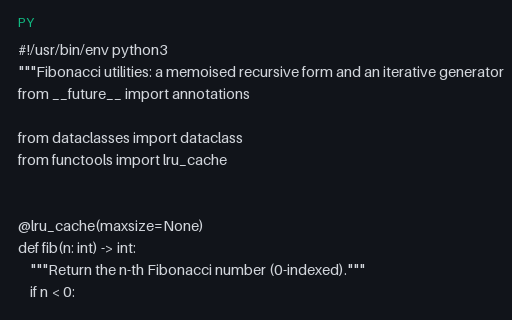
- pyPython — Fibonacci (dataclass, generator, type hints)A realistic Python snippet exercising type hints, an lru_cache-memoised recursive function, a generator, and a frozen dataclass — for testing syntax highlighters, linters (ruff/flake8), and formatters (black).
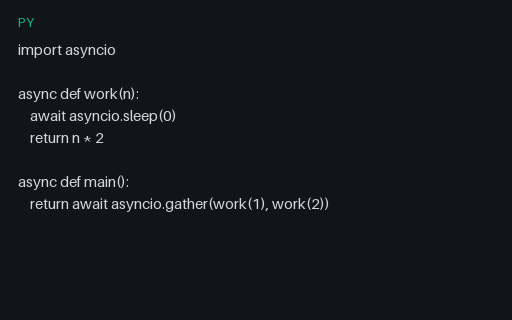
- pyPython Async GatherTiny asyncio gather stub for async Python tooling.
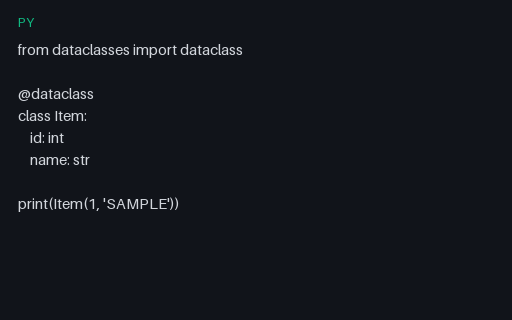
- pyPython Dataclass SAMPLEPython dataclass SAMPLE for highlighter and type-checker smoke tests.
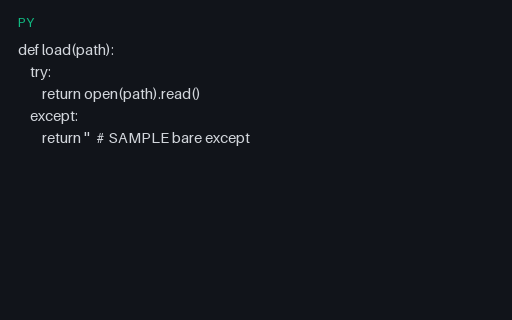
- pyPython Lint Invalid — Bare Except InvalidIntentionally lint-bait SAMPLE python snippet (bare-except-invalid) for rule-engine tests.
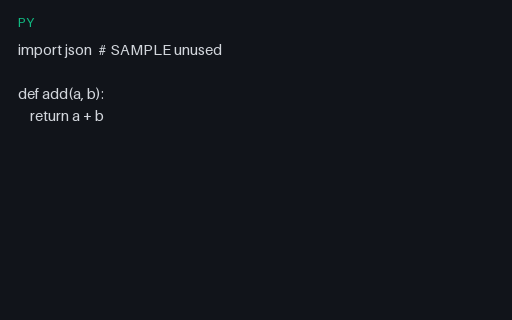
- pyPython Lint Invalid — Unused Import InvalidIntentionally lint-bait SAMPLE python snippet (unused-import-invalid) for rule-engine tests.
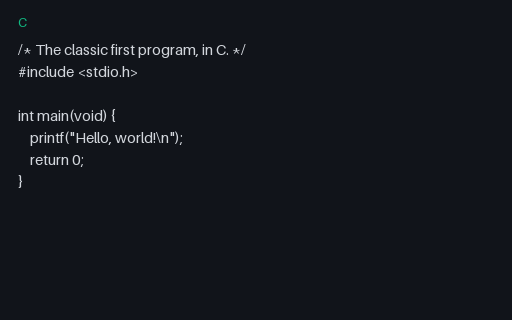
- cC — Hello WorldThe classic hello-world in C — an include, main, and printf — for testing highlighters, C compilers, and parsers against the canonical first program.
Generated by generation/code_samples.py. Free for any use, no attribution required — license.