
C++ — Hello World
The classic hello-world in C++ — iostream and std::cout — for testing highlighters, C++ compilers, and parsers.
// The classic first program, in C++.
#include <iostream>

int main() {
    std::cout << "Hello, world!" << std::endl;
    return 0;
}
Specifications
- Language
- C++
- Kind
- hello-world
- Lines
- 7
- Encoding
- UTF-8
- Line Endings
- LF
Testing contract
Expected to pass- Scenario
- Compile the file with a C++11 or later compiler and run it.
- Expected result
- It compiles with no warnings and prints exactly `Hello, world!` and a newline. It includes only `<iostream>` and returns 0.
What is a .cpp file?
C++ (.cpp) is a plain-text source file for the C++ programming language — a statically typed, compiled language that extends C with classes, templates, operator overloading, the Standard Template Library, and RAII. It is used for high-performance applications, game engines, and systems software.
How to use this file
Use an example .cpp file to test syntax highlighters, C++ compilers (g++, clang++), static analysers and formatters, and parser or language-detection tooling against real language constructs.
How to use this file for testing
“C++ — Hello World” is a deterministic Novus Examples fixture for Syntax highlighting, Code parsing, Editor testing. Idiomatic hello-world programs and realistic snippets across sixteen languages, exercising comments, string escapes, interpolation, numeric literals, and language keywords — for testing syntax highlighters, editor themes, and tree-sitter grammars.
Documented properties for this file: C++ · UTF-8 · LF. Compare results against paired or grouped companions on this page when present (clean↔damaged, searchable↔scanned, or format twins) so scores stay reproducible across runs.
Download the file once, keep the path stable in CI or local scripts, and treat the spec table as the contract: dimensions, seeds, field lists, and roles are intentional. Corrupt or invalid samples are labelled as such — expect parsers to fail loudly rather than silently accept them.
This is a short, known-correct source file. Run it through your syntax highlighter, linter, formatter, tree-sitter grammar, or parser, and open it in the in-browser editor to tweak and re-download. Each snippet exercises comments, string escapes, literals, and language keywords.
Code examples
c++ -std=c++20 hello-world.cpp -o prog && ./progRelated files
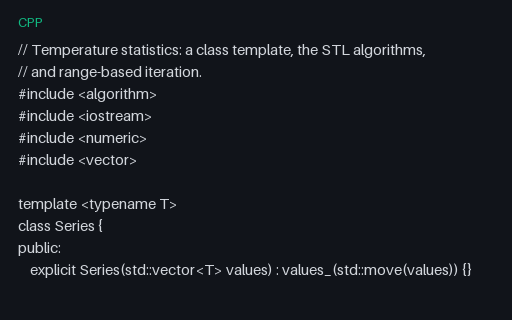
- cppC++ — Series (class template, STL)A realistic C++ snippet with a class template, STL algorithms (max_element, accumulate), std::move, and range handling — for testing highlighters, g++/clang++, and parsers against real templates.
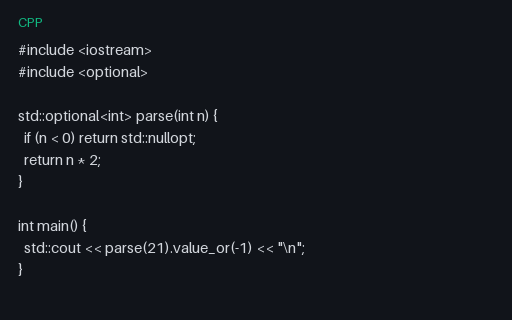
- cppC++ OptionalC++17 optional SAMPLE for clangd fixtures.
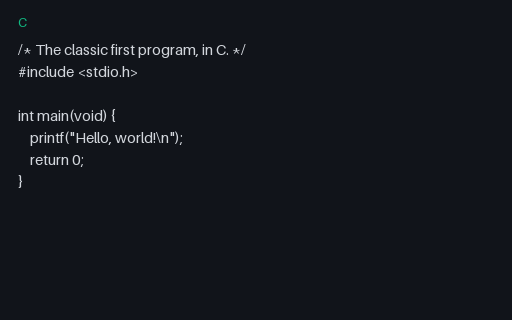
- cC — Hello WorldThe classic hello-world in C — an include, main, and printf — for testing highlighters, C compilers, and parsers against the canonical first program.
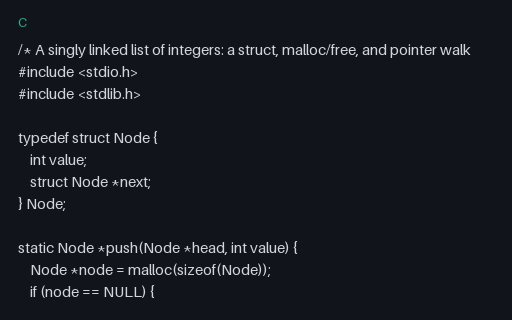
- cC — Linked list (structs, malloc, pointers)A realistic C program: a singly linked list with a typedef struct, malloc/free memory management, pointer walking, and error handling — for testing highlighters, compilers, and static analysers.
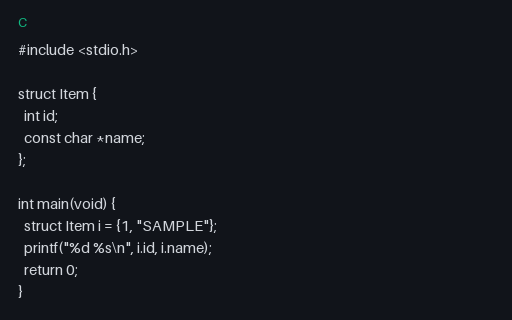
- cC StructC struct SAMPLE for clangd / highlighter fixtures.
- csC# FibonacciA small C# iterator Fibonacci utility — realistic snippet for language tooling.
Generated by generation/code_samples.py. Free for any use, no attribution required — license.