
Delivery driver: reference script
Exactly what was spoken, which is what the synthesiser was given: numbers, currency and times are spelled out as words because that is how they were said. This is ground truth by construction - it existed before the audio did - and it is deliberately NOT the same string as the recogniser transcript paired with it.
txt
text/plain
- Utterance
- delivery-driver
- Voice
- am_adam
- Speech Rate
- 1.05
- Synthetic
- true
- Disclosure
- Synthetic speech. Generated locally with a text-to-speech model from an authored script; not a recording of a real person, and no real customer, order or incident is described.
- Schema Version
- 1
Binary txt: no in-browser preview. Download it above to open in a compatible application.
Specifications
- Utterance
- delivery-driver
- Voice
- am_adam
- Speech Rate
- 1.05
- Synthetic
- true
- Disclosure
- Synthetic speech. Generated locally with a text-to-speech model from an authored script; not a recording of a real person, and no real customer, order or incident is described.
- Schema Version
- 1
- Role
- reference-script
- Characters
- 240
- Words
- 48
- Numbers Spelled Out
- true
Testing contract
Reference control- Scenario
- Read the file and compare it word for word with the ASR transcript beside it.
- Expected result
- It is what was SPOKEN, written the way it was spoken - numbers and times as words. The ASR transcript normalises those to digits and symbols, so the two differ on exactly the tokens that text normalisation decides, which is what makes a word error rate computed against the wrong one of them quietly wrong.
What is a .txt file?
TXT is a plain-text file containing unformatted character data with no styling or structure beyond line breaks. Its interpretation depends on character encoding, most commonly UTF-8, and on line-ending convention. It is the most universal and portable text container.
How to use this file
Use an example TXT to test encoding detection, line-ending (LF versus CRLF) handling, and any tool that reads or streams raw text input.
How to use this file for testing
“Delivery driver: reference script” is a deterministic Novus Examples fixture for ASR testing. Short synthetic digit/tone utterances with transcript JSON and clean↔noise pairs, for testing ASR loaders, WER harnesses, and audio preprocessing.
Documented properties for this file: reference-script. Compare results against paired or grouped companions on this page when present (clean↔damaged, searchable↔scanned, or format twins) so scores stay reproducible across runs.
Download the file once, keep the path stable in CI or local scripts, and treat the spec table as the contract: dimensions, seeds, field lists, and roles are intentional. Corrupt or invalid samples are labelled as such, expect parsers to fail loudly rather than silently accept them.
Media fixtures are short and synthetic by design. Prefer waveform or transcript ground truth in the same group when measuring ASR, trim, upscale, or sync tools; do not assume broadcast-quality masters.
Run ASR on the clip and score the transcript against the documented ground-truth script; clips are short, synthetic, and read from a fixed word or digit sequence.
Related files
- wavComplaint call: chain telephoneA 5 second excerpt of this group's take, telephone chain. Band-limited, resampled and companded in one pass: the whole telephone path applied at once rather than one effect at a time. Delivered as pcm_mulaw at 8000 Hz mono. Scored against plate.flac in the same group, which is the same five seconds undamaged. The parameters in the specification are what the file MEASURED, not what was requested of it.
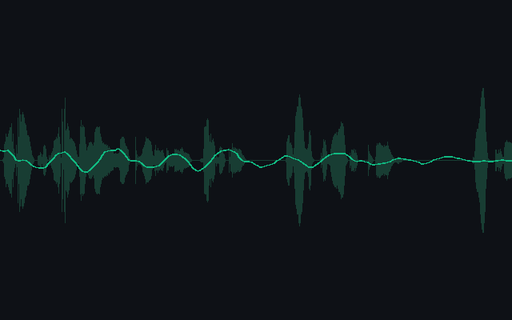
- flacComplaint call: clippedA 5 second excerpt of this group's take, clipping. Samples driven past a fixed threshold and flattened, the damage a hot microphone does and the one no codec can undo. Delivered as flac at 24000 Hz mono. Scored against plate.flac in the same group, which is the same five seconds undamaged. The parameters in the specification are what the file MEASURED, not what was requested of it.
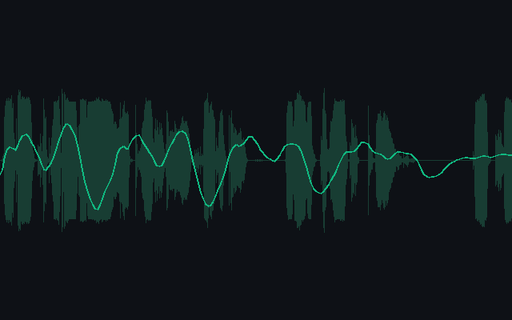
- wavComplaint call: codec g722 16kA 5 second excerpt of this group's take, codec. Encoded and decoded through a real speech codec, so the artefacts are the ones the format actually produces rather than a simulation of them. Delivered as adpcm_g722 at 16000 Hz mono. Scored against plate.flac in the same group, which is the same five seconds undamaged. The parameters in the specification are what the file MEASURED, not what was requested of it.
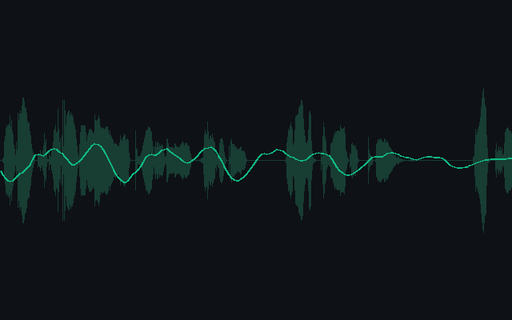
- gsmComplaint call: codec gsm 8kA 5 second excerpt of this group's take, codec. Encoded and decoded through a real speech codec, so the artefacts are the ones the format actually produces rather than a simulation of them. Delivered as gsm at 8000 Hz mono. Scored against plate.flac in the same group, which is the same five seconds undamaged. The parameters in the specification are what the file MEASURED, not what was requested of it.
- mp3Complaint call: codec mp3 128A 5 second excerpt of this group's take, codec. Encoded and decoded through a real speech codec, so the artefacts are the ones the format actually produces rather than a simulation of them. Delivered as mp3 at 24000 Hz mono. Scored against plate.flac in the same group, which is the same five seconds undamaged. The parameters in the specification are what the file MEASURED, not what was requested of it.
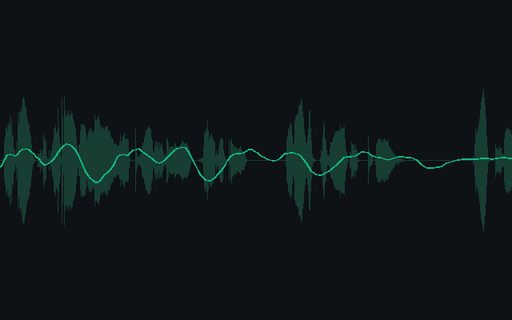
- mp3Complaint call: codec mp3 32A 5 second excerpt of this group's take, codec. Encoded and decoded through a real speech codec, so the artefacts are the ones the format actually produces rather than a simulation of them. Delivered as mp3 at 24000 Hz mono. Scored against plate.flac in the same group, which is the same five seconds undamaged. The parameters in the specification are what the file MEASURED, not what was requested of it.
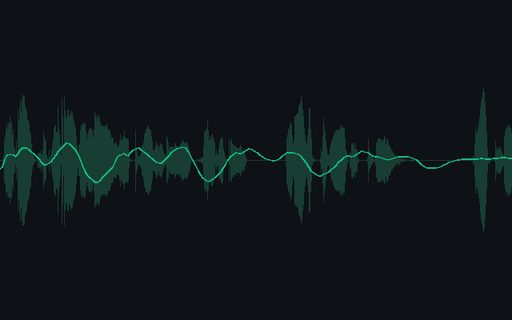
Generated by generation/audio_ladder_wave.py. Free for any use, no attribution required, license.