
Convert v2 Protobuf Schema Companion
Proto3 schema companion declaring the three fields used by the binary creator record. Stable P8 artifact p8-convert-protobuf-schema.
syntax = "proto3";
package novus.p8;
message CreatorRecord {
  string id = 1;
  uint32 asset_count = 2;
  string contact = 3;
}
Specifications
- Fields
- 3
- Wire Format
- protobuf
- Delivery Mode
- download-only
- Controlled Failure
- false
- Provider
- converter-v2
- Provenance
- Synthetic deterministic P8 fixture generated by generation/p8_content.py; seed namespace 2026082300
- Fixture Reserve
- convert-v2
Testing contract
Reference control- Scenario
- Compile the schema and inspect CreatorRecord field numbers and wire types.
- Expected result
- id is field 1 string, asset_count is field 2 uint32, and contact is field 3 string.
What is a .proto file?
Proto files define Protocol Buffers schemas, Google's language-neutral interface definition language for serializing structured data. They declare typed messages, fields, and services that a compiler turns into efficient binary serialization code in many languages. They underpin gRPC and high-performance data interchange.
How to use this file
Use an example proto file to test schema parsers, code generation across languages, and gRPC service or message-definition tooling.
How to use this file for testing
“Convert v2 Protobuf Schema Companion” is a deterministic Novus Examples fixture for Conversion testing, Serialization testing, Schema / OpenAPI testing. The same content exported across many formats and linked as a group, so you can convert one and diff against the expected twin.
Documented properties for this file: 3 fields. Compare results against paired or grouped companions on this page when present (clean↔damaged, searchable↔scanned, or format twins) so scores stay reproducible across runs.
Download the file once, keep the path stable in CI or local scripts, and treat the spec table as the contract: dimensions, seeds, field lists, and roles are intentional. Corrupt or invalid samples are labelled as such — expect parsers to fail loudly rather than silently accept them.
Data fixtures document their exact quirks — delimiters, encodings, null handling, schema, and row counts — in the spec table. Point your parser or importer at the file and assert it handles the documented edge cases; clean and deliberately-messy siblings make before/after diffs straightforward.
Related files
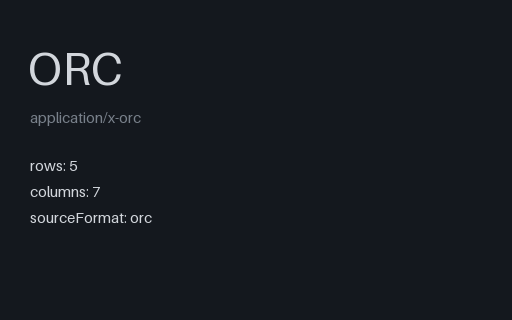
- orcConvert v2 ORC Employee Table SourceBinary orc source for the five-row P8 employee conversion table, preserving ids, names, departments, booleans, and scores. Stable P8 artifact p8-convert-orc-source.
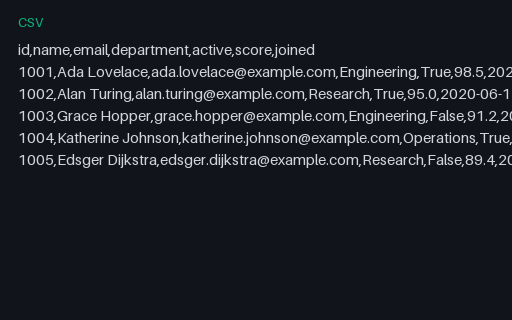
- csvConvert v2 ORC Expected CSVCsv semantic reference for the five-row P8 employee conversion table, preserving ids, names, departments, booleans, and scores. Stable P8 artifact p8-convert-orc-csv.
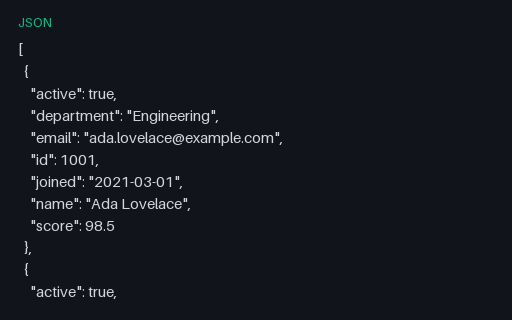
- jsonConvert v2 ORC Expected JSONJson semantic reference for the five-row P8 employee conversion table, preserving ids, names, departments, booleans, and scores. Stable P8 artifact p8-convert-orc-json.
- jsonAvro Schema Evolution - Backward-CompatibleThe compatible Avro record schema for reader/writer compatibility tests. Backward compatible for old records: nullable email is added with a null default.
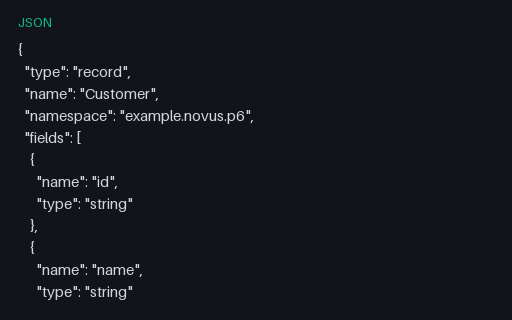
- jsonAvro Schema Evolution - BaselineThe baseline Avro record schema for reader/writer compatibility tests. Reference writer schema: id and name are strings.
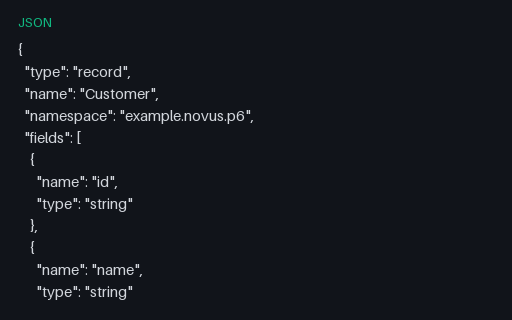
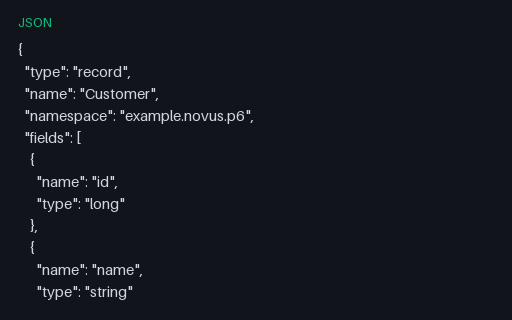
- jsonAvro Schema Evolution - BreakingThe breaking Avro record schema for reader/writer compatibility tests. Breaking relative to baseline: id changes to long and tenantId has no default.
Generated by generation/p8_content.py. Free for any use, no attribution required — license.